
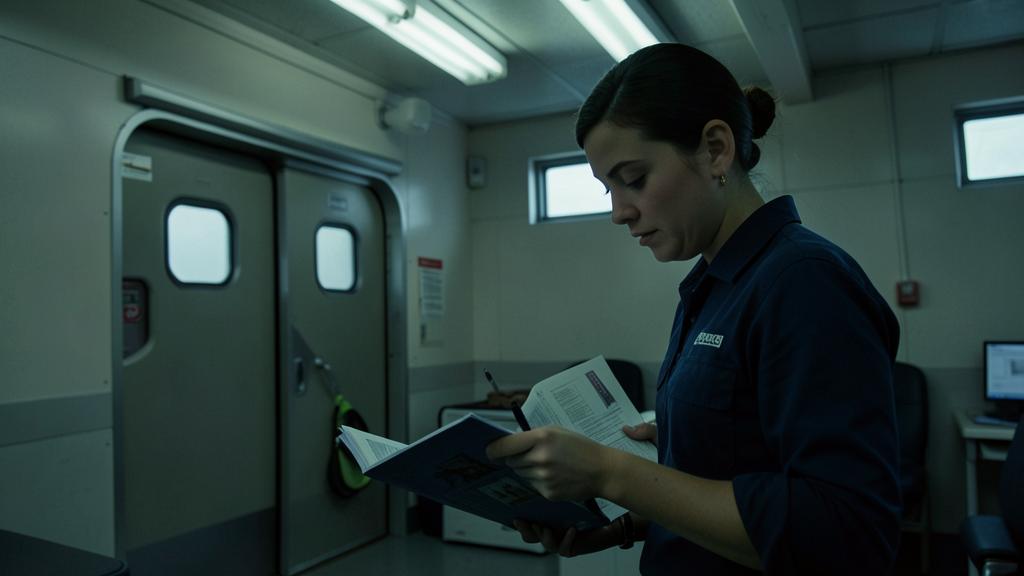
Twelve years on the line, a few thousand sectors on the same type, and the new employer announces a full course: same doors, same slides, same gestures, everything to relearn. The feeling of wasting one’s time is understandable, but it is mistaken. What a cabin crew member carries over when changing airlines is not what they think, and what they must rebuild is not what the course keeps repeating. The dividing line does not separate the known from the unknown: it runs between what a licence attests and what an organisation authorises.
A personal qualification on one side, a company authorisation on the other
The cabin crew attestation of safety training is issued to an individual, on completion of initial training and an examination conducted under European requirements by an approved organisation. It attests a foundation: general aviation knowledge, human factors, fire and smoke, survival, first aid, security, passenger handling. It travels with its holder within the area where the regulation applies and does not expire on its own; only a sufficiently long break in exercising its privileges closes it, at which point initial training and the examination must be redone.
This attestation, however, authorises no flight. What authorises flight is assignment by an operator, which requires operator conversion training specific to that operator, training on the type and variant flown, recurrent training and the associated check, plus any modules whose programme is approved in the company’s name. All of this is bound to the air operator certificate and the manual that carries it. When changing employer, you do not lose your qualification: you lose your authorisation. This is also why no airline can grant blanket credit for experience, even if it wanted to. What it must demonstrate to its authority is not that the person knows, but that they have been trained and checked under an approved programme, and that a record of it exists in its own files.
| Item | Who it belongs to | What happens to it on change |
|---|---|---|
| Cabin crew attestation of safety training | To the individual, issued under the authority of a member state | Presented and verified; nothing to redo as long as no long break has closed it |
| Medical fitness assessment | To the individual | Remains valid until its expiry; the new file resumes ongoing follow-up |
| Experience, sectors, operational seniority | To the individual, but proven by records held by the former operator | Governs access to certain functions; exempts from no module |
| Language proficiency | To the individual | A hiring asset and a network assignment criterion; the common working language is verified |
| Operator conversion, type and variant | To the operator, under an approved programme | Must be redone in full, even on a type already flown |
| Dangerous goods, security, crew resource management | To the operator | Must be redone under the new employer’s approved programme |
| Recurrent training and check | To the operator | Schedule restarted from the conversion completed at the new operator, whose records now govern |
There is no type rating in the cabin
This is the most counter-intuitive point for anyone comparing their situation to the flight deck’s. A pilot carries their type ratings on their licence: these are personal entries that follow the holder and are maintained through periodic checks. Nothing of the sort exists for cabin crew. The regulation does not create a type rating entered on an individual document; it requires the operator to train on the type and variant before any assignment, and to keep a record of it. Saying « I am rated on this aircraft » therefore has no legal translation on the cabin side. What exists is phrased differently: this person has been trained and checked by this operator on the configurations of its fleet.
The practical consequence is direct. Two operators of the same aircraft differ in cabin configuration, the location and model of emergency equipment, the type of extinguisher carried, the distribution of stations, the content and order of announcements, the division of tasks with the flight deck, the vocabulary of reports. The airframe is the same; the object of the training is not. A course is therefore not the repetition of something already acquired, but the learning of a different object that closely resembles the first.
When you change airlines, your basic safety training stays with you, but the specific training for that airline’s aircraft and procedures doesn’t. Even if you’ve flown the same plane before, you’ll need to learn the new airline’s way of doing things from scratch.
A cabin crew member trained on an Airbus A320 at Airline A changes to Airline B, which also operates A320s. While the aircraft is the same, Airline B may have different emergency equipment locations, evacuation procedures, or even the order of safety announcements. The crew member must complete full operator conversion training for Airline B, even though they’re already familiar with the A320.
Add to this the logic of the type cap. The regulation limits the number of types a single crew member may fly simultaneously, with a possible relaxation, subject to approval, when the aircraft are similar enough that equipment and procedures overlap sufficiently. This cap reflects an operational reality: recall under load degrades when too many configurations are held in parallel. A candidate arriving with a long list of types therefore does not bring a proportional advantage, but rather assignment flexibility and potential interference that the new operator will have to manage.
What experience actually buys
It buys no individual exemption. A reduction, when it exists, is not granted by an instructor faced with a file: it is written into the approved training programme, which may provide for credits on account of prior comparable training, on the same type and subject to recent currency. Requesting an equivalence on a personal basis therefore has no object; either the credit is written into the programme and it applies as a matter of right, or it is not, and no one on site has the power to invent it. The only useful time to raise the question is at hiring, with the training department, not on the first day of the course.
On the other hand, experience buys three real things. It opens access to functions: appointment as cabin manager requires a minimum operational seniority, a dedicated course and a check; seniority acquired elsewhere counts, the appointment itself does not. It buys speed of acquisition: an experienced trainee does not learn concepts, they re-index them, and their time shifts from understanding to memorising the differences. Finally, it buys reading the unwritten, which is the truly transferable value and the least measurable: knowing what temptations a tense stopover always produces, recognising the silence that precedes a cabin incident, sensing the moment a boarding flow is about to go wrong.
The hidden cost is not learning, it is re-indexing
For a beginner, instruction writes on a blank page. For a professional changing operator, it writes over an existing one. What is at stake is not the acquisition of knowledge, but the replacement of an already automated association: this signal, that gesture. New knowledge settles in within a few days; the old association does not fade, it is put into competition. Under load, in noise and urgency, it is the oldest and most repeated one that resurfaces.
Hence a signature that training departments know well: deviations in the first months rarely concern what the person does not know, but what they know too well, in the other version. The announcement made in the order used by the previous airline, the arming gesture performed in the old direction, the response to a call from the flight deck matching a different division of tasks. None of these deviations reflects a training gap in the sense a check would detect, since a check questions under conditions where there is time to think.
The second effect is temporal. Declarative knowledge reaches its maximum at the end of the course, at the very moment it is checked; the compliant automatism, on the other hand, is only built through use. Between the two opens a window in which the person is judged competent, believes themselves competent, and effectively is, as long as they have a second to choose. Sign-off does not close this window: it merely confirms the person holds their station in a nominal situation, nothing more.
The trap. The danger is not the radically different procedure: that one is obvious, prompts doubt, triggers a check. The danger is the almost identical procedure. A reversed order of announcements, a control whose direction of operation is inverted, a word in an evacuation command that flips the meaning, a reporting threshold expressed differently. None of this produces the sense of novelty that triggers vigilance: one believes one recognises it, so one does not inspect it, and the old gesture goes through. The remedy is not to review everything, but to identify during the course exactly where the two versions diverge only slightly.
Three durations, only one of which appears on the roster
Three durations coexist and are conflated in conversation. That of the course: a few weeks, depending on the number of types to cover and the share of security and dangerous goods modules. That of supervised line flying: a number of sectors set by the operator, on the order of a few dozen, until it deems sign-off warranted. The third appears on no roster, and it is the one that decides: the time it takes for non-normal cases to have been encountered at least once under the new reference framework.
This last one is not counted in hours of instruction but in variety of exposure. A go-around, an intoxicated passenger, an illness in cruise, a delay that pushes back the whole service, de-icing with passengers on board, a cabin equipment failure: each is the first opportunity to verify that the response produced is indeed the house one. On a dense short-haul network, the set is completed within a few months; on a low-frequency long-haul programme, it can take a full year, and the recurrent training deadline arrives before exposure has done its work.
This spread has a consequence for the operator as much as for the individual. An airline that recruits en masse just before a peak season mechanically arranges the encounter between its heaviest load and its least established automatisms: new entrants reach sign-off just as the programme intensifies. This is a planning fact, and it shows up in the reports of the first months far more reliably than in check results.
The right reflex. From the first week of the course, keep your own list of divergences: ten lines at most, only the points where the new reference framework differs slightly from the old one, never those where it differs greatly. Review it before each duty period during the first weeks, then before each return after a long rest. It is worth more than a general review, because it targets exactly the places where the old automatism can pass undetected, and it becomes obsolete on its own as the new gestures settle in.
Four departures, four programmes
The content of the relearning depends less on seniority than on the nature of the jump. Four situations recur, with blockers that have nothing to do with one another: direct mobility, moving under another authority, changing type, and returning after a break.
| Situation | Recognised without redoing | What is added | What governs the delay |
|---|---|---|---|
| Same type, same state | Attestation, medical fitness, experience, languages | Operator conversion, configurations, modules of the approved programme | The course scheduling calendar |
| Same type, other state | The same, subject to verification of the qualification by the new authority | Working language, national security programme, background check, employment formalities | Administration, almost never training |
| New type | The same, plus the professional foundation | Full type and variant training, arbitration on the number of types held | Availability of training resources and mock-ups |
| Return after a break | Variable: depends entirely on the length of the break | Refresher, or check, or resumption of initial training and the examination | The date of the last flight performed, not that of the last contract |
The fourth row deserves particular attention: it is the only one where time works against the person without any warning being issued. A short break calls for a refresher before return to line; a longer break reopens the check; a prolonged break closes the attestation itself. These thresholds are written down and are not negotiable. Above all, the date that triggers them is that of the last flight performed as a cabin crew member, not the end of the contract, which sometimes pushes the deadline back several months for someone who finished their period on the ground.
What to gather before the last flight
The most poorly anticipated cost item of a move is documentary. The new operator must have records to justify what it does not make the person redo; what it cannot obtain, it redoes, and what gets redone costs days of course, sometimes unpaid. Yet it is the former employer who holds the file, and it has no operational reason to give priority to the request of someone who has just left.
The most important documents to gather before your last flight are:
- Your training file with all dates: initial training, operator conversion, types and variants flown, recurrent training, checks, security, and dangerous goods modules;
- Your experience record (not the same as the training file): periods flown, types, functions held, any cabin manager appointments and their dates;
- Your medical file, including the currently valid assessment report;
- Employment certificates, which help prove a continuous career without unexplained gaps.
The right reflex. Request a full copy of your training file and your experience record while you are still in post, and check that the dates appear on them. An attestation stating « completed the training » without specifying when is worthless to a training department that must justify a credit to its authority. Keep these documents yourself, and keep them durably: they will serve again at the next move, and the company holding them may cease to exist before you do.
The trap. The costliest delay in an international move comes neither from the course nor from recognition of the qualification, but from the background check and the issuance of the restricted area access badge. These procedures require a continuous history over several years, and any period not covered by an identifiable employer will have to be documented otherwise. A gap year, a period of self-employment, an undeclared stay abroad are enough to hold up a file for weeks, even once training is complete and the crew member is expected on the line.
What remains to be checked, and the grey area that remains
Four points deserve to be read in the new operator’s documentation rather than assumed, and three should be asked before signing. The chapter of the manual describing the credits granted for prior training, because it determines the length of the course and its regime. The internal multi-type assignment rule, because it decides the competence-maintenance workload of the following years. The cabin manager appointment policy, where in-house seniority is often required in addition to professional seniority. Finally, the records regime, that is, the way the company keeps and communicates what will, one day, serve elsewhere.
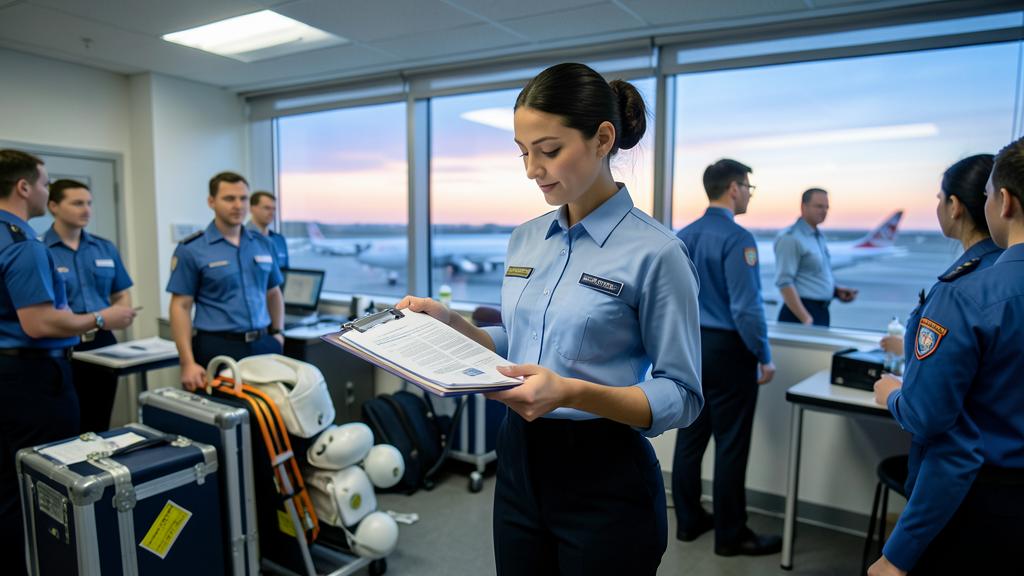
A grey area remains that regulation does not settle. Recognition of experience acquired elsewhere is not standardised: the texts set minimum seniority thresholds for access to certain functions, but nothing obliges an operator to count outside seniority the way its neighbour does. Two competing airlines, on the same aircraft and under the same authority, may treat the same file very differently, and this difference appears in no regulation: it lives in an internal policy, sometimes in a collective agreement. It is therefore a question to ask at recruitment, with the same precision as a question about pay; comparing practices between networks, on the forum, is worth more than discovering afterwards that ten years of seniority have been reset to zero for access to functions.
For anyone preparing to take up a new post, finally, what is expected has shifted. What an instructor looks for in a trainee coming from elsewhere is not the recitation of a manual just opened, but their ability to say where their own former reference framework diverges from the new one. Announcing the points on which the previous airline did things differently makes things legible, protects, and saves time for the person supervising. It is also the best answer to the early frustration: the course does not repeat what one already knows, it installs the exact place where what one knows has become wrong.
In all circumstances, the applicable regulation, the decisions of the competent authority and the operator’s approved documentation take precedence over this article, whose purpose is to describe a mechanism and not to serve as a procedure or as individual advice.
Questions fréquentes
Must a cabin crew member already trained on a type redo the course when joining another operator on the same aircraft?
Yes. For cabin crew, there is no personal type rating comparable to a pilot’s: training on the type and variant is delivered by the operator, under an approved programme, and its records belong to that operator. The new employer must demonstrate to its authority that the person has been trained and checked under its own programme. A reduction remains possible if it is written into that programme, never if it is requested on an individual basis.
Does the cabin crew attestation of safety training remain valid after resignation?
It remains valid: it is issued to the individual, not to the employer, and the end of a contract does not suspend it. What calls it into question is a prolonged absence from exercising its privileges, beyond which initial training and the examination must be redone. The clock starts from the last flight performed as a cabin crew member, not from the contract’s end date.
What documents should be recovered from a former airline?
The full training file with dates, the experience record detailing periods, types and functions held, the medical file with the currently valid assessment report, and employment certificates. These documents allow the new operator to justify any credit granted, and allow the background check to establish a continuous career. It is considerably easier to obtain them while still in post.
Does seniority acquired elsewhere count towards becoming a cabin manager?
On the regulatory side, the requirement is a minimum operational seniority as a cabin crew member, without distinguishing the employer, plus a dedicated course and a check. But the appointment itself is at the operator’s discretion, which may additionally require in-house seniority set by its internal policy or a collective agreement. Two neighbouring airlines therefore often treat the same file differently, and this is a point to verify at recruitment rather than afterwards.
How long does it take to be truly comfortable at a new airline?
The course lasts a few weeks and supervised line flying covers a number of sectors set by the operator, on the order of a few dozen, but the real settling-in period is measured in months. It ends once non-normal situations have been encountered at least once under the new reference framework, which depends far more on the density of the programme than on seniority. On a dense short-haul network the set is completed quickly; on a low-frequency long-haul programme, it can take a full year.
What is the main risk in the first months after a change of operator?
Substitution of automatisms, not ignorance. Observed deviations are almost always about elements known in another version: an order of announcements, a direction of operation, a reporting threshold. These almost identical elements trigger no sense of novelty, hence no verification, and the old gesture resurfaces under load. Keeping a written list of fine-grained divergences is the most effective remedy.


Leave a Reply
You must be logged in to post a comment.