
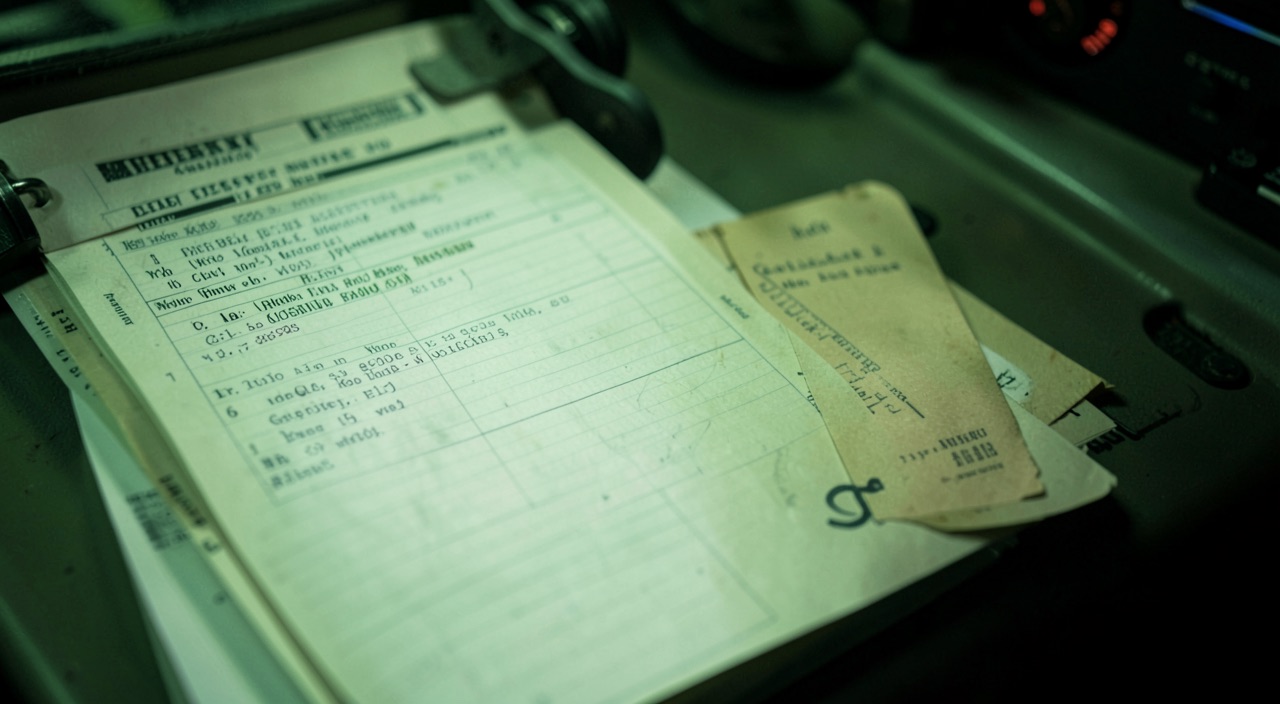
The aircraft technical log carries an open deferral under Category C, the part is quoted for delivery in about a fortnight, and the station only cares about one question: how long does this hold. Two questions hide inside that one — the exact date the time limit expires, and who has the authority to extend it. Neither is settled by the manufacturer’s master list: it knows nothing of your fleet, your routes, your approvals, or your workshops. Everything hinges on the document your operator derived from it, and on a principle that runs in one direction only.
What the master list establishes, and what it does not know
The master list is a document produced by the type certificate holder, assessed and approved by the authority. It answers a question of airworthiness, not of operations: for this aircraft type, can a given item be inoperative at dispatch without eroding the safety level targeted by the certification basis, and under what compensating conditions? The answer is written in columns — the item, the number installed, the number required for dispatch, then a remarks column that in practice carries the essential part: the conditions, the symbols pointing to an operational or maintenance procedure, and the repair category.
What it does not do is just as significant. It does not know the actual configuration of a given serial number: two aircraft of the same type differ by an option, a cabin layout, a navigation fit, an avionics standard. It does not know the network: nothing in the remarks column knows whether you fly in reduced vertical separation minimum airspace, in extended diversion time operations, in low-visibility approach, or under a demanding navigation specification. It knows neither your workshops, nor your spares stock, nor the language of your manuals. Finally, it says nothing about the channel through which a crew will learn that an item is inoperative — and that is often where deferrals come apart.
The preamble deserves better than the glance it usually gets. It carries the definitions that make the rest enforceable: what a day is, when the clock starts, what ‘as required by operations’ means, how the procedure symbols are read, and the fate reserved for items absent from the list. The default rule is strict and routinely forgotten: whatever is not listed, and is required by the certification basis, an airworthiness directive, or an operating rule, must work. A minimum equipment list never authorizes anything by its silence.
Two neighbouring instruments are commonly confused with it. The configuration deviation list, drawn from the flight manual, deals with missing airframe parts — a panel, an access door, a fairing — not with inoperative equipment. The non-essential equipment and furnishings programme deals with items that play no role in either airworthiness or operations: an armrest, a curtain, a trim panel. Each has its own approval and its own time-limit logic. Deferring an item under the wrong instrument is deferring without a basis.
The master list is a general rulebook for all aircraft of a type, but it doesn’t know your specific plane or how you fly it. Your operator’s list is a custom version of that rulebook, tailored to your aircraft and operations. You can’t make it more lenient than the master list, but you can make it stricter.
An A320neo’s master list might allow flying with one of two autopilots inoperative, but your operator’s list might require both to work if you fly in RVSM airspace. The master list doesn’t know your routes, but your list does.
Derivation: a ratchet that turns only one way
The operator’s list is built from the master list and can never be less restrictive than it. The principle seems trivial; its consequences are less so, because it applies to each column independently, not to the document taken as a whole.
Toward the restrictive side, everything is open: withdraw an item for which no relief is wanted, increase the number required at dispatch, add a condition, restrict a relief to certain routes or certain seasons, shorten a time limit. Toward the permissive side, nothing is possible: you cannot add an item the master list does not address, cannot extend a time limit, cannot remove a procedure symbol, cannot rewrite a condition to empty it of substance. No industrial constraint, no parts unavailability, no schedule imperative creates an exception to this one-way direction.
That said, derivation is not an expurgated copy: the operator must add what the manufacturer could not write. The procedures called up by the symbols do not exist in the master list — it requires them, the operator drafts them, for its own crews and its own mechanics. The list must reflect the fleet’s actual configuration, aircraft by aircraft where the fleet is not uniform. It must cross-reference the specific approvals held, failing which the crew will have to do so themselves under the pressure of departure. It must state where the placard is affixed and through which channel the deferral reaches the flight deck.
| Master list column | Tightening allowed | Relaxation forbidden |
|---|---|---|
| Listed item | remove it from its own list, or grant relief for it only on certain routes | add an item the master list does not address |
| Number required at dispatch | increase it | lower it |
| Conditions and procedure symbols | add to them, clarify them, make them more restrictive | remove a symbol, or empty a condition of its substance |
| Time-limit category | shorten it | extend it, or reclassify an item into a longer category |
| Preamble and definitions | supplement them, make them more explicit | remove a definition that limits a relief |
Approval of this list by the competent authority is not a stamp placed on a frozen document: it carries an ongoing obligation to keep it current. When the master list is revised, the operator must incorporate the applicable changes within a bounded time — on the order of three months in European practice — and a revision may just as well tighten as relax. A fleet flying on a lapsed revision does not have a paperwork problem: it is applying reliefs that no longer exist.
A deferral is a dated maintenance act
The word ‘tolerance’ does damage, because it suggests a state of affairs that would settle in on its own. A deferral is a sequence of acts, each traceable, and omitting a single one renders the whole thing invalid.
The finding is entered in the technical log: it is this entry, not the moment when the decision to defer is made, that fixes the starting point of the time limit. The decision to apply the list identifies the exact item, not a neighbouring item with a similar name. The maintenance procedure called up by the corresponding symbol is carried out and certified by authorised personnel: deactivate, isolate, secure, check for absence of effect on neighbouring systems. The placard is affixed at the point of use, in plain sight. The item moves into the list of open deferrals, with its category and its due date. And the operating procedure, if one exists, must reach the crew through a channel that does not depend on their curiosity.
The trap: the placard without the procedure. A placard affixed while the maintenance procedure has not been carried out and certified defers nothing — the aircraft is not in the configuration the list assumes, and the relief falls away. The mirror case is even more frequent: an operating procedure that stays in the maintenance documentation and never reaches the flight deck. The crew discovers the placard at the pre-flight walkaround without knowing what limitation it carries, and applies a list of which they have read only half.
There remains a question the list addresses only imperfectly: cumulative effect. Each item was analysed on its own; a small number of combinations were analysed explicitly, through interdependency cross-references. The others were not. Three harmless-looking deferrals taken separately can together remove the redundancy a fourth assumed was in place, or concentrate several task overloads onto the same crew. The judgement falls to the commander, and the list does not relieve them of it.
Time limits: what the clock counts, and the only extension allowed
Four categories organise the duration during which one may fly with the item inoperative. Category A has no standard duration: the remarks column carries it, and it may be expressed in days, cycles, flights, or operating conditions. The other three have reference durations: three consecutive calendar days, ten, one hundred and twenty.

The point most often misapplied is not the duration but its starting point. The day of the finding does not count; the clock starts at the beginning of the following day. A defect logged on the 3rd under Category C therefore runs until the end of the 13th — not the 12th, not the 14th. And the calculation is based on the date of entry in the technical log, not on the date the placard was affixed, not on the date of the workshop’s decision, not on the date of the first subsequent flight.
| Category | Reference duration | Start of the count | Extension |
|---|---|---|---|
| A | no standard duration: carried by the remarks column, in days, cycles, flights, or conditions | as stated in the remark | no |
| B | three consecutive calendar days | at the start of the day following the finding | once only, duration no greater than the original |
| C | ten consecutive calendar days | at the start of the day following the finding | once only, duration no greater than the original |
| D | one hundred and twenty consecutive calendar days | at the start of the day following the finding | once only, duration no greater than the original |
The extension exists, and it is tightly bounded. It applies only to categories with a standard duration, never to Category A. It is unique: once, for a duration no greater than the original, with no renewal. It requires an approved procedure, a designated decision-maker, traceability, and notification of the authority according to the arrangements adopted. What it is not: a planning tool. It was designed for the part that has not arrived, not for the workshop slot that was never booked. An operator whose extension rate is drifting upward is not describing regulatory flexibility, it is describing a supply problem.
The right reflex: recalculate the due date from the logbook entry, and read the category in your own list, not in the master list. An operator is fully entitled to have shortened a time limit, and it is theirs that applies — the reflex of checking ‘what the manufacturer says’ here leads to the opposite of the error one fears. The duration, moreover, is a maximum and not an entitlement: rectification is expected at the first genuine opportunity, which rules out letting a time limit run to its full term for no reason other than that time remains.
Two systems, two approval instruments
The grammar is shared on both sides of the Atlantic: the same columns, the same procedure symbols, the same time-limit categories, the same single extension. What differs is the instrument that makes the list enforceable, and the path by which a revision becomes mandatory.
In Europe, the master list is an element of the operational suitability data attached to the type certificate: it is approved by the European agency, on the same footing as the type’s minimum training programme. The operator’s list, meanwhile, is approved by that operator’s competent authority, the one that issued its air operator certificate. Two approvals, two levels, and an explicit obligation to incorporate revisions within a bounded time.
In the United States, the master list is drawn up by a type-specific flight operations evaluation board, convened around the federal administration, the manufacturer, and operators, then published by the administration together with its preamble and policy documents. The operator’s list becomes enforceable through a paragraph of the operations specifications attached to the certificate and, for non-commercial operations, through a letter of authorization. This is where the real structural difference lies: this letter allows a private operator to carry and apply the master list itself, without deriving its own document from it. There is no equivalent in Europe, where the reasoning always remains that of a list established by an identified operator.
On time limits, the convergence is stronger than one might think: the same reference durations, the same exclusion of the day of the finding, the same single extension subject to authorization. The divergence lies in the vehicle for that authorization — an approved procedure built into the list on one side, an operations authorization paragraph on the other — and in the timetable for incorporating revisions, stated as a general obligation in Europe, carried by the revision itself and negotiated with the assigned inspector in the United States.
| Step | Europe | United States |
|---|---|---|
| Drafting of the master list | type certificate holder | type-specific flight operations evaluation board, convened around the administration |
| Approval of the master list | element of the operational suitability data, approved by the agency | published by the administration, with preamble and policy documents |
| What makes the operator’s list enforceable | approval by the operator’s competent authority | paragraph of the operations specifications attached to the certificate |
| Non-commercial operation | list established by the operator, under a relaxed regime depending on the nature of the aircraft | letter of authorization allowing the master list to be applied as is |
| Incorporation of revisions | general obligation, within a bounded time | timetable carried by the revision, negotiated with the assigned inspector |
| Extension of a time limit | approved procedure, built into the list | authorization carried by the operations specifications |
How far the list commits
The minimum equipment list decides the flight’s commitment. It does not decide its conduct. A fault that appears after the commitment point falls under abnormal procedures and the commander, not the remarks column. The list can inform their decision — after all, it indicates what the type can do without that equipment — but it neither authorizes nor forbids it.
This commitment point is a practical grey area. Between chock removal, the start of taxi under its own power, and brake release at take-off, the definition chosen changes the answer to a very concrete question: must a defect appearing at the parking stand, engines running, be treated under the list? The preamble settles it, provided it has been read before the stopover where the question arises.
Second limit: a relief allowed in general may be excluded by a specific approval. An item that permits dispatch under routine operations may prohibit reduced vertical separation minimum airspace, extended diversion time operations, low-visibility approach, or a given navigation specification. Well-designed lists carry this information in a dedicated column; others force you to cross-reference two documents at the worst possible moment.
Third limit: when the list grants nothing, the flight is not necessarily impossible, but it changes regime. Ferrying an aircraft to a workshop with an item the list does not cover falls under a specific flight permit, with its own conditions — reduced crew, no passengers, route or weather restrictions. This is not an extension of the list: it is a different instrument, and it is not signed off at the station counter.
What to go and check in your own documentation
Seven points can be checked directly against your list and the manual that accompanies it, and they prevent most of the deferral errors observed in operations.
- The preamble: definition of the flight’s commitment point, definition of a day, fate of unlisted items, reading of the symbols.
- Your operator’s departures from the master list: which items have been withdrawn, which time limits shortened. That list is rarely highlighted, and yet it is the one that applies.
- The extension procedure: does it actually exist, who decides it, what traceability, what notification of the authority.
- Where the operating procedures live — in the list, in the operations manual, in a supplement — and through which channel they reach the flight deck before departure.
- The existence of a column, or a cross-reference, matching against the specific approvals held by the operator.
- The revision status of your list against the currently applicable revision of the type’s master list.
- The boundary with the configuration deviation list and with the non-essential equipment programme: knowing which of the three instruments applies before opening a deferral.
The grey area that will remain is that of cumulative effect. No operator publishes an analysis of every combination of deferrals, and no list ever will: the number of cases is out of reach. It is offset by a systematic reading of the list of open deferrals before every departure, and not only of the placards visible from the seat — a deferral in the hold or the avionics bay reminds no one of anything. For those preparing a type rating or a line adaptation, it is in fact the mechanism that gets tested, not the table: they ask how a due date is calculated and who can extend it, rarely what Category C is worth. Operational feedback on these points circulates on the FL330 forum, and formal preparation on the topic is part of the modules offered by FL330 Formations.
This article describes a mechanism, not your situation. In the event of any discrepancy, the applicable text and your operator’s approved documentation — minimum equipment list, operations manual, maintenance procedures, and associated specifications — prevail over what is written here.
Questions fréquentes
Does the day the defect is found count toward the rectification time limit?
No. The day of the finding is excluded from the count: the clock starts at the beginning of the following day. A defect logged in the technical log on the 3rd under Category C therefore runs until the end of the 13th. The calculation is based on the date of entry in the logbook, not on the date the placard was affixed or the date of the workshop’s decision.
Can an operator grant a relief that the master list does not provide for?
No, under no circumstances. The operator’s list can only be more restrictive than the master list: it may remove items, increase the number required at dispatch, add conditions, or shorten time limits — never the reverse. An item absent from the master list and required by the certification basis or by an operating rule must work at dispatch.
Can a Category C time limit be extended twice?
No. The extension is single, and its duration cannot exceed the original duration, under an approved procedure and a designated decision-maker. It applies only to categories with a standard duration, so never to Category A. Once that term has passed, the item must be rectified before the aircraft can depart.
What should be done about a fault that appears after taxi has begun?
It falls outside the scope of the minimum equipment list, which governs the flight’s commitment, not its conduct. Handling it falls under abnormal procedures and the commander’s decision. The exact point separating the two regimes is defined in the preamble of the operator’s list, and that definition is worth knowing before the stopover where the question arises.
What is the difference between the minimum equipment list and the configuration deviation list?
The minimum equipment list deals with equipment that is installed but inoperative; the configuration deviation list, drawn from the flight manual, deals with airframe items that are physically absent, such as a panel or a fairing. The two have separate approvals and separate time-limit logics. A third instrument, the non-essential equipment and furnishings programme, covers what plays no role in either airworthiness or operations.
Can a US non-commercial operator use the master list directly?
Yes, and that is the main structural difference between the two systems. A letter of authorization issued by the federal administration allows a private operator to carry and apply the type’s master list as its minimum equipment list, without deriving its own document from it. In Europe, the reasoning remains that of a list established by an identified operator and approved for that operator.


Leave a Reply
You must be logged in to post a comment.