
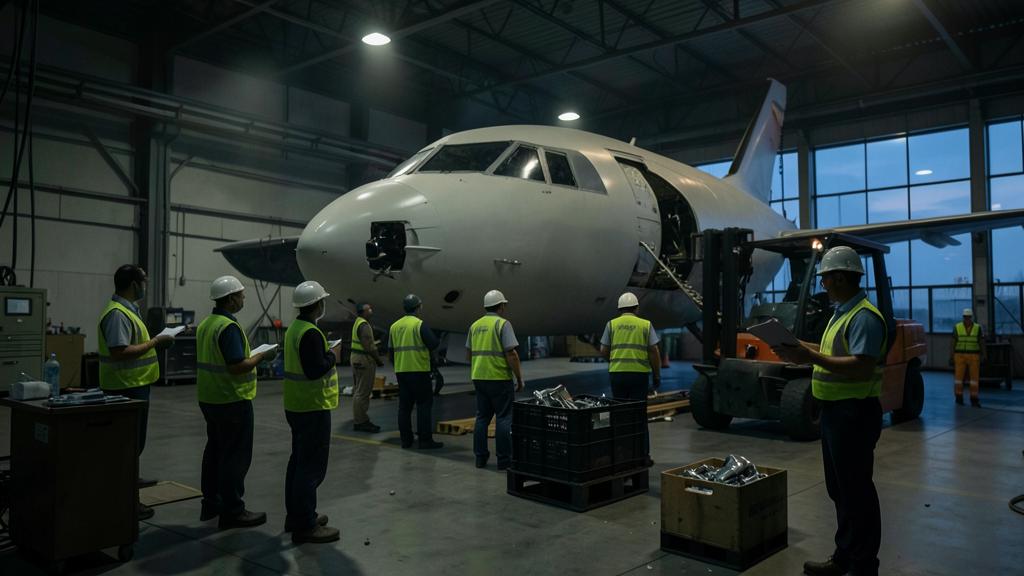
The photographs taken when a final airframe rolls out of the hall show an ending. Contractually and legally it is the opposite: the last delivery starts the longest clock in the programme. Airframes routinely fly for two to three decades, so the aircraft leaving on that last day commits its design holder to obligations that will still be running when the next generation of programmes is itself in service — and it does so at the exact moment the organisation is dismantling the tooling, the supply chain and the people who know how the thing was made.
The certificate does not close with the factory
Two approvals govern an aircraft programme and they have nothing to do with each other in law. The type certificate covers the design: it says this configuration meets the applicable airworthiness code. The production organisation approval covers manufacture: it says this organisation can build conforming articles repeatably. Ending production surrenders scope under the second. It does not touch the first.
That distinction carries the whole subject. Under the design and production rules, and behind them the obligations that States of Design accept under the ICAO framework, a type certificate holder carries continuing obligations for as long as any aircraft of the type remains in service anywhere. It must maintain a design organisation capable of supporting the type. It must keep the instructions for continued airworthiness current and available to operators. It must report failures, malfunctions and defects that could contribute to an unsafe condition. And when an unsafe condition is identified, it must produce the corrective design action that an airworthiness directive will then mandate.
None of those obligations has a fixed expiry. They end when the fleet ends, which is a decision made by operators one aircraft at a time, not by the manufacturer.
Even after production stops, the aircraft maker must keep supporting the design for as long as any of those planes are flying. This means maintaining manuals, fixing safety issues, and keeping spare parts available – all without knowing exactly when the last plane will retire.
The Airbus A300 entered service in 1974 and production ended in 2007. Yet as of 2023, over 200 A300s remain in service, meaning Airbus must still maintain design documents, issue airworthiness directives, and support operators with technical queries – nearly two decades after the last one was built.
| Element | Status after line closure |
|---|---|
| Production organisation approval, for that type | Ends or is reduced in scope. New conforming aircraft can no longer be built |
| Type certificate | Continues. It can be transferred, but it does not lapse because production stopped |
| Design organisation capability for the type | Must continue, at a level sufficient to support the fleet and to answer an unsafe condition |
| Instructions for continued airworthiness and their revisions | Continue, including the maintenance, structural repair and component documentation operators depend on |
| Occurrence and defect reporting to the authority | Continues unchanged |
| Obligation to develop corrective action for an unsafe condition | Continues, and gets harder as engineering resources are reassigned |
| Contractual product support: spares availability, response times, training | Continues on its own terms, set by the purchase agreement rather than by any regulation |
| Supplier long-term agreements | Continue only to the extent they were written to survive production. This is where the gaps appear |
Tooling: the decision that cannot be reversed
A production line is not mainly a building. It is a set of hard tooling — assembly jigs, drill plates, forming dies, moulds, test rigs — each one qualified against the drawing set, each one occupying floor space that has just become available for something more profitable.
Some of that tooling is only useful for building complete aircraft and can be scrapped without consequence. Some of it also produces spare parts, and the distinction between the two is not always obvious when the decision is taken. A forming die for a fuselage frame is production tooling until an operator suffers a ground collision and needs that frame; then it is the only economic route to a part that would otherwise have to be re-engineered from scratch.
Once tooling is scrapped, recovering the part means reconstituting a manufacturing route: retrieving the drawing and specification set, finding a supplier able to work to it, producing new tooling, qualifying the process, running first article inspection, and demonstrating conformity to the approved design. For a structural item the sequence is measured in quarters, not weeks, and the cost bears no relationship to the original part price. Programmes that come out of production well are the ones where somebody spent the money to survey, mark and store the spares-relevant tooling before the hall was cleared — because that survey is impossible to do afterwards.
The trap. Tooling storage decisions are usually taken by facilities and finance, on a floor-space argument, while the people who could identify the spares-relevant subset are being reassigned to the next programme. The window in which the right question can be asked is short and closes quietly.
Obsolescence has four faces, and they behave differently
Support engineers use obsolescence as a single word for four unrelated failure modes. Separating them is what makes the problem manageable, because each has a different lead time and a different fix.
| Mechanism | What triggers it | Route out |
|---|---|---|
| Component obsolescence | A semiconductor, connector or display is discontinued by its manufacturer, typically on a consumer-electronics timescale rather than an aerospace one | Lifetime purchase while stock exists, an approved alternative part, or a redesign of the assembly with requalification |
| Source obsolescence | The sole foundry, forge or specialist processor exits the business or the sector | Qualify a new source: process qualification, first article inspection, and design holder acceptance. Long, and rarely cheap |
| Material and process obsolescence | A substance loses regulatory acceptability — chromates and cadmium in surface treatment are the standing European examples | Substitute the process and requalify everything that depended on its properties, including repair schemes in the manuals |
| Knowledge and data obsolescence | Native design data sits in formats or systems no longer readable, and the engineers who built the configuration retire | Migrate and revalidate the archive while somebody can still confirm it is right. Impossible to do late |
The fourth row is the one that gets least budget and causes the most damage. A drawing set that cannot be read is functionally equivalent to a drawing set that does not exist, and the discovery is usually made under time pressure, when an operator needs a repair scheme for damage the structural repair manual does not cover.
The support horizon is contractual, not regulatory
Ask how long a manufacturer must support a type and you will get a number. Ask where the number comes from and the conversation changes, because it is almost never a regulatory figure. Continuing airworthiness obligations have no term. What has a term is the product support commitment in the purchase agreement: spares availability, publication revisions, technical response times, training availability, and the notice required before any of them is withdrawn. Those terms are negotiated, they differ between customers of the same type, and the strong ones were obtained by launch customers with leverage.
| Horizon | Governed by | Can it be shortened? |
|---|---|---|
| Continuing airworthiness support for the type | The design and production rules, and the State of Design’s obligations | No, while aircraft remain in service |
| Spares availability commitment | The product support annex of the purchase agreement | Yes, by expiry or by a notice period the contract allows |
| Publication and data access | A licence, usually renewed periodically and priced per fleet | Yes, by price. A shrinking fleet is a weak negotiating position |
| Supplier component support | The supplier’s own end-of-service-life policy and its agreement with the airframer | Yes, and this is where surprises originate |
| Repair capability at approved maintenance organisations | Commercial viability, tooling and trained staff | Yes, silently, as shops stop reinvesting in a declining type |
Read that table from an operator’s seat and the exposure is obvious. The one guarantee that cannot be withdrawn is the safety one. Everything that makes the aircraft economically operable — parts on a shelf, a manual you can read, a shop that will take the component — is commercial, and commercial support follows fleet size.
When the design holder can no longer answer
The awkward case is an unsafe condition on a type whose design organisation has shrunk to a handful of people. The obligation to produce a corrective action does not scale down with the fleet, and an airworthiness directive is not negotiable: if the mandated action cannot be performed, the aircraft do not fly. Alternative methods of compliance exist and are used, but somebody with design privileges still has to write and justify them.
Two structural responses recur. The type certificate can be transferred to an organisation that specialises in supporting mature types — a transfer that requires authority approval and evidence that the transferee holds the design capability and the data to discharge the obligations. Done early, while the original engineering team can still hand over knowledge rather than boxes, it works well. Done late, it transfers an archive nobody can interpret.
The second response is that support capability migrates outward. Independent design organisations develop repair schemes and modifications, maintenance organisations retain type expertise the manufacturer has let go, and parts appear through approval routes outside the original design holder — the parts manufacturer approval route in the United States, and in Europe a design approval under the parts and appliances provisions of the design rules. The two systems are not equivalent and the differences matter when a fleet is registered across both, so a European operator cannot assume that a part accepted on a United States register is usable without further work.
What operators actually do about it
Fleet planners treat post-production support as a curve rather than a cliff, and they watch three indicators. The first is the size of the active fleet, because teardown of retired aircraft becomes the dominant source of used serviceable material once enough of them are being parted out — and then thins again when too few remain. The second is the count of items on the manufacturer’s end-of-service-life notices, which is the earliest formal warning that a subsystem is becoming unsupportable. The third is shop capability: when the number of approved repair stations willing to accept a component starts to fall, turnaround times lengthen before availability does.
The right reflex. Read every end-of-service-life and last-time-buy notice as a dated planning input, not as correspondence. Each one carries a decision point — buy now, redesign, or plan the fleet exit before the item becomes the constraint — and the notice period is the only time you will get to choose between them. Filing them unactioned is how an operator discovers an unobtainable part on an aircraft on jacks.
Residual value follows the same curve with a lag. An out-of-production type holds value while parts are plentiful and manuals are affordable, then falls faster than its remaining airframe hours would suggest, because the market prices supportability rather than structure. Lessors know this precisely; operators sometimes discover it at the wrong end of a lease return condition.
Why the last delivery deserves more attention than it gets
The end of a production line is treated as a communications event and a factory-floor logistics exercise. It is neither. It is the moment at which a set of obligations with no expiry date is handed to an organisation that is simultaneously losing the tooling, the supply agreements and the individual memory needed to discharge them — and the moment at which every operator of the type acquires a commercial exposure that will not appear in any regulation they can consult.
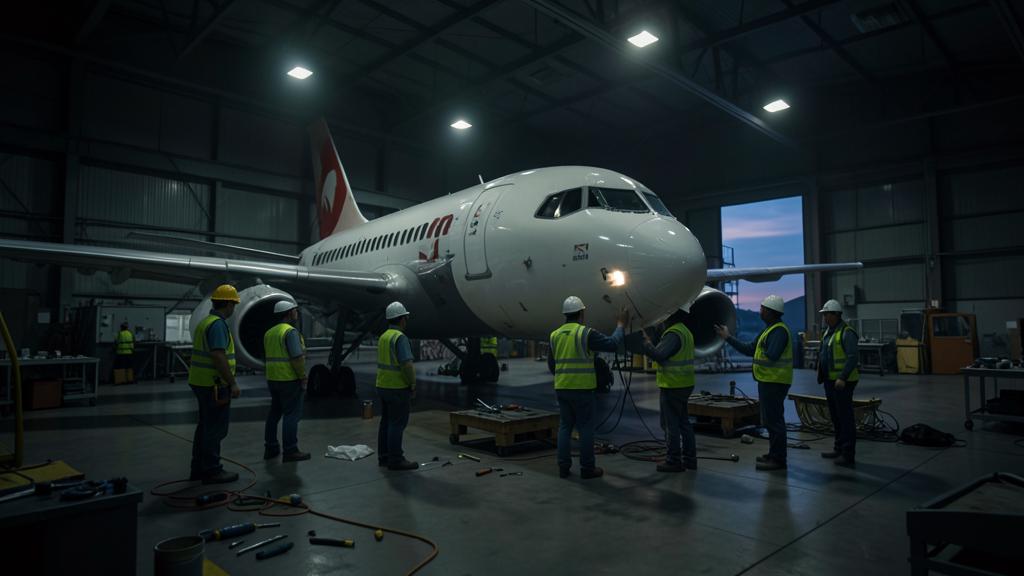
The programmes that age gracefully are the ones where the questions were asked while the hall was still full: which tooling produces spares, which suppliers have written post-production terms, which data cannot be read in ten years, and who will hold the certificate in twenty. None of those questions can be answered afterwards, and all of them are cheap to answer in advance. The industry’s record on asking them is uneven, which is why post-production support keeps generating engineering work long after the programme has stopped being news — a corner of the sector covered across the FL330 resources.


Leave a Reply
You must be logged in to post a comment.