
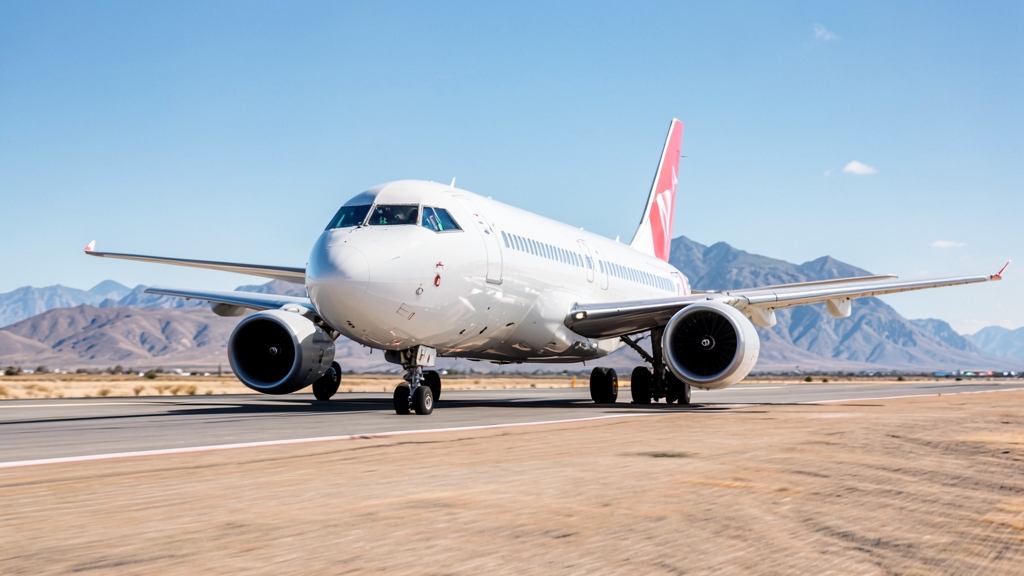
Holding the nosewheel on the ground past the point where instinct says rotate, on a day when the aeroplane is already heavy, looks from the flight deck like a mistake being made deliberately. It is in fact a trade being executed: runway that would otherwise go unused is being converted into climb gradient, and climb gradient is being converted into payload. The technique is worth real weight — but only in a narrow set of conditions, and there is one obstacle geometry in which it quietly costs margin instead of buying it.
The regulated takeoff weight is a lowest-of, and the loser tells you what to do
The weight that may be carried is the lowest of a family of independent limits, each answering to something different: the runway available, the one-engine-inoperative climb capability, the obstacles beyond the end, the tyres, the brakes, the surface condition, the structural limit on the certificate. The tool prints one answer; the useful information is which of those limits produced it.
On a short runway at sea level in winter, field length binds. On a long dry runway at high elevation or high temperature — precisely where thrust is scarcest and payload matters most — the climb limit very often binds instead, and the field-limited weight sits comfortably above it. That gap is the whole subject: runway paid for, planned for and maintained, and not used.
Increased-V2 takeoff — improved climb, overspeed takeoff, depending on whose manual you read — exists to spend it.
Why the minimum V2 is a floor, not an optimum
The speed schedule is built from certification floors. V2 must clear the reference stall speed in the takeoff configuration by a defined margin — 1.13 VSR for most jets, less for those certified with provisions for a significant reduction in the engine-out stall speed — and it must clear the minimum control speed in the air by its own margin. VR must be high enough that the aeroplane can reach V2 by the screen height, and high enough above VMCA to be flyable. V1 is bounded below by VMCG and above by VR and by the maximum brake energy speed.
Every one of those is a constraint about control. None is a statement about climb performance. At the minimum V2, a jet in takeoff configuration with an engine out sits well down the back of its drag curve: induced drag is high, excess thrust is thin, and the gradient — thrust minus drag, over weight — is worse than it needs to be.
Increase the speed and the picture improves. Induced drag falls faster than parasite drag rises, excess thrust grows, and the gradient climbs towards a maximum somewhere above the certified minimum, then falls away again as parasite drag takes over. The minimum V2 is not the best V2 for climbing; it is the lowest speed at which the aeroplane is certified to be safe.
The plane’s takeoff speeds are set to be safe, not necessarily the best for climbing. Going faster than the minimum speeds can improve climb performance, but only if the runway is long enough to handle the longer takeoff roll.
On a hot day at Denver (elevation 5,430 ft), an Airbus A320 with a long runway might use increased V2 to carry more passengers. The longer roll (say, 6,500 ft instead of 5,800 ft) allows a steeper climb, increasing the takeoff weight by 2,000 lbs while still clearing obstacles.
Buying gradient with concrete
The mechanism is that simple: raise V1, VR and V2 together by an increment, and the second-segment gradient at the new V2 is better than it was. A better gradient means a higher weight can meet the same certified requirement — the climb-limited weight goes up.
The bill arrives at the other end. Higher speeds mean a longer acceleration, so both the takeoff distance required and the accelerate-stop distance required grow, and the field-limited weight falls. The two curves move towards each other, and the maximum usable increment is where they meet. Past it the runway binds again and the extra speed buys nothing.
| Limit | Effect of raising V1, VR and V2 | Why |
|---|---|---|
| Climb-limited weight | Increases — this is the entire point | The one-engine-inoperative gradient at V2 improves as speed moves towards the optimum |
| Field-limited weight | Decreases | More runway is consumed accelerating to a higher V1 and VR, in the go case and the stop case |
| Obstacle-limited weight | Depends on obstacle distance — better far out, possibly worse close in | The net flight path is steeper but starts further down the runway |
| Tyre speed limit | Margin shrinks | The limit is a ground speed; a higher VR eats into it, and tailwind, elevation and temperature eat further |
| Brake energy limit | Margin shrinks | A rejected takeoff at a higher V1 puts more energy into the brakes; VMBE can become the cap on the increment |
| Structural maximum weight | Unchanged | It is a certificate limit, indifferent to how the aeroplane is flown |
| VMCG floor on V1 | Unchanged, and no longer relevant | The technique only ever pushes V1 upward, away from that floor |
Where the gain stops
Four things can cap the increment before the two curves intersect. The AFM publishes a maximum increment, and it is not to be extrapolated. Tyre limit speed is a hard ground-speed number that a hot day, a high field and a tailwind bring surprisingly close. Maximum brake energy speed caps V1, and with it the whole schedule. And the structural maximum takeoff weight ends the discussion: at the certificate limit there is nothing to gain and no reason to accept a longer roll.
What is available is worth having, but it is a property of that runway, that day and that aeroplane; no rule of thumb is worth carrying between them. The only number that means anything is the one the tool produces, and the only useful habit is knowing which limit it traded against.
The obstacle geometry that punishes the technique
This is the part that gets missed, because it inverts the intuition that a steeper climb is always better.
The net takeoff flight path does not begin at the runway threshold. It begins where the aeroplane reaches the screen height — 35 ft, or 15 ft where the applicable rules allow wet-runway credit — and that point moves further down the runway when the speeds are raised. So an increased-V2 takeoff produces a flight path that is steeper but displaced forward.
Against an obstacle several miles out the displacement is trivial and the extra gradient accumulates over the whole distance: the technique wins easily. Against a close-in obstacle just beyond the runway the two effects fight, and the displacement can cost more vertical margin than the improved gradient gives back. The obstacle-limited weight then falls while the climb-limited weight rises.
An integrated tool computes all of this and hands over the governing answer without comment. A crew working from AFM tables by hand has to check the obstacle case separately and explicitly — and the same caution applies to an engine-out departure with a turn in it, where bank angle costs gradient exactly where the geometry is tightest.
The trap. “Steeper is safer” stops being true when the start of the climb moves. Improved climb changes both the slope and the origin of the net flight path, and only one of those changes is in your favour. Whenever the limiting case is an obstacle in the first mile or two, verify the technique rather than assume it.
What the gradient has to deliver in the first place
The requirement being satisfied is specific. The second segment runs from the point where the landing gear is fully retracted to an acceleration altitude of not less than 400 ft above the runway, flaps in the takeoff setting, the remaining engines at their takeoff rating and the aeroplane at V2. It is the most demanding of the climb segments and it is what usually sets the climb-limited weight.
| Engines | Gross gradient required, second segment | Reduction applied to obtain the net flight path |
|---|---|---|
| Two | 2.4 % | 0.8 % |
| Three | 2.7 % | 0.9 % |
| Four | 3.0 % | 1.0 % |
The net flight path is what must clear obstacles, by 35 ft vertically, inside the accountability area. The reduction is not a safety pad the crew may spend: certified gross performance was measured on a new aeroplane flown by a test pilot, and the net path is the regulator’s estimate of an ordinary aeroplane on an ordinary day. Improved climb raises the gross gradient and the same reduction is applied to it, so the benefit passes through — but nothing about the technique makes the aeroplane exceed its certified numbers.
Wet, contaminated, and the stop case
On a wet or contaminated runway the accelerate-stop distance usually binds, and the technique typically disappears — because the one thing improved climb does to the stop case is make it worse. Raising V1 means rejecting later, faster, on a surface with less braking available. The wet-runway screen height reduction is a concession on the go case, not on the stop case.
There is also a judgement outside the arithmetic. A higher V1 on a contaminated runway can be entirely legal and still a poor bet: the accelerate-stop calculation assumes a reject initiated at V1 with no hesitation, maximum braking, and a friction level inferred rather than measured — assumptions that all soften on a wet surface. Where the tool offers the increment and the weight does not need it, taking the lower schedule is defensible.
| Situation | Verdict | Reason |
|---|---|---|
| Long dry runway, high elevation or high temperature, climb-limited | Pays, often substantially | The gap between field-limited and climb-limited weight is exactly what the technique spends |
| Distant limiting obstacle | Pays | The improved gradient accumulates over the distance and swamps the forward displacement |
| Close-in limiting obstacle | Verify, do not assume | The displaced start of the net flight path can cost more than the gradient gains |
| Field-limited runway | No gain | There is no spare runway to convert; the increment is zero by construction |
| Wet or contaminated surface | Usually unavailable, and undesirable even when offered | The accelerate-stop case binds, and a higher V1 makes the reject worse |
| Already at structural maximum takeoff weight | No reason to use it | Nothing more can be carried; the longer roll is bought for nothing |
| Strong tailwind, tyre or brake limited | Capped or unavailable | Tyre limit speed and maximum brake energy speed both cut the increment short |
Improved climb and reduced thrust are competing claims on the same runway
Spare runway can be spent once. It can buy reduced thrust — assumed temperature or a derate — which lowers turbine temperatures and buys engine life and shop-visit interval. Or it can buy climb gradient, which buys payload. It cannot buy both at full value, and an operator’s cost model decides which claim wins on a given sector.
The two thrust reductions are not interchangeable, and the difference matters when something fails. An assumed-temperature reduction is a calculation: full thrust remains available, so advancing the levers is always an option. A derate is a different certified thrust rating with its own minimum control speeds; the aeroplane was scheduled against those speeds, and the rating is what the certified case assumed. Some AFMs permit a derate, an assumed temperature and a speed increment to be combined; the crew should know which combination is in force before an engine quits, not after.
Flap setting is the same trade in another currency
A lower flap setting gives a better second-segment gradient and costs runway. A higher setting shortens the roll and flattens the climb — the same trade the speed increment makes, in a different variable, which is why modern optimisers solve for flap and speed together rather than in sequence.
Working from tables by hand, test both knobs before settling. On a given runway the flap change is sometimes worth more than the speed increment, and sometimes the two together open a weight that neither reaches alone. Assuming the “usual” flap for the station is how payload gets left on the ramp with a mile of runway unused.
What it does to the flight deck
The technique’s only real operational risk is human. The roll is long, the runway remaining looks wrong, the aeroplane feels ready well before VR, and every instinct built on a thousand normal takeoffs says rotate.
Rotating early destroys the premise. The aeroplane arrives at the screen height below the speed the calculation assumed, on a gradient never certified for that weight, having spent the margin that justified carrying it. Rotation rate matters for the same reason — the AFM distances were flown with a normal rotation, and a slow one costs runway just as an early one costs speed.
The second-order effect is on cross-checking. Crews carry a mental model of what the speeds should look like for a given weight, and it is a useful gross-error check. On an increased-V2 takeoff it fires a false alarm: the speeds look high for the weight, because they are. That is why the technique belongs in the departure briefing by name, with the reason attached — a speed schedule that surprises somebody at 80 knots will be questioned at the worst possible moment.
The right reflex. Brief improved climb explicitly, and brief what it does to the picture: a longer roll, a later rotation, higher speeds than the weight suggests, and a reject at a higher speed if it comes to that. Announcing it turns an anomaly into an expectation — and the benefit depends entirely on the speeds being flown as published.
What to check before accepting the figures
- Which limit produced the weight. If the tool is not showing you the governing constraint, you are reading an answer without its question.
- Whether the limiting case is an obstacle, and if so how far out. Close-in obstacles are where the technique needs verifying rather than trusting.
- The surface condition, honestly. If it is wet or contaminated, the stop case is the one that matters and a higher V1 is working against you.
- Tyre limit speed and brake energy margin, especially with a tailwind, high elevation or a high ambient temperature.
- Which thrust reduction is in force, and whether full thrust is available if you need it.
- Whether the flap setting was optimised alongside the speeds, or simply inherited from habit.
- That both pilots have the same figures, from the same run, with the same runway condition and the same intersection — the cross-check that actually fails. The FL330 performance courses spend most of their time on it.


Leave a Reply
You must be logged in to post a comment.