
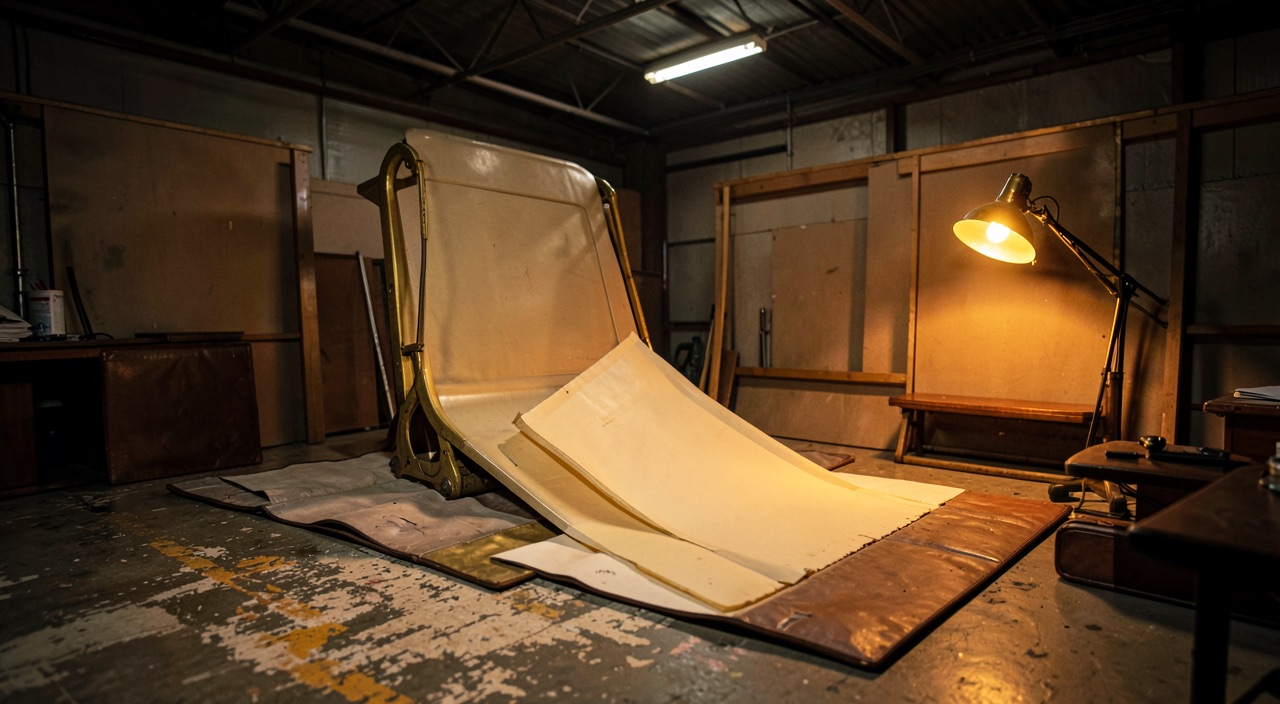
A candidate shows up with their cabin crew attestation, obtained from an approved training organisation and paid for out of pocket, only to learn that several more weeks of training stand between them and a jump seat in a constituted crew. The question always lands the same way: what was the point of the initial course, if the operator redoes everything? It does not redo everything. The school’s approved programme covers a narrow, non-negotiable core, part of which can only be acquired by doing — live fire, dense smoke, doors, water landing — and everything else belongs to a second layer, one that starts at hiring and ends with the contract.
What the attestation certifies, and what it does not say
The attestation establishes that its holder has completed a compliant initial training programme and passed the examination that sanctions it. It is issued by the competent authority, or by an organisation authorised to do so on its behalf, and it is attached to the person: it survives a resignation, a dismissal, the disappearance of an operator. In a market where contracts are short and seasons uneven, that is its principal value, and it is a real one.
This portability does, however, have a limit that the brochures stay quiet about: the European framework makes the attestation’s validity conditional on the actual exercise of the function. The document is issued without an expiry date, but it stops being usable once its holder has not exercised the function for several years, and the return then goes through refresher training conducted under an approved programme. This is not a printed expiry date, it is a condition of use — the distinction matters to anyone who left the trade after a season and is considering coming back, because it decides whether the file starts again with a training organisation or only with an airline.
What it does not say is just as clear-cut. It designates no aircraft type, no cabin configuration, no particular emergency equipment. It does not amount to an authorisation to exercise the function: its holder cannot board as a required crew member until an operator has trained them on its aircraft, its procedures and its organisation. The core is portable, exercising the function is not, and confusing the two wastes time on both sides of the interview table.
The transatlantic comparison sheds light on this split. Under the European framework, the attestation precedes hiring: candidates obtain it on their own initiative and show up with it, which has given rise to an initial-training market independent of the airlines. Under the American framework, the individual cabin crew document is obtained at the end of training conducted by the carrier itself, within its own approved programme; there is practically no initial track outside an airline. Same technical content, two economies, and two ways of allocating the candidate’s financial risk.
The attestation proves you’ve done the basic training, but it doesn’t mean you’re ready to fly. Airlines still need to train you on their specific planes and procedures. The core skills (like fighting fires or evacuating) stay with you, but the rest is tied to each airline.
A cabin crew member trained on an Airbus A320 at Airline A switches to Airline B, which flies Boeing 737s. They keep their attestation, but must retake type-specific training for the 737, plus Airline B’s own procedures. The initial core (fire, smoke, doors) is already good, but the rest is new.
Two standards of proof within a single programme
The approved programme blends two different kinds of requirements that are readily conflated because they appear on the same list. The first is checked by examination: general knowledge of aeronautics and applicable regulation, dangerous goods, security, human factors and crew resource management, flight physiology. A candidate can fail, revise, retake the exam. Knowledge is verified in writing and it can be caught up on.
The second is only attested by performance. Operating each type of extinguisher, putting out a fire representative of a cabin interior fire, breathing through a smoke hood inside an enclosure filled with an aerosol that removes vision, opening a door in emergency mode, donning a life jacket and using it in the water: none of these elements can be replaced by a lesson, a video or a questionnaire. This is the point where the programme costs the school money, and precisely why it is approved rather than merely declared.
| Programme block | Proof required | What redoing it in the classroom does not replace |
|---|---|---|
| Regulation, security, dangerous goods | Written examination | Nothing: the classroom is the proper setting for this block |
| Aeromedical and first aid | Examination, then practical skills on a manikin and on the equipment actually carried | The rate and depth of chest compressions, handling the defibrillator |
| Fire and smoke | Extinguishing a representative fire, hood worn inside an opaque enclosure | The loss of bearings, the muffling of the voice, gloved clumsiness |
| Doors and evacuation | Actual operation of each door type, in normal and emergency mode | The real effort on the handle, the sequence of actions under noise |
| Survival and ditching | Life jacket donned and used in the water, boarding a life raft from the water | Buoyancy, the bulk of wet clothing, fatigue |
The distinction governs a training organisation’s entire physical setup. A classroom and a set of course materials suffice for the first category; the second requires a smoke chamber, a fire pit, operable doors, a pool or body of water, and equipment representative of what is actually carried on board. It is this list of facilities that the authority comes to inspect before granting approval, and it is what caps the number of places a school can honestly open in a given year.
Fire and smoke: what the chamber actually produces
The fire and smoke block is the most demanding in the programme and the most discussed among instructors. It is not limited to knowledge of extinguishing agents and their field of use. It requires the actual operation of each type of extinguisher, the extinguishing of a fire representative of a cabin fire, and wearing a respiratory protection hood inside an enclosed space filled with an aerosol that removes vision.
What the exercise builds is not the extinguishing motion itself, which is learned in a few minutes. It is the full chain: recognising the source, raising the alarm, donning the hood within a useful time, moving without visual reference through a space one thought one knew, finding equipment back at its stowage, and communicating with a bubble over one’s head that muffles the voice and rules out lip-reading. A cabin fire is fought blind; the chamber is the only place where one experiences what that means.
The geometry of the space matters more than the intensity of the fire itself. Smoke first occupies the upper part and the interface descends: everything that depends on standing up becomes impossible well before the lower layer disappears in turn. The approved programme therefore requires an enclosed space, not a smoke-filled room with the door open, as well as a path to follow, not a fixed point in front of a fire pit.
The trap. The training aerosol is cold, non-irritant and low in particulates. It faithfully reproduces the loss of bearings, never the physiological assault of an interior fire’s smoke: heat on the face, watering eyes, coughing, the collapse of decision-making. A trainee who leaves the chamber finding the exercise easy has validated their procedure, not their tolerance. This is why serious instructors time how quickly the hood goes on rather than how long the course takes: the only parameter under control that day is the delay.
Doors and evacuation: the handle, the effort and the count
The second heavy block concerns doors. The programme requires the actual operation of doors in both normal and emergency mode, on representative equipment: a large door, a window-type overwing exit, a rear exit where applicable. It also requires the operation or observation of the associated evacuation means — slide, ramp, slide-raft — actual deployment of which costs enough to stay rare, which explains the place taken up by training devices in a training organisation’s facilities.
This requirement does not come out of nowhere. Certification of transport aircraft, above a certain seating capacity, rests on a demonstration of evacuating all occupants within ninety seconds, with only half the doors available, and with the crew intended to be on board. The cabin crew number calculation — one crew member per bracket of fifty installed passenger seats, whether the bracket is full or only started, on the aircraft concerned — derives from the same logic: each station is expected to be able to arm, open and hold its door alone, in the dark, with noise and passengers standing in the aisle.
From this follows the nature of the verification. The trainee is not asked to describe the sequence, but to execute it in the correct order, with the real effort the handle demands, through to assessing outside conditions and locking the door in the open position. The approved programme goes down to this level of detail precisely because this is where errors take root, and because an error in this particular action cannot be made up for in flight.
The right reflex. Have the detail of what you actually operated recorded, door type by door type and with the date, rather than a blanket mention of a validated « evacuation » block. On the day of a conversion at an operator whose fleet includes a door type you have never opened, it is this level of detail that decides whether the session is credited or added back onto the schedule.
First aid, survival, and the rest of the core
The remaining blocks are less spectacular and just as structuring. The aeromedical block covers altitude physiology, hypoxia, decompression, the most frequent in-flight emergencies, and the correct response using the equipment actually carried on board. First aid is practised there: resuscitation on a manikin, clearing the airway, the recovery position, using a defibrillator when one is carried. The tricky part is not the action itself, it is holding it together in a narrow aisle, in turbulence, with a bystander filming.
Survival training requires a session in the water: donning a life jacket, inflating it, moving about, and boarding a flotation device from the water. Here again, it is not knowledge that is being targeted but the discovery of the bulk an inflated jacket takes up, the encumbrance of wet clothing, and the effort demanded by climbing over an inflated tube. The rest of the block — signalling, hypothermia, shelter, hostile environments — is covered in the classroom without any loss.
Added to this are security, dangerous goods and human factors. These three fall under the examination, but they run through everything else: spotting a prohibited item in cabin baggage, recognising precursor behaviour, or telling a commander that one is not ready only becomes useful at the exact moment a situation deteriorates. This is also the part of the core that an operator will readily redo in its own way, because it touches on its own organisation.
The layer the operator adds on top
A second training begins at hiring, entirely described in the operator’s documentation and approved along with it. It breaks down into three pieces that should not be confused. Type-specific training covers the equipment, doors and procedures of an aircraft type and its cabin variants; without it, one cannot be counted on the roster for that type. Operator conversion covers the organisation: station allocation, in-house phraseology, service procedures, security, special passengers, on-board documentation. Familiarisation closes out the set with flights performed as a supernumerary to the required crew.
An operator that flies several types, or several configurations of the same type, adds differences training: door position, seat count, distinct equipment, mixed cabins. None of this appears in the attestation and none of it carries over automatically. It is the new operator who decides what it credits, on the basis of documentary evidence, within a programme that is itself approved — and its latitude is bounded by that programme, not by its good will.
| Layer | What it adds | Where it is approved | Follows the person? |
|---|---|---|---|
| Initial training at a training organisation | Common core: fire, smoke, doors, survival, first aid, security, dangerous goods | The organisation’s approved programme | Yes, the attestation remains acquired |
| Type-specific training | Equipment, doors and procedures of a type and its cabin variants | Operator’s manual | No, it lapses with access to the type |
| Operator conversion | In-house organisation: stations, phraseology, service, security, documentation | Operator’s manual | No |
| Familiarisation | Flights performed as a supernumerary to the required crew, under supervision | Operator’s manual | No |
| Recurrent and check | Annual maintenance, plus the three-yearly return to practical exercises | Operator’s manual | No, but dated records carry over |
What lapses, and at what pace
Once on the line, two clocks run at the same time. The first is annual: recurrent training completed by a check that verifies competence on equipment and emergency procedures. The second spans three years and returns to the exercises that cannot be conducted every year for lack of facilities and budget: extinguishing a real fire, the hood in a smoke-filled enclosure, actual operation of doors and evacuation means.
A third rule deals with interruption, and it reads on two scales. After a few months without exercising the function — on the order of six months under the European framework — the return goes through refresher training before being counted on the roster again; the attestation itself is not at issue. When the break is counted in years, the problem changes nature: it is the core itself that stops being valid, and one no longer negotiates a few days of refresher with an operator, one goes back through a training organisation. And access to the purser position adds its own course, centred on crew management, handling an abnormal situation and the interface with the flight deck; this course belongs to the operator and carries over no more than conversion does.
The trap. The three-year cycle does not start over from zero just because one changes employer, but it does not prove itself either. The operator that is hiring must make sure each practical element was genuinely covered within the period, and it can only do so from documentary evidence. A file left behind at the previous employer, or an attestation that cites a block without dating the session, produces the same result as a session never done: it will be redone, on the new airline’s schedule and not on yours.
What to check before signing, and the grey area that remains
Three checks are worth making before committing to an initial course. First, the facilities: a training organisation that shares the smoke chamber, the fire pit or the pool is not suspect, but one needs to know where and when these sessions will take place, because they determine the attestation’s issue date far more than the weeks spent in the classroom. Second, the examination: its format, its retake conditions, and what happens in the event of failure on a practical element, which cannot be made up the next morning. Finally, the records handed over at the end, since the attestation alone does not describe what was actually done.
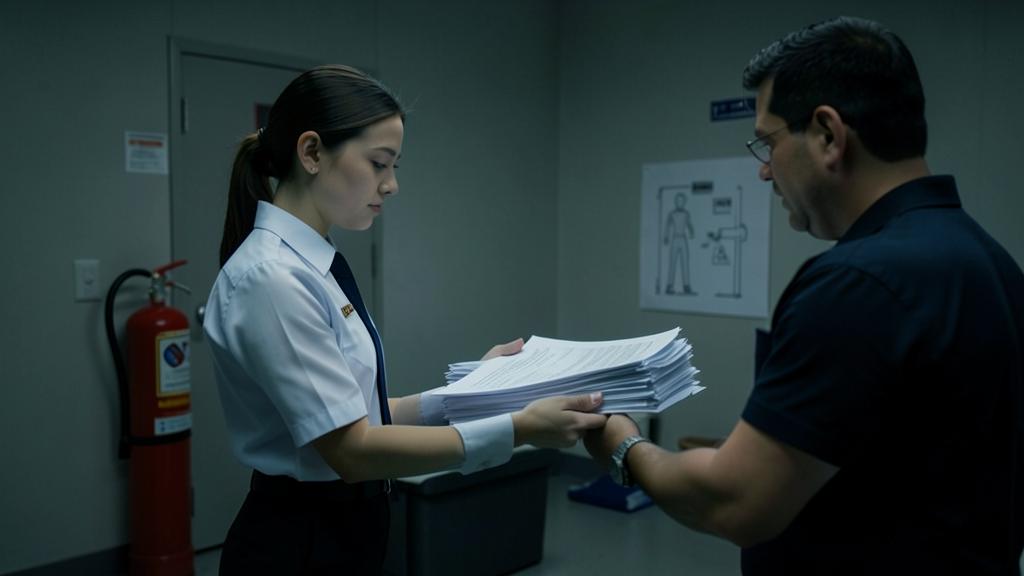
- First, check the training facilities (smoke chamber, fire pit, pool) and their availability, as these determine your attestation’s issue date.
- Second, review the examination format, retake conditions, and consequences of failing a practical element.
- Finally, confirm the records you’ll receive at the end, as the attestation alone doesn’t detail what you actually did.
The grey area sits at the junction of the core and the operator layer. Nothing obliges an airline to credit a session conducted elsewhere beyond what its own programme provides for, and practices diverge: some credit generously to shorten conversion, others redo everything on principle, for the sake of uniform technique. For anyone preparing an application, the consequence is concrete: what adds value to a file is not holding the attestation, which has become a mundane prerequisite, but the dated traceability of what was actually performed and the freshness of the practical elements. The course fact sheets published on the training portal detail, course by course, the records to request at the end of the programme.
There remains the case of returning after a long interruption, where everything hinges on how far back things go. Having one’s practical elements dated and checked before the interview costs half a day; discovering the issue after a job offer costs a place in the first available course. This anticipation is the only variable the candidate truly controls in the whole chain.
Nothing in the foregoing substitutes for the sources: the applicable regulation, the training organisation’s approved programme and the operator’s approved documentation prevail over this article, including where they prove more demanding than what is described here.
Questions fréquentes
Is the cabin crew attestation enough to fly?
No. It certifies the common core and follows the person, but it designates no aircraft type. Before being counted as a required crew member, one needs type-specific training, operator conversion and familiarisation flights, all described in the airline’s approved documentation.
Can the live-fire exercise be replaced with a remote module?
No. The programme requires the actual operation of extinguishers, the extinguishing of a fire representative of a cabin fire, and wearing the hood inside a closed, smoke-filled enclosure. The associated theory can be delivered remotely, the demonstration cannot: that is exactly what distinguishes an approved programme from a course catalogue.
What happens to the three-year cycle when changing airline?
The attestation remains acquired and the elements already covered stay valid within their period. But the new operator must verify from documentary evidence what was done and when, within the limits of its own approved programme. Get the dated record of your practical sessions before leaving your previous employer.
After an interruption, does the entire initial training have to be redone?
The answer depends on the length of the break, and the threshold is not the same depending on what is being looked at. A few months without exercising the function calls for refresher training, described in the operator’s programme and conducted before resuming duties; the initial course is not redone. If the break lasts several years, it is the attestation’s validity that is at stake, and the return goes through a training organisation rather than the airline alone. Have your last flight performed as a required crew member dated: it is this date, more than that of the attestation, that decides the course of action.
Can a school train without a pool or a smoke chamber?
It can teach the theoretical blocks, not deliver the complete programme. Practical facilities can be shared or subcontracted, but they must be identified in the approved programme and genuinely available. Ask for the location and dates of these sessions before enrolling, since they set the issue date.
Does the purser position require separate training?
Yes. A dedicated course precedes the first exercise of the function: crew management, handling an abnormal situation, the interface with the flight deck, task allocation during evacuation. It belongs to the operator and does not automatically carry over from one airline to another.


Leave a Reply
You must be logged in to post a comment.