
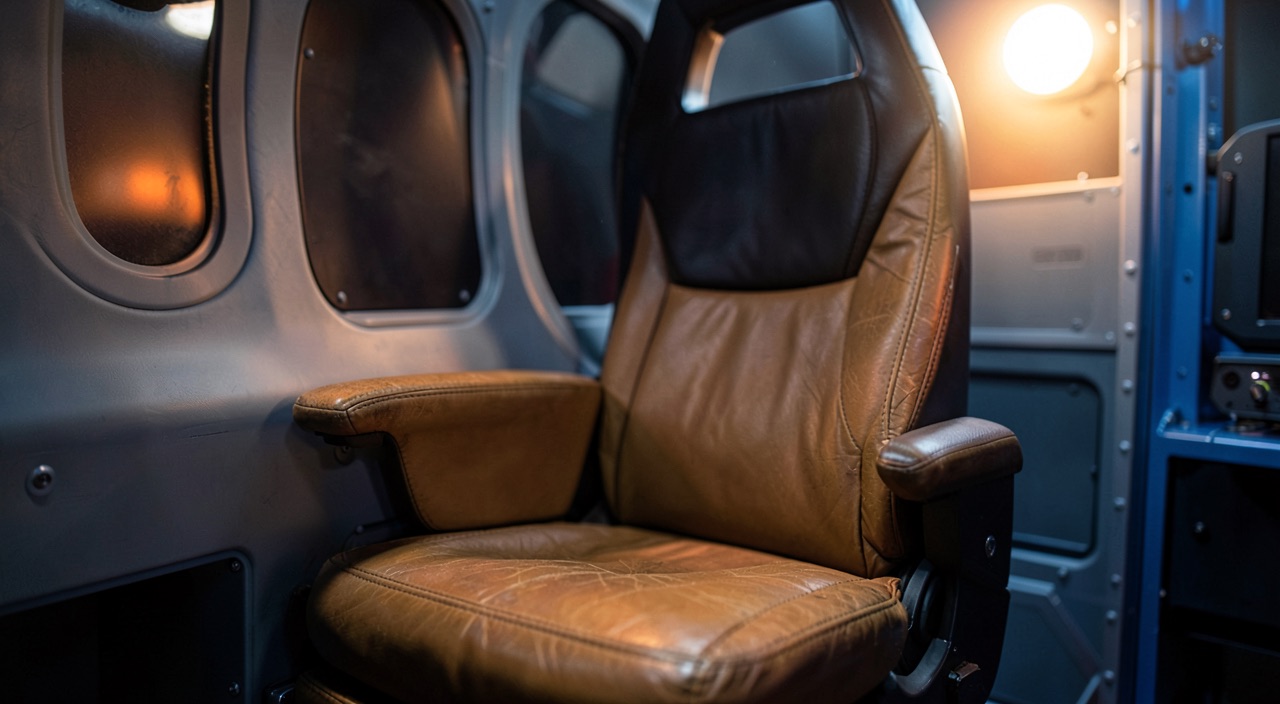
The flight manual says « minimum crew: one pilot, » the aircraft is equipped, the pilots are type-qualified. None of that authorises boarding a paying passenger with the right-hand seat empty. The approval is decided elsewhere: selection, training, workload, and limitations discovered on the morning they block a departure.
Two separate doors, two gatekeepers
The confusion fits in one sentence: the aircraft is certified single-pilot, so you fly with one. Type certification answers a design question, put to the manufacturer — can a single pilot, under the conditions demonstrated in flight tests, handle the aircraft and manage its failures unassisted? The answer fits in one line of the limitations. Public transport asks another question, addressed to the operator: with your pilots, your airfields and your procedures, does solo operation stay under control?
The two doors have neither the same lock nor the same validity. The first opens once and for all, at the level of the type. The second opens for a given operator, within a described envelope — instruments, night, airfields, minima — and closes as soon as you step outside it. A third, more mobile lock is played out flight by flight: does today’s pilot meet the experience and recency conditions? That is the one people forget, because it lives neither in a certificate nor in a manual, but in a tracking log nobody rereads.
Flying solo isn’t just about the plane being certified for one pilot. The airline must prove its pilots and procedures can handle it safely, and each pilot must meet extra experience rules before every flight.
An airline operating a Cessna Citation Latitude (certified single-pilot) must ensure its pilots have 100 hours as pilot-in-command on type, plus 10 solo approaches in the last 90 days. If a pilot misses this, they can’t fly solo, even if they’re otherwise qualified.
Hence a practical consequence: the authority will barely discuss the aircraft. The manufacturer’s demonstration is a given. What gets scrutinised is what the operator puts in front of the empty seat.
Selecting someone who will decide alone
Experience conditions are the easy part: numeric, verifiable. The mechanism is the same everywhere — a minimum number of hours on type before solo release, part of them as pilot-in-command; instrument flights including approaches actually flown on the type; recency to be maintained over a rolling window, failing which the privilege is suspended. The values differ from one side of the Atlantic to the other, the structure does not vary. And these counters are specific: hours flown with a co-pilot in the right seat do not all feed them.
The difficult part cannot be quantified. With two pilots, a pronounced character trait is cushioned by the presence of another professional: whoever pushes too far meets an objection, whoever hesitates finds an opinion. Alone, those traits become operating margins. Selection therefore looks for something other than a good hand-flyer: tolerance for ambiguity, ability to decide early and own an unpopular diversion, preparation discipline, absence of that quiet pride that keeps a poorly set-up approach going because nobody is watching.
The right pilot for solo flights isn’t just skilled—they must make quick, tough decisions alone and stay calm under pressure. Airlines test for this through interviews and solo simulator sessions.
A pilot applying for single-pilot approval might be asked in a simulator to handle a sudden weather diversion to a unfamiliar airport with a short runway. Their ability to stay calm and make the right calls—without a copilot—is what matters.
Operators who hold on to their approval over time have formalised this: written criteria, an interview conducted by an experienced pilot, a simulator session flown alone. The file asks for these criteria; the inspector will ask for the traces of their application — that is, candidates turned away.
Training for a situation nobody observes
Here lies the structural paradox of single-pilot operation. Line adaptation is flown under supervision, therefore with an instructor in the right seat. As long as they are there, the trainee flies with two, alongside a particularly competent crewmate who tunes a frequency and catches an error before it becomes visible. The day the instructor steps out, the condition changes entirely — and it is not a training event, it is an ordinary commercial flight.
The trap of the occupied right seat. An adaptation flown entirely with an instructor alongside demonstrates nothing about solo operation, and the first truly solo flight ends up outside any observation setup. The transition is built up: simulator flown alone, with the instructor playing the role of control and never that of a co-pilot, then chosen first flights — familiar airfield, comfortable weather, short day — and debriefed.
The simulator becomes the centrepiece, provided it is used for what it must demonstrate. The scenario matters more than the list of failures: a clean failure in cruise is handled quite well alone, whereas a modest accumulation during descent saturates anyone. A diversion, a late runway change and a sluggish piece of equipment are worth every engine failure in the world. Line-oriented checks are conducted alone, otherwise they verify a skill the pilot will never actually exercise.
The human factors component changes in nature. Crew resource management presupposes a crew; what replaces it is an inventory of resources outside the flight deck — air traffic control, the operator on the ground, onboard documentation, the autopilot, and the time one grants oneself by holding rather than pressing on. This is practised in session, it is not listed in a ground course.
Workload is the real subject of the approval
What single-pilot operation removes is not a pair of hands: the controls are designed for one. What disappears is a monitoring function — call-outs, cross-checking of configurations, independent verification of an entry — and an offloading capacity: holding the flight path while the other absorbs the overload. A single-pilot approval is a file that explains how these two functions have been replaced.
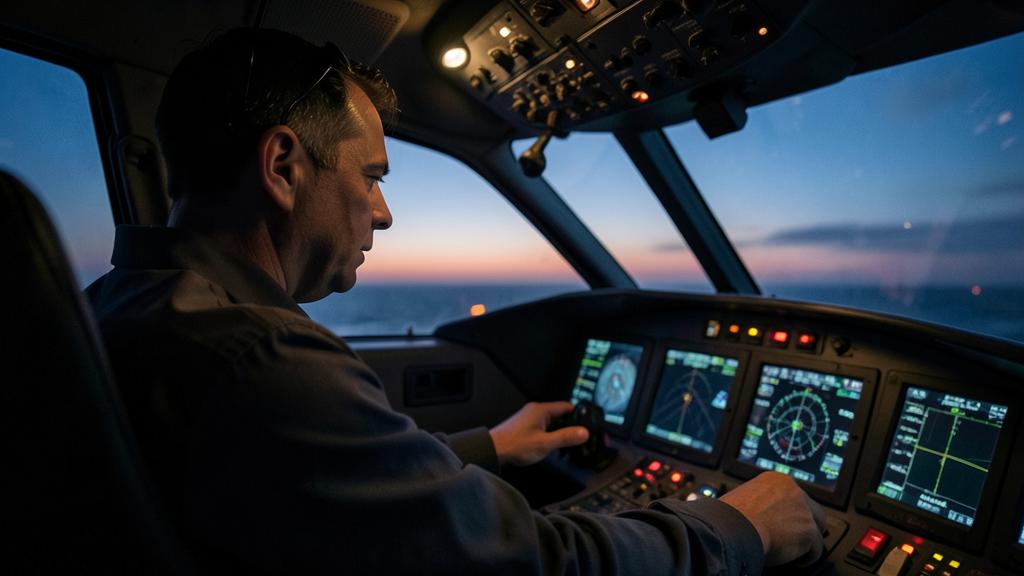
The hardest part of solo flying isn’t the routine—it’s managing sudden tasks like weather changes or runway switches during takeoff or landing. Airlines must prove their pilots can handle these moments without help.
A pilot flying a Beechcraft King Air 350i solo must handle a last-minute runway change during approach. With no copilot to help, they must quickly reprogram the flight computer, adjust the approach, and manage radio calls—all while flying the plane.
Workload is not measured by the number of tasks but by their concentration. It plays out in the two bottlenecks that are departure and approach, where non-flying tasks arrive in a burst: reprogramming, runway change, frequency, configuration, cabin, landing decision. The whole job consists in emptying these windows, through three levers. Bring them forward: approach briefing done well before descent, diversion chosen before departure. Automate them: flight path, charts and weather consultable without leaving the loop. Remove them: procedures written for a single operator.
On this last point, reusing as-is a checklist designed for two is a flaw an inspector spots in a minute: a checklist where a column of responses expected from a second occupant still remains has been photocopied, not reworked. A single-pilot checklist is built differently — a memorised sequence of actions, executed in a stable order, followed by a brief check of only the items whose omission would be serious.
The right reflex: decouple before you deal with it. Alone, any anomaly is handled only after putting the flight path in a safe state — autopilot engaged in a safe mode, altitude and heading held — never before. The reflex is trained precisely because it is not natural: instinct pushes you to look at the light first, then to discover you have lost a few hundred feet and the thread of the approach.
The limitations that come with the approval
An approval is never a simple authorisation: it is an authorisation attached to a narrower envelope than that of the same machine flown with two. The points below recur, to varying degrees, in both the European and American systems.
| Element | Two-pilot crew | Approved single pilot |
|---|---|---|
| Autopilot | A convenience; its failure degrades the flight without prohibiting it | An operating condition: instrument and night flight subject to it functioning |
| Approach minima | Full envelope, low visibility included if the operator is approved | Mandatory visibility floor; the lowest categories are outside the envelope |
| Mutual monitoring | Cross call-outs, independent verification of entries | Automation, written thresholds, staggered checks |
| In-flight incapacitation | Taken over by the other pilot, trained procedure | No onboard backup; dealt with upstream through medical fitness |
| Flight and duty time | Baseline scale | Reduced maximum flight duty period |
| Recency | By type and by role occupied | By type, with a component specific to flights flown alone |
| Cabin and passengers | Cabin crew, or a pilot not on duty | Entirely the single pilot’s responsibility |
Two lines deserve elaboration. The autopilot stops being a comfort item and becomes an operating condition: instrument or night flight without a co-pilot requires a serviceable autopilot, capable at minimum of holding a selected altitude and heading. And low-visibility operations fall outside the envelope, because the lowest categories rely on cross-monitoring and a division of roles at go-around that a single pilot cannot provide.
The trap of the minimum equipment list. Built from the manufacturer’s document, often written for the two-pilot configuration, it can tolerate an inoperative autopilot in exchange for a seemingly harmless restriction. Under a single-pilot approval, that same deferral prohibits an instrument or night departure. If the preamble does not carry this condition, the contradiction erupts on the ramp: maintenance has signed off a deferral it believes is proper, the pilot refuses a departure their approval forbids, and neither side has a text to point to. The single-pilot condition must therefore be written into the preamble and into the wording of the relevant item, not into a separate operational note.
Two more discreet constraints tend to catch operators out. Flight and duty time limitations reduce the maximum duty period compared with the scale for a full crew: the roster must build this in upstream. And licensing and fitness rules are stricter for those flying alone with passengers: the validity of class 1 medical fitness shortens earlier in a career than for two-pilot flying, and single-pilot commercial transport privileges close before those of multi-pilot operation — a commander can therefore lose the ability to fly solo while still keeping several more years of flying as part of a crew. An operator that builds its succession only on experienced pilots would do well to date these deadlines alongside everything else.
What the authority reads in the file
An application is judged on coherence, not volume. The frequent mistake: presenting an operations manual designed for a two-pilot crew, with an additional chapter bolted on. The inspector looks for the opposite — the trace that every part has been reread through a single question: what if nobody occupies the right seat?
- Normal and abnormal procedures, rewritten for a single operator, with the point at which the autopilot takes over the flight path.
- Checklists, whose form betrays their origin.
- The training programme, and how solo operation is assessed within it.
- Selection criteria and the traces of their application.
- The minimum equipment list and its preamble.
- Airfield classification, revised with the single pilot’s workload as a criterion.
- The fatigue management system and the roster that follows from it.
Finally comes the safety case produced by the safety management system: identified hazards — saturation on approach, incapacitation with no onboard backup, an undetected error, commercial pressure applied to a lone pilot facing their client — mitigation measures, indicators that will show, by the chosen deadline, whether they hold. This is the part written last, too quickly, and it is the part that decides.
What to go and check at home
Four checks fit into a morning and tell you the essentials.
- Does the recency log distinguish flights and approaches flown alone from those flown with an instructor in the right seat? Without that column, the tracking demonstrates nothing.
- Does the preamble of the minimum equipment list carry the single-pilot condition in plain words?
- On the roster, is the duty period reduction applied by the tool or by the scheduler’s memory?
- On the onboard checklist, does a column of responses expected from a second occupant still remain?
The right reflex: date the individual conditions, not just the qualifications. A pilot can be current on their type rating, their check and their fitness, and no longer meet the recency condition specific to single-pilot operation. Carrying that deadline on the same record as the others avoids a refused departure discovered when the flight plan is filed.
One grey area the texts barely address remains: alternation. A pilot who flies with two on Monday and alone on Thursday on the same type maintains two competing sets of habits — call-outs, task allocation, autopilot use — and procedural memory does not switch on command. The rule rarely imposes a separation; experience nonetheless leads to building one, through homogeneous runs of flights. For anyone preparing a rating with a business aviation position in mind, that is the point to have clarified at interview: not whether one will fly alone, but in what proportion and at what pace. Exchanges between operators are more instructive on this than brochures.
This article describes mechanisms common to several regulatory systems; it replaces none of them. The regulation applicable to your operation, the specifications annexed to your certificate, the aircraft’s flight manual and the operator’s approved documentation take precedence over the foregoing and are authoritative in the event of a discrepancy.
Questions fréquentes
Is being certified for a single pilot enough to operate public transport with a single pilot?
No. Type certification sets the minimum crew in the flight manual, which makes the operation technically possible. Public transport additionally requires an approval issued to the operator, covering its procedures, selection, training and operating envelope. Every flight further assumes that today’s pilot meets the experience and recency conditions attached to that approval.
Is the autopilot mandatory for single-pilot operation?
For instrument flight and night flight, yes, in both major regulatory systems: a serviceable autopilot, capable at minimum of holding a selected altitude and heading, is an operating condition there, not a comfort item. Its failure is therefore not a simple technical deferral — it closes the departure under those conditions. This is precisely what the minimum equipment list must state.
Can low-visibility approaches be flown single-pilot?
The lowest categories remain outside the envelope, because they rely on cross-monitoring during the approach and on a division of roles at go-around that a single pilot cannot provide. A runway visibility floor is also imposed on single-pilot operation regardless of the result of the operator’s minima calculation. In practice this reduces the availability of destination airfields during the bad-weather season.
How can someone really be trained if the instructor occupies the right seat?
By shifting most of the demonstration to the simulator, where the instructor plays the role of air traffic control or the operator, never that of a co-pilot. Scenarios should chain modest events during descent rather than a clean failure in cruise, since it is the accumulation that saturates a lone pilot. The first truly solo flights are then deliberately chosen to be simple, and debriefed afterwards.
What does single-pilot operation change in duty time?
The maximum flight duty period is reduced compared with the scale applicable to a full crew, since no workload sharing is possible in flight. This reduction must be built into the scheduling tool, otherwise it is discovered the day before. The fatigue management system and airfield classification are reviewed under the same logic.
Can a pilot alternate between two-pilot crew and single-pilot operation on the same type?
Nothing generally forbids it, but the two regimes rely on different habits: call-outs, task allocation, failure handling, autopilot use. Operators who practise both organise homogeneous runs of flights rather than daily alternation, and record these conditions in recency tracking. It is a question worth asking at interview before accepting a position.


Leave a Reply
You must be logged in to post a comment.