
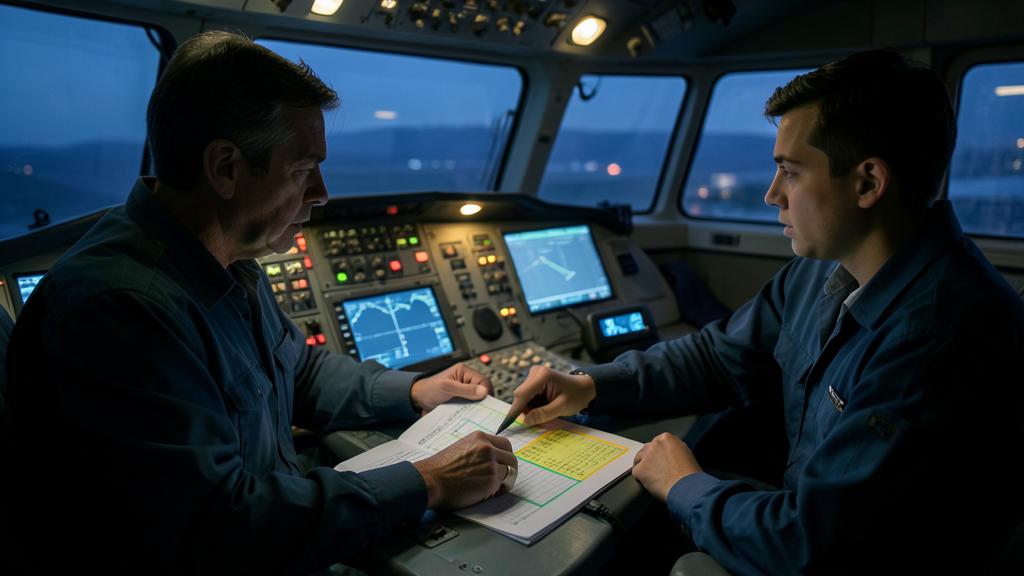
Commander’s discretion is described in crew rooms as a reserve of time, something a captain is entitled to spend when the day runs long. That description is wrong in a way that matters, because it invites exactly the use the rule was written to prevent. Discretion is a relief valve: narrow, conditional, consultative, and recorded in a document that goes to the authority and is read afterwards by people looking for patterns. This is what makes an extension defensible, what makes it indefensible, and why the second one on the same rotation is worse than the first.
The rule is built on a premise: the roster was legal when it was published
European flight time limitations rest on a structure that is easy to miss when you only ever see your own roster. The operator must publish duties that comply with the limits as planned. The maximum daily flight duty period is derived from three inputs — the crew member’s acclimatised state, the local time at which they report, and the number of sectors — and the acclimatised table tops out at thirteen hours for a favourable report time and a small number of sectors, then steps down in half-hour increments as sectors are added. The shortest values in the table belong to the report times that place the duty across the window of circadian low. Augmentation and in-flight rest facilities extend it under their own separate rules.
That is the planning envelope, and it is closed. Nothing in it contemplates the aircraft going technical at the second turnaround, or a slot delay in the fourth hour, or a diversion. The relief valve exists because a closed envelope applied to an open world produces either an aircraft abandoned at an outstation or a rule that everyone quietly ignores. Discretion is the alternative to both.
The consequence, and it is the whole point, is that discretion is defined by when the circumstance arose, not by how inconvenient it is. The European text conditions it on unforeseen circumstances in actual flight operations, commencing at or after the reporting time. A delay known before report is not an unforeseen circumstance at or after report. It is a planning input, and the rule provides a different, entirely separate mechanism for it.
Discretion is a way to handle unexpected problems during a flight, not a way to fix bad planning. It only applies if something unforeseen happens after the crew reports for duty. If the issue was known beforehand, it’s not discretion—it’s a planning mistake.
A crew reports for a four-sector day at 0600. At the third sector, a technical issue delays the flight by 90 minutes. The captain can use discretion to extend the duty period, as the delay was unforeseen. But if the crew knew about the delay before reporting, they should have used the delayed reporting rule instead.
The three things discretion can move, and how far
| What moves | How far | Condition attached |
|---|---|---|
| Maximum daily flight duty period, standard crew | Extension of up to two hours | Unforeseen circumstances commencing at or after report; consultation with all crew members on their alertness |
| Maximum daily flight duty period, augmented crew with in-flight rest | A larger extension, up to three hours | Same conditions; the larger figure follows from the crew being augmented, not from the day having been harder |
| Minimum rest period before the next duty | A reduction, subject to an absolute floor written into the rule, below which no further reduction is available | Same conditions. A reduced rest is not a shorter version of a normal rest, it is an event in its own right |
| Cumulative duty and flight time limits | Not at all | There is no discretion over the rolling seven, fourteen and twenty-eight day duty limits, or over the flight time limits per twenty-eight days, per calendar year and per twelve consecutive months |
| A crew member’s own declaration of unfitness through fatigue | Not at all | The commander cannot extend past a crew member who has declared themselves unfit, and the operator cannot require them to operate |
The last two lines are the ones that get forgotten in the moment. An extension that keeps the sector legal on the day can still put a crew member over a rolling limit, and the rolling limits have no valve at all. In practice this is a crewing question, not a flight deck one, but the commander who extends without asking has assumed something they did not verify.
What discretion is not, and the four mechanisms it keeps being confused with
Half the arguments about discretion are actually arguments about which tool applies. Four other mechanisms exist, each with its own conditions, and reaching for discretion when one of them applies is both unnecessary and, in the record, indefensible.
- Delayed reporting. Where a crew is notified of a delay before leaving for the airport, the rule allows the flight duty period to be recalculated from a later reporting time under defined conditions. This is a planning tool used before duty starts. It is not discretion, it consumes none of it, and using discretion instead of it looks in the record like a failure to manage a known delay.
- Standby and its own accounting. How standby time counts toward the flight duty period is fixed by rule and by the operator’s approved arrangements. A long standby followed by a call-out is not an unforeseen circumstance; it is an arrangement whose consequences were foreseeable when the roster was built.
- Split duty. A break of sufficient length in suitable accommodation extends the permitted duty under its own conditions. It requires the accommodation to exist and to have been usable, and it is planned, not improvised.
- The operator’s own decision to cancel or reposition. Discretion is not the only response to a broken day. Positioning the crew as passengers, calling a reserve, or cancelling the sector are all available, and the fact that they cost money is not a reason for the commander to absorb the difference in duty hours.
There is a mirror provision that gets even less use, and it is not written as a permission. Faced with unforeseen circumstances that could lead to severe fatigue, the commander is required to shorten the actual flight duty period or increase the rest period. Discretion is not a one-way valve; the protective direction is simply the one that almost never produces a report, and therefore the one nobody is trained to expect.
The trap. A commander asking the cabin and flight deck « everyone happy to continue? » in front of the whole crew, ten minutes before a departure everyone wants, is not consulting. It is polling under pressure. The consultation the rule requires is an assessment of alertness, and it only works if declining is genuinely available — which means asking individually, and asking before the aircraft is ready.
The consultation is what makes the extension lawful
The European text does not permit a commander to extend on their own judgement of their own state. The extension must be based on an assessment made in consultation with all the other crew members, cabin crew included. This is not a courtesy provision and it is the element most often missing when an extension is examined afterwards.
The reason it is written that way is straightforward. Fatigue is poorly self-assessed and worse assessed by observation from the other side of a flight deck door. The crew member on the fourth sector of a duty that started before dawn, who has eaten nothing since report, holds information the commander does not have and will not acquire by looking at them. A structured question — not « are you all right? » but « how are you for another hour and forty, and what would make it worse? » — produces different answers.
Three practical points follow. Ask each crew member, not the group. Ask before the point at which saying no becomes disruptive, which usually means before boarding rather than at the door. And record that you asked, because the report will require it and because memory of the sequence degrades within days.
The good reflex. Decide the extension against the state of the crew at the end of the extended period, not at the moment of asking. The question that produces the useful answer is not « can we do this? » but « what will the approach into a busy field, at night, at the end of hour fifteen, look like for the person answering? »
The report, and the people who read it
An extension that stays inside the smallest band is absorbed by the operator’s own records. Past a threshold the rule fixes — in the European text, an increase of more than one hour, and correspondingly a reduction of rest beyond a short margin — a report is required, and it does not stay inside the company. A copy goes to the competent authority, accompanied by the operator’s own comments, inside a filing deadline the rule sets in weeks rather than months.
| Reader | Question being asked | What answers it |
|---|---|---|
| Crewing and rostering | Does the next duty still work? | Actual off-blocks and on-blocks, the rest that follows, and the cumulative position |
| The operator’s fatigue management function | Is this route, this pairing or this reporting time producing extensions repeatedly? | The pairing identifier, the sector, the time of day, and the stated cause |
| The safety management system | Was the extension a hazard control that worked, or a hazard in itself? | The consultation, the alternatives considered, and whether anything else degraded during the extended period |
| The competent authority | Is this operator using a relief valve as a planning margin? | The rate and distribution of reports across the network, compared with the operator’s peers |
| An investigator, afterwards | What did the commander know, and when? | The timeline, the stated reason, and whether the circumstance was genuinely unforeseen at report |
The fourth line is the one that changes behaviour at company level. A single extension tells the authority nothing. Twenty extensions on the same rotation over a season tell it that the rotation is planned too tight, and the finding lands on the operator, not on the twenty commanders. This is the structural reason discretion is reported rather than merely logged: individually it is a judgement call, in aggregate it is evidence about a roster.
Where the commander is exposed, and where they are not
Commanders are frequently anxious about the wrong part of this. The exposure is not in having extended. It is in a small number of identifiable defects.
- Extending for a foreseeable circumstance. An aircraft known to be unserviceable before report, a delay notified the previous evening, a rotation that has been running late all week. If the circumstance existed before the reporting time, the mechanism does not apply and the extension has no legal basis.
- Extending on commercial pressure and recording an operational reason. The report is a factual document. A cause written to be acceptable rather than to be true is the defect that turns an operational judgement into an integrity question.
- Not consulting, or consulting in a way that made refusal impossible. Both fail the same requirement, and only one of them is visible in the paperwork.
- Extending past a crew member’s declaration. There is no mechanism for this. A declaration of unfitness through fatigue ends the discussion.
- Not reporting. The threshold is fixed by rule, not by judgement, and an unreported extension over the threshold is a straightforward non-compliance by the operator that will be traced to a named commander.
Conversely, a commander who extended for a genuinely unforeseen circumstance, consulted individually, considered the alternatives, stayed inside the stops, and reported accurately, is not exposed by the fact that the flight was long. That is the valve working. The record exists to demonstrate exactly that, which is why a thin report is worse for the commander than a full one.
Europe and the United States do not do this the same way
The two schemes solve the same problem with different architecture, and crews moving between them should not carry assumptions across. The European approach places the extension in the commander’s hands, defines it against circumstances arising at or after report, requires consultation with the whole crew, and controls abuse through a reporting threshold and after-the-fact analysis by the authority.
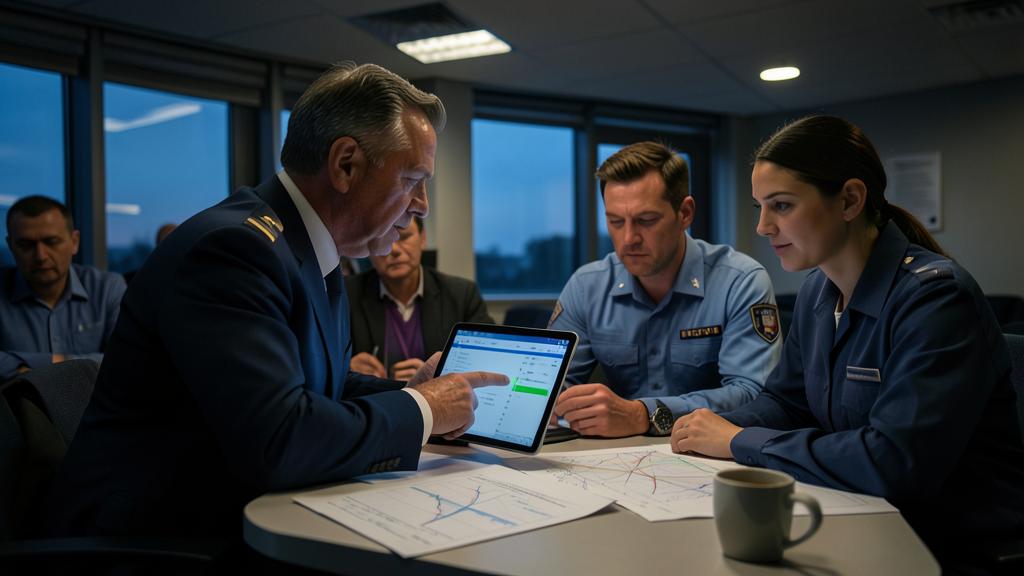
The United States scheme for scheduled passenger operations builds the extension differently. Its dividing line is take-off rather than reporting time: an extension decided before take-off is capped, and — the structural difference that matters most — an extension beyond a short margin may be used only once before the crew member’s next required weekly rest, with a reporting obligation attached. A circumstance arising after take-off falls under its own separate provision. Where Europe controls frequency by making the pattern visible afterwards, the American rule writes part of the frequency limit into the text itself. Neither is more permissive in general; they are permissive in different places, and the pilot who assumes the familiar shape is the one who gets it wrong. Crews comparing how their operators apply the consultation requirement in practice will find the discussion on the FL330 forums.
The sentence to carry away is the one the crew room version leaves out. Discretion is not time the commander owns. It is a controlled departure from a limit, granted on a condition about the past — that the circumstance was unforeseen at report — and paid for with a document that outlives the flight. Used that way it protects a network. Used as a planning margin, it produces a pattern, and the pattern is always found.


Leave a Reply
You must be logged in to post a comment.