
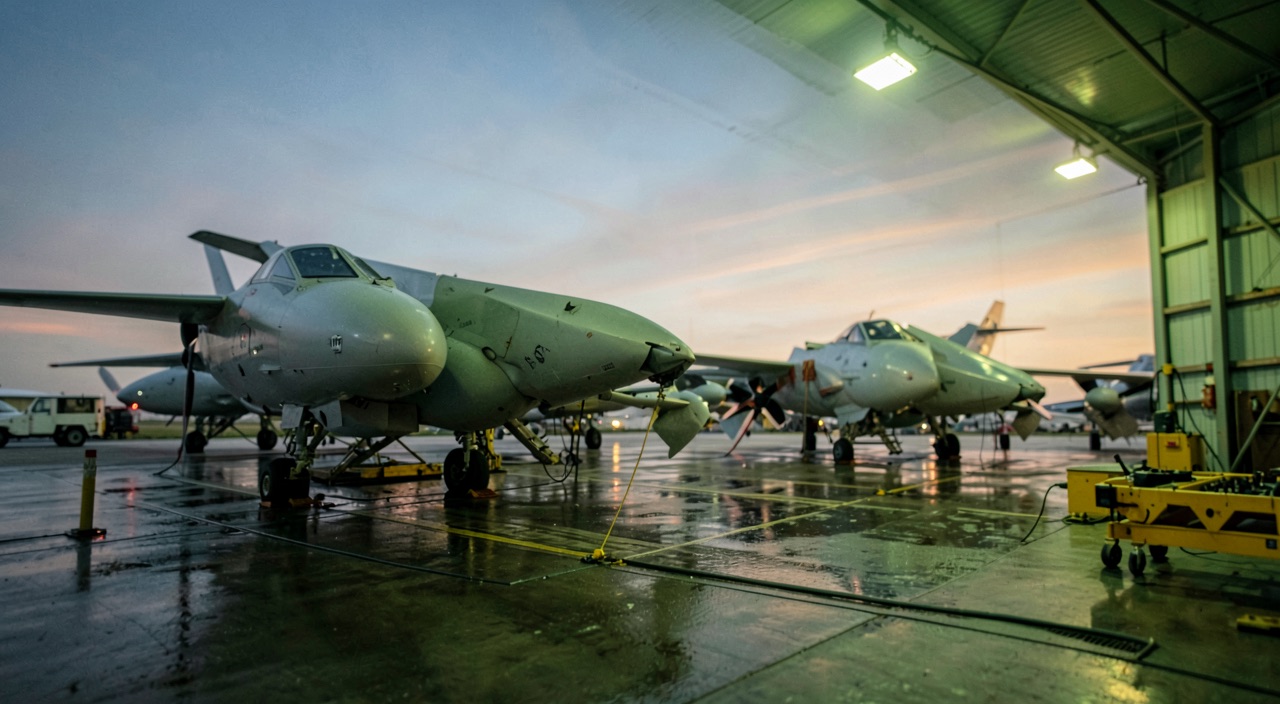
A testbed returns from a maximum energy braking test, a wheel well is damaged, and the grounding is announced for six weeks. The campaign manager doesn’t lose six weeks of flight time; they lose the only testbed with its wing wired for strain gauges, and with it, a chain of test points that four other aircraft are waiting to validate. That’s the entire logic behind test campaign allocation—why it distributes domains, not hours, and what it imposes the day a testbed is taken out of service.
A test fleet isn’t divided by flight hours.
The temptation, when faced with a program involving five testbeds and thousands of test points, is to divide: so many points per aircraft, so many hours per month, a rising progress curve. No campaign works that way, and a single grounding is enough to reveal the flaw. The unit that’s divided isn’t flight hours—it’s the domain: a coherent set of demonstrations requiring the same instrumentation, the same configuration, and, most often, the same analysis team.
A testbed isn’t a vehicle loaded with test points like cargo. It’s a measuring instrument, with defined, documented, and enforceable characteristics. A test point isn’t credited to the file unless it was flown on a testbed whose hardware and software configuration was approved for that measurement, with calibrated sensors and a qualified data acquisition chain. Two aircraft of the same type, built in the same factory, aren’t two copies of the same instrument.
Flight is just one of several means—and the most expensive. The engine test bench, the static and fatigue testbed, the iron bird, and the validated simulator each absorb a portion of the demonstration. The flight campaign gets the rest: what no ground means can produce, because it requires real air, real mass, and the coupling between structure, aerodynamics, and flight laws.
Test campaigns are organized by specific areas of testing (domains) rather than just flight hours. Each testbed is specialized for certain tests and can’t easily be replaced by another, even if they’re the same model. This is because each has unique instrumentation and calibration that makes them irreplaceable for their assigned tasks.
For an Airbus A350 certification campaign, one testbed (MSN001) is dedicated to flight loads validation with 2,000 strain gauges installed during assembly. If this aircraft is grounded for repairs, no other testbed can perform these specific tests – even if they have similar instrumentation, because the calibration data is aircraft-specific. The campaign would have to wait for MSN001’s return or find alternative compliance means.
What instrumentation ties up.
The reason a testbed can’t be replaced lies in a few meters of cable. Instrumentation includes thousands of channels, and the heaviest part isn’t the visible one: the strain gauges glued to the wing box sole, the frames, and the engine attachment fittings are installed during assembly, with the structure open, and their harnesses follow paths specifically routed for the purpose. Reinstalling this on a closed testbed doesn’t take weeks of shop time.
Air data instrumentation tells the same story in another form. A performance testbed carries a nose boom and deploys a trailing cone, and the difference between the pressure it measures and the real pressure is established by dedicated flights, for that testbed, in that standard, with that boom-antenna pair. Calibration belongs to the individual aircraft, not the type. Transferring it makes no sense; redoing it costs flights that no one planned.
Finally, there’s the mass. A heavily instrumented testbed carries racks of recorders, climate-controlled bays, sometimes a liquid ballast transferable in flight to explore extreme centers of gravity: its empty weight has little in common with the production version. This is acceptable for measuring loads, but unacceptable for a functional and reliability demonstration, which must be performed on an aircraft configured like the one the operator will receive. The most instrumented and the most representative testbeds are two opposing objects, and no campaign can do without either.
The order is imposed before it’s negotiated.
The second constraint is chronological. The flight domain doesn’t open all at once: it expands in stages, in speed and altitude, with each stage validated by analyzing the structure’s response to controlled excitation before the next is authorized. Until a stage is cleared, no testbed flies beyond it—not the performance testbed that wants to measure a high-speed cruise, nor the systems testbed that wants to qualify guidance at the top of the domain. The first testbed doesn’t work for itself: it unlocks the field for the others.
Load surveys play the same role one step further. Until measurements confirm the structural model, the maneuvers and turbulence conditions explored remain limited, and part of the flight qualities test points remain pending. The third lock is software: flight laws and computers evolve in successive standards, and a test point flown on a given standard is only valid for the next if it’s demonstrated that the change doesn’t affect it. Otherwise, it must be reflown. A campaign isn’t a list of test points—it’s a directed graph, where a few nodes condition hundreds of others.
That’s the first rule of allocation: what opens must be isolated and assigned to the earliest available testbed, even if it credits few test points relative to the hours it flies. Its value doesn’t lie in its own productivity, but in the number of test points it frees up elsewhere.
What each testbed receives.
The resulting allocation is remarkably stable from one program to another, because it stems from physical constraints, not a house doctrine. One testbed opens the domain and carries the loads. A second takes performance and flight qualities, because it must be clean, weighed, and calibrated. A third handles systems and guidance functions, because it will follow the pace of software deliveries. A fourth takes propulsion and environments—icing, water and snow, heat, cold, altitude—which require modifications and relocations. The last, configured like the production version, does functional and reliability testing, route flights, and cabin testing.
| Cellule | Domaine principal | Instrumentation dominante | What makes it non-transferable |
|---|---|---|---|
| First flight | Envelope opening, flutter, loads | Strain gauges, accelerometers, exciters, wideband telemetry | Wiring embedded in the structure, installed before the boxes are closed |
| Performances | Take-off, climb, cruise, landing | Nose boom, trailing cone, thrust measurement, CG ballast | Air data calibration specific to the airframe and its configuration |
| Systems | Flight controls, guidance, avionics | Recorded buses, fault injection, on-board test bench | Software standard frozen and traced point by point |
| Powerplant and environments | Engine, icing, water and snow, extreme temperatures | Engine instrumentation, ice accretion measurements, environmental probes | Specific installations and deployments timed to the season |
| Function and reliability | Representative operations, cabin, route flights | Near-production interior, light cabin measurements | Must resemble the delivered aircraft, so cannot carry the measurement pallets |
The last line deserves attention, as it’s often underestimated in schedules. The functional and reliability demonstration requires a volume of representative operational hours before type certification is issued—on the order of a few hundred hours, depending on whether the propulsion system is already certified. This volume can’t be compressed: it must be flown. It therefore occupies an entire testbed for months, in a near-final configuration, i.e., late. Any upstream slippage is fully transferred to the end of the campaign.
When a testbed goes down: five levers, none free.
The question that defines the job remains. A testbed is grounded: a ground failure, damage during a high-risk test, a structural discovery, an unavailable part. The useful response isn’t to reallocate its test points, since they’re not transferable; it’s to determine what, elsewhere, can advance without it, and at what cost.
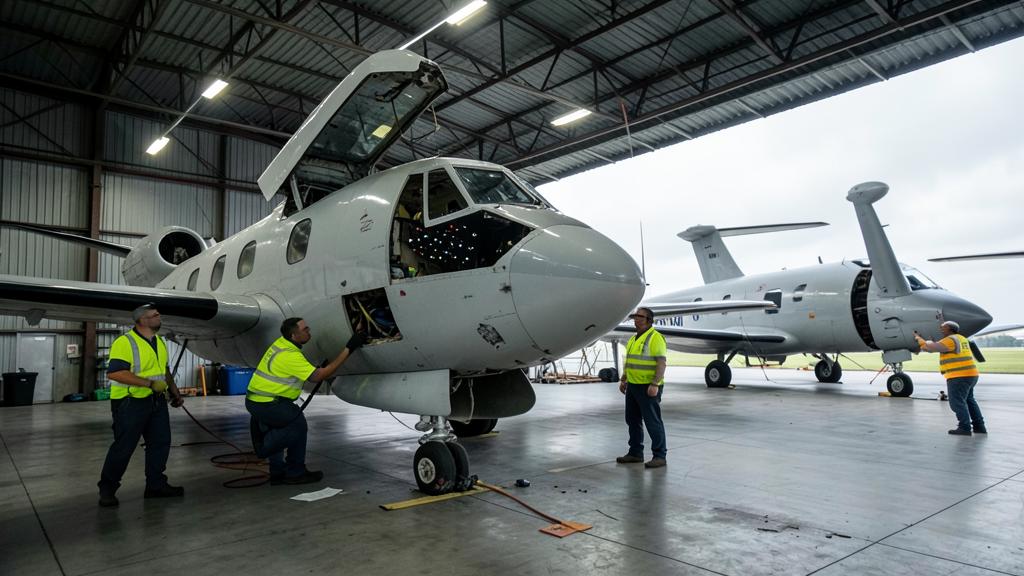
The first reflex is to measure the margin of the affected domain, not the overall program margin. A domain with a six-week buffer absorbs a six-week grounding without consequence; the same delay on the domain that locks the others propagates fully, to testbeds that were flying normally. That’s why a serious campaign plan shows a margin per domain, never a single margin pushed to the end of the bar.
| Levier | Used when | What it consumes |
|---|---|---|
| Wait for return to flight | The repair fits within the margin specific to the affected discipline | The margin, and nothing else: it is the cheapest lever |
| Resequence the campaign | Other disciplines have points that can advance without the lost airframe | Ground capacity: telemetry, data reduction, monitoring teams |
| Change the means of compliance | The point is demonstrated by validated analysis, similarity or ground test | Review time and the authority’s agreement, to be prepared early |
| Re-instrument another airframe | The discipline locks the others and the repair is long | Months in the shop, then a calibration campaign to redo |
| Reduce the target scope | None of the above brings the date back | Capabilities deferred to a later extension |
The third lever, changing compliance means, is the only one that truly creates time, and the only one that can’t be improvised. Replacing a flight test point with an analysis validated on already completed tests, by similarity to a previous model, or by a ground test assumes that the certification program planned for it, or that an amendment is accepted. Prepared months in advance, it’s an open option; requested in an emergency, it’s an additional review and often a refusal.
The trap. Believing a test point moves because the host testbed flies the same profile. A performance test point measured on a testbed whose air data calibration wasn’t established in that configuration isn’t rejected upon return from the flight: it’s processed, entered in the progress table, then discarded months later during dossier review. The cost isn’t the lost flight—it’s the gap discovered when the campaign was supposed to be finished.
Windows that can’t be recovered.
Everything that precedes assumes that lost time can be recovered. Some of it can’t, and that’s where testbed allocation becomes a scheduling decision rather than a technical one.
Tests dependent on the atmosphere have a season. Natural icing is sought where and when it occurs; extreme cold, heat, and high altitude, and strong crosswind hunting follow the same rules. These tests are conducted in deployment: one testbed, one team, spares, a ground station, sometimes several weeks away from base. Losing the concerned testbed at the wrong time doesn’t cost six weeks: it costs the season, and the window only reopens in the next cycle. A deployment is prepared well before the cold campaign’s first flight, with site agreements, spares shipped, ground station set up, crew and analysts detached—so the decision to commit a testbed is made months before the first flight of the cold campaign.
Ground means are a second factor of scarcity. The telemetry room follows one high-risk flight at a time, with specialists deciding in real time whether to continue or stop; the chase aircraft, the calibrated runway, optical means at takeoff, the water basin for ingestion aren’t duplicated. Rescheduling to occupy available testbeds quickly means asking these means to do two things the same day.
The last bottleneck is the least visible: analysis capacity. A flown test point isn’t a credited test point. Between the two, there’s validation of measurements, parameter recalibration, report writing, internal review, then presentation to the authority. A fleet that flies faster than its analysis office accumulates hours, not demonstrations, and the gap is discovered too late. Flights with the authority’s crews arrive at the very end of the program, on a frozen configuration: it’s the last window, and it doesn’t widen.
The right reflex. Track the campaign by credited test points per domain and per standard, never by flight hours. A table that adds up hours rises steadily while a testbed accumulates points that a configuration change just invalidated; a table that counts credited points, with the testbed and its standard reference, stops abruptly the day the problem arises.
What to look for in a campaign plan.
Anyone receiving a campaign plan, to execute or audit it, can judge it in a few questions. Is there an explicit matrix of domains per testbed, with the associated standard? Is the margin shown per domain, or pushed to the end of the bar? Are dependent test points listed as such, i.e., those that can’t be flown until another is acquired? Are alternative compliance means already named in the certification program, or will they be invented when needed? And is the calibration status of each testbed maintained as a configuration data point, on par with a software standard?
A gray area remains, and it’s better to address it from the start: the boundary between development testing and certification testing. The same flight, on the same testbed, produces a credited test point or just information, depending on whether the configuration was frozen and declared before takeoff. It’s a management decision, not a technical consequence, and it’s often where the gap lies between a campaign that meets its deadline and one that discovers it. For those preparing a candidacy or qualification for these jobs, that’s the real content of the position: less flight management than configuration and traceability control, as emphasized by the specialization tracks focused on airworthiness.
Nothing that precedes replaces the approved certification program: the applicable specifications, the authority’s position, and the approved documentation of the design organization prevail over this article as soon as a discrepancy appears.


Leave a Reply
You must be logged in to post a comment.