
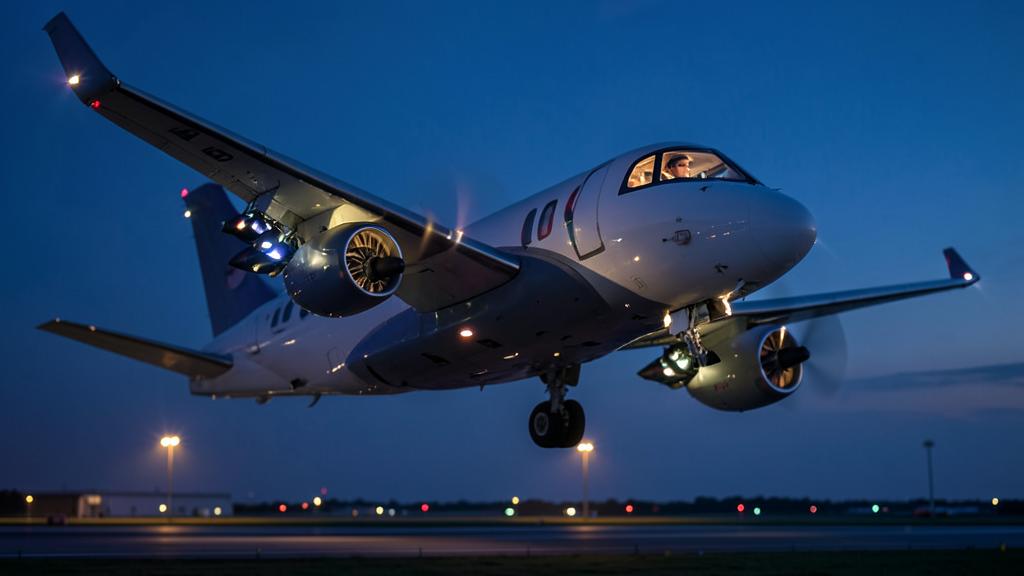
Ask two propulsion engineers whether a hybrid aircraft should be built series or parallel and you get an architecture argument. Ask them instead what the aircraft is supposed to do — how long the sector is, what share of the installed power the cruise actually uses, how many minutes per flight the peak is demanded — and the argument tends to settle itself, because it was never a matter of taste. A hybrid propulsion system is a machine for moving power from where it is produced to where it is needed, and the mission profile fixes both how much power has to move and for how long. Those two quantities decide which parts of the chain must be sized for the full load. Every kilogram of machinery rated for a load it uses for three minutes a flight is a kilogram carried for nothing over the remaining hours, and that is the real currency of the debate.
Power and energy are two separate bills
The single most useful discipline in this field is to stop saying electric and start saying which of two quantities is under discussion. Power is a rate, measured in kilowatts, and it sizes machines: the generator, the cables, the inverters, the motor, the radiator. Energy is an amount, measured in kilowatt-hours, and it sizes stores: the battery, or the fuel tank. A component that must deliver a megawatt for two minutes and a component that must deliver a megawatt for two hours are made of the same physics but they are not the same aircraft.
This distinction is why the honest description of a battery on a transport aircraft today is a power device rather than an energy device. Kerosene carries roughly twelve kilowatt-hours of chemical energy per kilogram; a lithium-ion cell at the state of the art carries a small fraction of a kilowatt-hour per kilogram, and the pack that surrounds the cells — structure, busbars, cooling, protection, state monitoring — carries none at all while adding mass. The gap narrows once you account for conversion: a gas turbine turns a minority of its fuel energy into shaft work, whereas an electric chain delivers most of what it takes in. It narrows by a factor of two or three. It does not close.
The practical consequence is blunt. A battery can plausibly cover a short, intense demand — the take-off and initial climb of a fixed-wing aircraft, the hover of a lift-plus-cruise machine — because that demand is measured in minutes and therefore in modest energy. It cannot plausibly cover the cruise of a commercial sector, because cruise is measured in hours and the energy bill scales with time. Every credible hybrid architecture in the transport categories is therefore built around the same idea: fuel supplies the energy, electricity reshapes the power.
Hybrid aircraft use fuel for long flights because batteries are too heavy to store enough energy. Electricity is only used to boost power during short, intense phases like take-off, where the extra weight of batteries is worth it.
A regional turboprop like the ATR 72-600 needs roughly 2,000 kW in cruise and around 3,500 kW at take-off. A hybrid system might use electric motors of about 1,500 kW to cover the extra power needed for take-off, reducing the size of the main engines and saving fuel during cruise.
What the mission profile actually tells you
The number that drives the architecture is the ratio between the peak power demanded at take-off and the power demanded in cruise, weighted by how long each phase lasts. A conventional propulsion system is sized by the peak — by the engine-out climb gradient, by the hot-and-high take-off, by the certification case that demands the most. That peak then flies along, mostly unused, for the whole cruise.
Where the peak-to-cruise ratio is large, a large share of the installed thermal power is dead weight for most of the flight, and there is something to gain: downsize the engine towards the cruise requirement and let an electrical path supply the difference during the few minutes when the peak is real. Where the ratio is small — where cruise already demands most of what is installed — there is very little difference to supply and the electrical path is added mass with nothing to do.
| Mission archetype | Peak-to-cruise power ratio | Time spent at or near peak | Dominant sizing driver |
|---|---|---|---|
| Lift-plus-cruise or tilting-rotor VTOL | Very high — hover demands the whole installed power, wing-borne cruise a modest fraction of it | Minutes, twice per sortie | Power, decisively |
| Short-sector commuter, many cycles per day | High — take-off and climb dominate a flight measured in tens of minutes | A large share of the whole flight | Power, with energy becoming significant |
| Regional turboprop, one to two hours | Moderate | A small share of the flight | Balanced; the answer depends on the specific power achieved |
| Long-range turbofan | Low in practice — cruise at altitude already uses most of the power available there | Negligible share of the flight | Energy, overwhelmingly |
Read that table the other way round and it explains the shape of the industry. The aircraft that are being flown as hybrids are small, short-sector and high-cycle, or they hover. The long-range airliner is absent from the list not because anyone dislikes electricity but because its mission profile offers nothing for a power device to reshape.
Series: everything through the wire, and what that buys
In a series architecture the thermal engine has no mechanical connection to the propulsor at all. It drives a generator; the generator feeds power electronics; the electronics feed motors; the motors turn fans or propellers. The engine’s only job is to make electricity.
What this buys is freedom. Once the link is a cable rather than a shaft, the propulsors can go anywhere the aerodynamicist wants them: distributed along the wing to blow the flaps and raise the achievable lift coefficient, at the tail to ingest the fuselage boundary layer, in numbers large enough that the failure of any one of them is not a design case in the way an engine failure is. The engine itself can be run at a single, chosen operating point rather than dragged up and down the power range, which is where the specific fuel consumption argument comes from.
What it costs is that every watt is converted at least twice. Each conversion stage — generator, rectifier, inverter, motor — is individually efficient — the best aerospace machines and converters are quoted in the middle to high nineties — but they multiply. A chain of four stages at ninety-six per cent each delivers under eighty-five per cent of what it took in. The missing fraction does not vanish; it appears as heat, in a place with no exhaust to dump it into.
The trap. The efficiency of a series chain is often quoted stage by stage, where every number looks excellent. Multiply them. Then apply the result to the take-off power, not the cruise power, because that is the case the cooling system has to survive.
Parallel: the shaft stays, and so do the constraints
In a parallel architecture the thermal engine keeps its mechanical connection to the propulsor and an electric machine adds torque to the same shaft, usually through a gearbox and some form of clutch or freewheel. Only the boost fraction passes through the electrical path.
That single sentence contains the whole economic case. If the electrical contribution is a fifth of the take-off power, then the generator, the inverters, the cabling and the motor are sized for a fifth of the take-off power. The mass of the electrical chain falls in proportion, the conversion losses apply to a fifth of the flow rather than all of it, and the cooling problem shrinks with them.
What it costs is placement and complexity. The propulsor must stay where the engine is, so none of the aerodynamic prizes of distributed propulsion are available. The gearbox that sums two power sources is a new critical part with its own failure modes, its own lubrication system and its own certification burden. And the engine can no longer be held at one operating point, because it is mechanically tied to a propulsor whose speed is set by flight conditions.
| Component | Series | Parallel |
|---|---|---|
| Thermal engine | Cruise-plus-margin, run at a chosen point | Cruise-plus-margin, dragged across the power range |
| Generator and rectification | Full propulsive power | Boost fraction only, or absent if the battery is charged on the ground |
| Power electronics and cabling | Full propulsive power | Boost fraction only |
| Electric motors | Full propulsive power | Boost fraction only |
| Mechanical transmission | None between engine and propulsor | Summing gearbox, clutch or freewheel, on the critical path |
| Thermal management | Sized on the losses of the whole flow | Sized on the losses of the boost flow |
| Propulsor placement | Free | Fixed at the engine |
Putting a number on the dead mass
The arithmetic that decides these programmes is embarrassingly simple once one parameter is fixed. Call it the system specific power, expressed in kilowatts per kilogram, and insist that it be measured at system level — machine, inverter, cabling, cooling, mountings, protection — rather than at the level of a bare rotor on a test stand. The mass of the chain is then the rated power divided by that figure.
The whole industrial argument of the last decade has been about the value of that one number for flight-rated, cooled, protected hardware. Machine-level claims and system-level reality differ by a large factor, and the difference is almost entirely cooling and installation. What matters here is not which figure is right but how violently the answer moves.
| System specific power | Chain rated at 1 MW (series, full flow) | Chain rated at 200 kW (parallel, 20 per cent boost) |
|---|---|---|
| 2 kW/kg | 500 kg | 100 kg |
| 3 kW/kg | 333 kg | 67 kg |
| 5 kW/kg | 200 kg | 40 kg |
| 8 kW/kg | 125 kg | 25 kg |
| 12 kW/kg | 83 kg | 17 kg |
Two readings matter. First, the series column is where the programme risk lives: a factor of two in specific power moves hundreds of kilograms on an airframe whose whole payload may be measured in a few tonnes. Second, the ratio between the columns is fixed by the architecture and does not depend on the technology at all. A parallel system boosting by a fifth carries a fifth of the electrical mass, whatever the state of the art turns out to be. That is one reason parallel architectures tend to reach the certification queue first while series architectures dominate the conference papers.
The right reflex. When a specific power figure is quoted, ask three questions before believing it: is it continuous or peak rating, does it include the inverter and the cooling loop, and at what altitude and ambient temperature was it measured. A machine cooled at sea level on a bench is a different machine at cruise altitude with a thin air stream.
Heat is a mass, and it flies with you
The item that surprises people coming from the automotive side is thermal management. A gas turbine rejects the overwhelming majority of its waste heat into its own exhaust, at no installed cost. An electrical chain rejects its losses at low temperature, into a coolant, which must reach a heat exchanger, which must be fed with air, which must be taken from somewhere and paid for in drag.
The arithmetic is unforgiving because the losses are a percentage of a large number. A few per cent of a megawatt is tens of kilowatts of heat to reject continuously, and the low temperature difference available makes the exchanger large. This is a mass that scales with the power passing through the electrical path — which is exactly the quantity that separates series from parallel. It is also the reason so many demonstrator aircraft show excellent numbers on a cool morning at a coastal airfield and much worse ones in the certification envelope.
The certification boundary moves too
Conventional aircraft carry a tidy division of labour: the engine is certified against the engine code, the propeller against the propeller code, and the installation of both against the aircraft code. A hybrid propulsion system does not respect that boundary. The energy store, the power electronics, the control laws that arbitrate between two sources and the machine itself form a system whose failure modes cut across all three documents, and no one of them was written with a second, electrical power path in mind.
Both major authorities have handled this so far through special conditions and dedicated criteria developed case by case rather than through a settled code, and small-category VTOL aircraft have been given their own framework precisely because the existing categories did not describe them. The practical consequence for anyone reading a manufacturer’s claim is that the certification basis is part of the design, not a formality that follows it. A boost that is credited in the take-off performance is a boost whose availability has to be demonstrated with the same rigour as an engine’s — including after the failures that the architecture makes possible, such as a battery isolated by its own protection system on a hot day.
Reading a hybrid claim without being taken in
Four questions separate a designed aircraft from a rendered one. What is the peak-to-cruise power ratio of the intended mission, and does it justify any reshaping at all? What fraction of the propulsive power passes through the electrical chain, and is the chain mass quoted at system level? Where does the waste heat go, and what does its exchanger cost in drag? And is the electrical contribution credited in the certified performance, which forces a full availability demonstration, or is it merely a fuel-saving convenience that the aircraft can fly without?
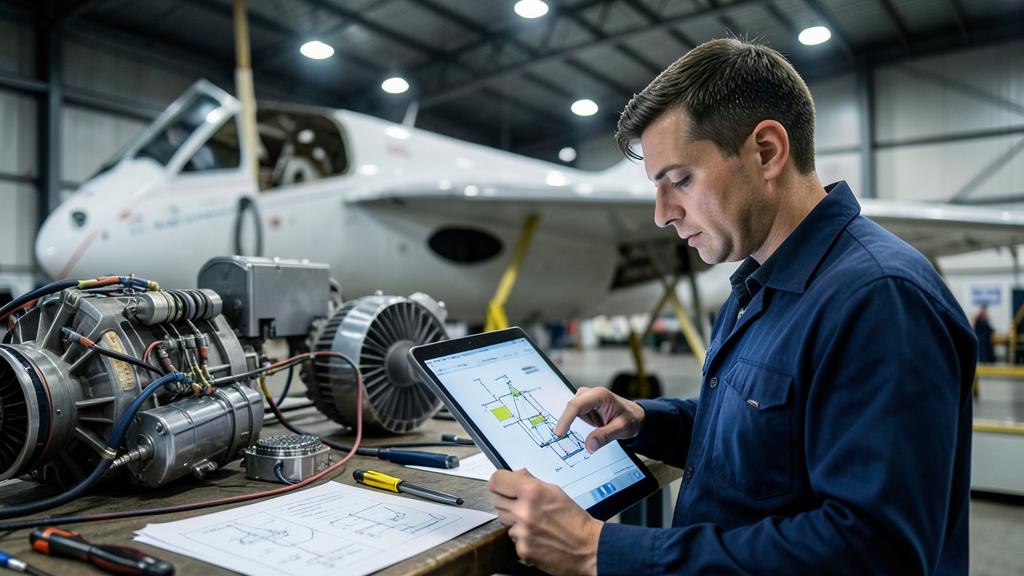
An architecture is not better or worse in the abstract. Series buys aerodynamic freedom and pays for it in conversion, cooling and mass rated at full flow. Parallel buys a small, cheap electrical chain and pays for it in a fixed propulsor position and a new critical gearbox. The mission profile decides which bill is worth paying, and it decides before the first component is chosen. Discussion of these trade-offs among engineers and line crews continues in the technical sections of the FL330 forums, where the recurring lesson is the same: someone always quotes a specific power without saying what it includes.


Leave a Reply
You must be logged in to post a comment.