
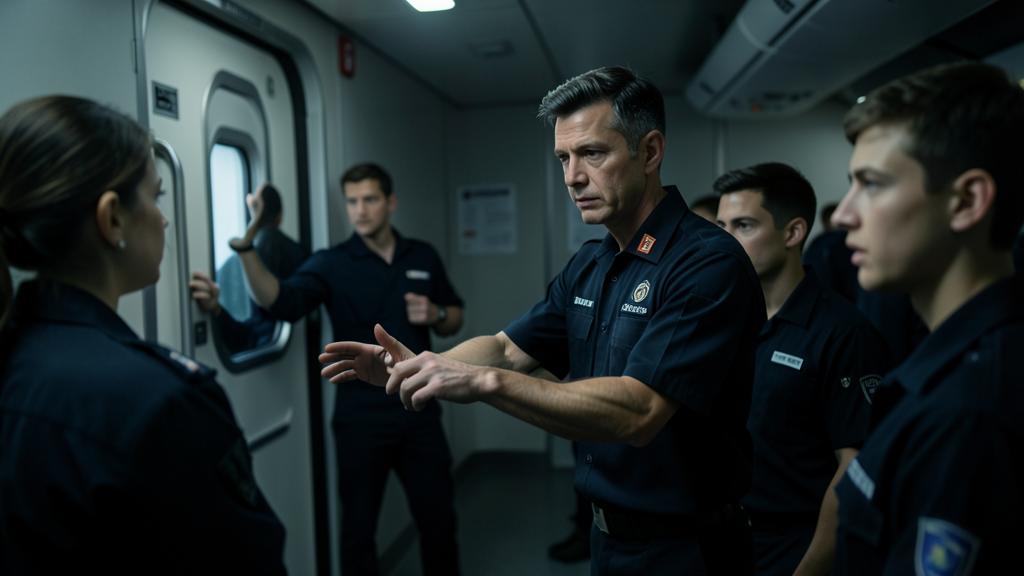
Every operator has made the same mistake at least once: taking the best cabin crew member on the fleet — the one who is calm at the door, immaculate on the checks, the one everybody wants on a difficult night — and putting them in front of a class. Some flourish. A surprising number do not, and they fail in a specific and predictable way. They cannot say what they know, they cannot mark someone down, and their verdict does not match the verdict of the instructor in the next room. None of that is a character flaw. It is the gap between doing a job perfectly and being able to describe, teach and judge it.
What you actually know, and why it will not come out
Operational competence is largely tacit. You do not consult a rule when a passenger’s tone changes; you notice, and you are already moving. You do not recall the door drill; your hands do it. The knowledge has been compiled into something fast, automatic and almost invisible from the inside.
That compilation is exactly what makes it hard to teach. Ask an expert why they did something and they will construct an explanation after the fact, and the explanation will be plausible, coherent and incomplete — because the real decision never passed through language. Instructional literature calls this the expert blind spot: the more automatic a skill becomes, the worse its owner is at reconstructing the steps a beginner needs.
The practical symptom is easy to spot in a training hall. A new instructor demonstrates a procedure at full operational speed, flawlessly, and turns round to a room of blank faces. They demonstrate it again, slightly slower, with the same result. What the class needed was not a better demonstration. It was a decomposition: which cue starts this, what does your hand do first, what would tell you it has gone wrong, what do you do then. That decomposition is a separate skill, and it is learned, not inherited.
Experts act without thinking, which makes it hard to explain their actions. Teaching requires breaking down automatic skills into clear steps, which is a skill in itself.
An A320 instructor demonstrates the emergency slide deployment. Instead of just doing it, they explain: “First, you hear the alarm, then you check the door handle, then you pull the lever—if the slide doesn’t deploy, you check for obstructions.” This breakdown helps trainees understand, not just mimic.
An instructor produces a judgment, not a performance
Here is the shift that catches people. On the line, your output is a safe, well-run cabin. In training, your output is a defensible judgment about somebody else — a statement, recorded, that this person is or is not competent to work with passengers behind a door they may one day have to open under pressure.
That statement has consequences. It affects a colleague’s livelihood. It is the operator’s evidence to its authority that the crew on the aircraft are trained. And in the worst case, it is a document read after an accident by people asking how the person at door 2L came to be certified. A judgment carrying that weight has to be built the way any defensible finding is built: against published criteria, from observed evidence, reproducibly.
Most new instructors have never had to do any of those three things deliberately. On the line they judge constantly — this passenger is trouble, that colleague is having a bad day — but privately, unrecorded, with no obligation to justify. Training removes all three protections at once.
| Dimension | On the line | In the training hall |
|---|---|---|
| What you produce | A safe, well-run cabin on this sector. | A recorded judgment about a person’s competence. |
| How you know you succeeded | The sector ended well. | Another instructor, given the same performance, would have reached the same verdict. |
| Whose behaviour you control | Largely your own. | Someone else’s, indirectly, through what you say and how you say it. |
| Time horizon | Hours. | The remainder of that person’s career, and every passenger they will work with. |
| Who reviews your work | Rarely anyone. | The standardisation process, the training manager, and potentially an investigation. |
Standardisation means the same verdict, not the same slides
Operators use the word constantly and often mean the wrong thing by it. Standardisation is not everybody using the same presentation. It is different instructors reaching the same conclusion about the same performance. If instructor A passes a candidate that instructor B would have failed, the operator does not have a standard — it has two, and the crew know it within a week.
This is where field competence actively works against a new instructor. An expert has a personal model of what « good » looks like, refined over years, and it is genuinely good — but it is theirs. It includes preferences that are not requirements: the order in which they check the cabin, the phrasing they use, the way they hold a demonstration handset. Left unexamined, those preferences leak into assessment, and a candidate is marked down for doing something correctly in a way the instructor would not have chosen.
The correction is not to have no opinions. It is to know, for every point you would raise, which category it falls into: a safety requirement, a company procedure, a technique that works, or a personal preference. Only the first two belong in a grade. The third belongs in a coaching conversation, flagged as advice. The fourth belongs to you and stays with you.
The trap. The most damaging assessment error is not being too hard. It is being inconsistent — hard on the candidate who irritates you, generous with the one you flew with last summer. Inconsistency destroys the credibility of the whole training system, because crews compare notes and can see it. A consistently demanding instructor is respected. A variable one produces the belief that the check is a lottery, and that belief is what eventually stops people reporting their own weaknesses.
Four ways an excellent crew member fails as an assessor
| Failure mode | What it looks like | What fixes it |
|---|---|---|
| Demonstrating instead of describing | The instructor performs the task beautifully; nobody can repeat it. Questions get another demonstration. | Task decomposition: cues, steps, error signals, recovery. Written out before the session, not improvised. |
| Grading personality | Confident candidates pass, quiet competent ones are marked as lacking presence, with no observable behaviour cited. | Evidence discipline: every grade traced to something that was seen or heard, quoted in the record. |
| Reluctance to fail | Marginal performance passed with a verbal comment that never reaches the file. The problem reappears on the line. | Accepting that the grade is a statement to the operator and the authority, not a message to the candidate. |
| Standard drift | Six months in, the instructor’s threshold has quietly moved. Their pass rate diverges from everyone else’s. | Standardisation meetings with real recorded cases, cross-observation, and monitoring of grade distributions. |
The third one deserves a note, because it is the most human and the most consequential. Failing a colleague is genuinely unpleasant, especially in a community where you will fly with them next month. New instructors resolve the discomfort by converting the failure into advice: a quiet word, an encouragement to work on it, a pass. The candidate leaves believing they were fine. Nothing is recorded, so nobody downstream knows to look. The next instructor sees the clean file and calibrates against it.
This is the mechanism by which a training system slowly stops detecting anything. It never starts with a bad instructor. It starts with a kind one.
Who owns the qualification — and it is not you
Here the difference with the flight deck matters, and it surprises people who assume the two career paths mirror each other. A flight instructor on the flight crew side holds a personal certificate under Part-FCL, granted to the individual, valid across employers within its privileges, revalidated on its own cycle.
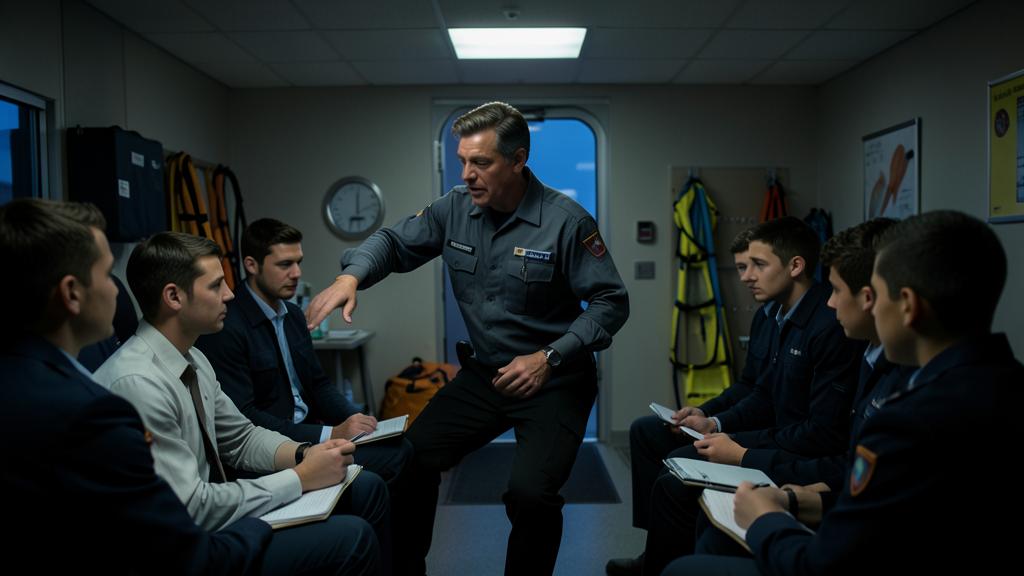
Cabin crew instruction does not work like that in the European system. Cabin crew themselves hold a cabin crew attestation under Part-CC, but the training that follows — operator conversion and differences training, familiarisation, recurrent training and checking, refresher training, senior cabin crew training — sits inside the operator’s training programme, approved by the competent authority under the organisation requirements for air operations. The instructor’s authority to teach and to assess comes from being nominated within that approved programme, having the qualification and experience it specifies, and being subject to its standardisation arrangements.
Three practical consequences follow, and they are worth understanding before you apply.
- It is not portable in the way a licence is. Changing operator generally means being nominated again under a different approved programme, with different documentation, different standardisation and possibly different prerequisites.
- The prerequisites are the operator’s, within what the rule requires. Minimum experience, previous role, evidence of instructional ability and the internal course you must pass are defined in the training manual, which is why two airlines in the same country can have visibly different entry routes.
- Your standardisation is a compliance item, not an internal nicety. The programme is approved on the basis that assessments are consistent, and an authority audit can examine grade records, instructor calibration and the evidence behind a marginal pass.
Elsewhere, the architecture varies. Other authorities build the same function through their own approved training programme requirements. What is broadly common is the principle: for cabin crew, the instructional and checking authority lives in an approved programme and in the individuals nominated within it, rather than in a personally held instructor certificate. Do not assume a route learned in one jurisdiction transfers.
The record is the deliverable
New instructors treat the paperwork as the tax paid after the real work. It is the other way round. The session is transient; the record is what exists afterwards, what the operator relies on, what an auditor reads, and what protects both you and the candidate if the judgment is ever questioned.
| Element | Worthless version | Usable version |
|---|---|---|
| The observation | « Good performance overall. » | The specific action, in sequence, with what was said and done. |
| The criterion | Implied, or the instructor’s preference. | Named: the procedure, the standard, the training objective it maps to. |
| The gap | « Needs to be more confident. » | What was expected, what happened instead, and under what conditions. |
| The action | « Discussed. » | What was retrained, what was demonstrated again, what remains open and who owns it. |
| The verdict | A tick. | A grade supported by the four rows above, that another instructor could have reproduced. |
The right reflex. Write the debrief so that a colleague who was not in the room can tell what happened and would reach your conclusion from your words alone. If they could not, you have written an impression rather than an assessment — and an impression is exactly what cannot be defended, taught from, or acted on later.
Getting in, and staying credible once you are
The route into cabin crew instruction is largely the operator’s to define, but the pattern is consistent enough to plan against. Experience on the fleet first, usually with time as a senior cabin crew member. Then some form of internal instructional course, covering how adults learn, how to structure a session, how to run a debrief, and how to grade against criteria. Then supervised delivery, then supervised assessment, then nomination within the approved programme, and thereafter continuing standardisation.
The most underrated part is what happens after nomination: staying on the line. An instructor who has not worked a full aircraft in eighteen months teaches an aircraft that no longer exists — the new galley layout, the tablet that replaced the paper manifest, the route that now boards two hundred passengers through one door. Credibility in a training hall is fragile, and it is lost the moment a candidate realises the instructor is describing yesterday’s operation. Operators’ training manuals normally set a currency expectation for their instructors; treat it as a floor rather than a target.
Be honest, too, about what the role costs. You will fly less and at less convenient times. You will teach the same module until you can recite it, and you will have to make it sound like the first time, because for the person in front of you it is. You will sometimes be the reason a colleague’s career stalls. In exchange you get influence over how an entire fleet behaves in the situations that matter, which is a rare thing to be handed. Those weighing the move will find both sides argued at length by people who have made it on the FL330 forums.
The one-line version
Being excellent at the job proves you can do it. Instruction requires two further capabilities that no amount of line experience supplies on its own: the ability to take an automatic skill apart in words, and the discipline to reach the same verdict as your colleagues on the same evidence. Operators that select on the first competence alone, and train neither of the other two, get exactly what they selected for.


Leave a Reply
You must be logged in to post a comment.