
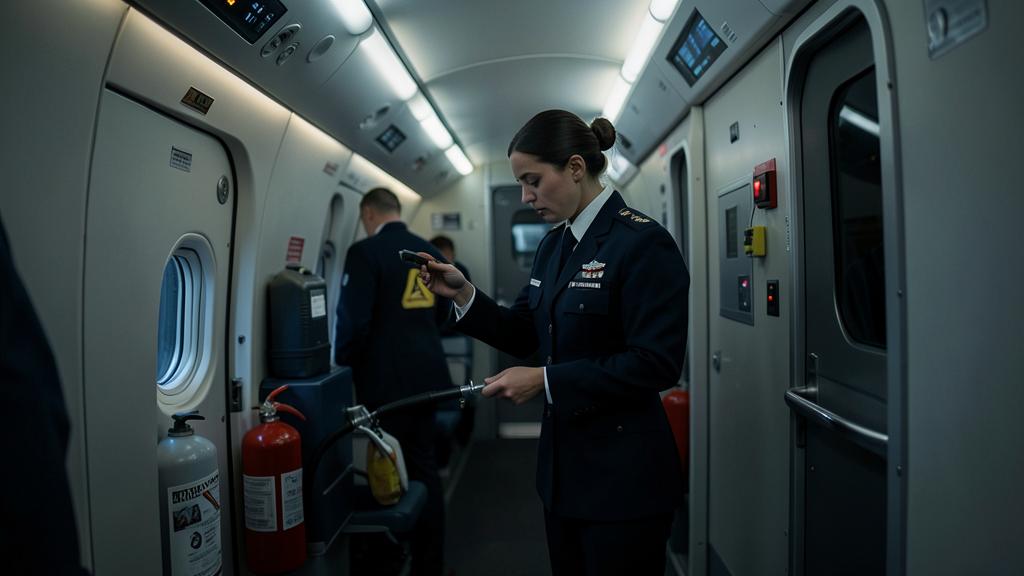
A transfer between two certificates within the same group, an identical fleet, sometimes the very same registrations, and two days of training logged as “differences” on the roster. Six months later, a file review finds that the type was never entered in the crew member’s training record with the new operator: what was actually required was full conversion training. Familiarisation, conversion, and differences training are not three intensities of the same course, and the roster is the last place where the distinction can still be made correctly.
Three purposes that cannot substitute for one another
The three pathways are not distinguished by their duration but by the question each one answers. conversion training addresses the case “this crew member does not yet hold this operator-type pairing”: it builds a qualification from scratch, with its practical exercises, door and exit drills, its fire and smoke handling, its operator-specific human factors component, its security and dangerous goods procedures, and the check that closes it out. differences training addresses the case “something has changed on what the crew member already holds”: it covers only the gap, and only makes sense if the underlying base exists and remains current. familiarisation does not answer any programme question: it simply establishes that an already-qualified crew member has never seen the real operation, and puts them into it before counting them within the required cabin crew complement.
The costly shortcut is to rank them on a scale of intensity: long, short, very short. A three-day differences course remains differences training; a two-sector familiarisation remains familiarisation. No duration turns one into the other, and none of the three makes up for what the others did not provide. That is why a classification error is not fixed by adding hours: it is fixed by redoing the missing pathway, in the correct order.
Conversion training is like learning to drive a new car from scratch. Differences training is like learning a new feature in a car you already know. Familiarisation is just getting to know the roads and traffic rules. You can’t skip steps.
A cabin crew member trained on an Airbus A320 with Airline A moves to Airline B, which also operates A320s. They need full conversion training, not just differences, because the procedures, equipment, and documentation differ between operators, even if the aircraft looks the same.
What triggers conversion training
Four situations, one single logic: the record does not contain the operator-type pairing that the assignment presupposes. The first case is first employment as cabin crew with this operator, including when the attestation is old and the type is perfectly well known elsewhere. This is the most consistently underestimated case, because the aircraft itself has not changed. But the cabin layout, the location and model of the emergency equipment, the normal and emergency procedures, the security instructions, the operator-specific human factors component, and the documentation itself belong to the certificate, not to the manufacturer. Two operators flying the same aircraft type do not share the same announcements, the same evacuation roles, or the same way of managing a cabin disruption.
The second case is the addition of a further type with an operator already known; the third is a return after an interruption long enough that refresher training no longer suffices, with the regulation setting the threshold beyond which conversion training must be redone. The fourth is rarer and more debatable: a fleet transformation so extensive that the gap ceases to be a gap, and the delta logic no longer has a base to attach to.
What identifies conversion training is not its volume of classroom hours but its nature: the practical elements actually carried out on each type of door and exit, on the aircraft or on a representative training device, the extinguishing of a live fire, the use of survival equipment, and the check that closes the pathway out. A course without practical exercise and without a check cannot be conversion training, whatever label it carries on the roster.
Differences training: the delta only holds up because of its base
Only two triggers. The first is assignment to a variant of a type the crew member already operates. The second is a change of equipment or procedure on a type they already hold: a new cabin configuration, a change of fire extinguisher model or respiratory protection, relocation of an item of emergency equipment, a change to a slide or an opening method, a new evacuation procedure.
The notion of a variant is not a marketing designation, and that is exactly where rosters go wrong. It is the operator who defines its variants in its manual, on the basis of emergency equipment, exits, safety-related systems, and procedures. Two aircraft sold under the same name may require differences training if their cabin or exits differ; two distinct model names may fall under the same variant if everything that matters for safety is identical. The marketing name decides nothing; the manual’s list decides everything.
The condition of validity, meanwhile, is structural: the base must be held and remain current. Adding a delta to a type whose recency has lapsed amounts to stacking a fix onto an unusable base; the base must first be restored, and only then can the gap be addressed. The content of differences training is bounded by design, since everything that is identical is not repeated. This is precisely what makes bad classification invisible in the classroom: the trainee cannot notice the absence of something they were never told about.
Differences training only works if you already know the base type. It’s like learning a new feature in a car you already drive. If you don’t know the base, you need full training.
An airline introduces a new model of fire extinguisher on its Boeing 737 fleet. Crew members already qualified on the 737 need differences training to learn the new procedure, but only if their base qualification is still current.
Familiarisation: a condition for assignment, not a module
Familiarisation is placed after conversion training and before assignment within the required cabin crew complement. It produces no grade and no check: it is simply observed and logged. What it provides is in no syllabus, and cannot be: the real geography of the network, the actual duration of services, station procedures, the people involved, the sequencing of tasks in a full cabin, the real-world exposure to what had until then only been handled in the classroom.
Two confusions keep recurring. The first is to count it as a programme element, when it fills no training gap: a crew member who has not completed conversion training will not be made up for by three observation sectors. The second is to treat the crew member on familiarisation as a required crew member: they are supernumerary, and counting them within the minimum complement turns a good practice into an operating irregularity.
It can also be triggered on its own. A change of network, of type of operation, or of area, with no change of aircraft type or equipment whatsoever, can call for familiarisation without conversion or differences training. This is the case most often overlooked, because it comes with no course to schedule and so costs nobody anything at the moment it is omitted.
A trigger matrix
Reading it line by line avoids most planning errors. A single rule runs through the table: what enters the record is never what appears on the roster line, but what was actually delivered, practised, and checked.
| Situation | Pathway required | What enters the record | Associated check |
|---|---|---|---|
| First employment with this operator, type already known elsewhere | Conversion training, then familiarisation | The operator-type pairing | Yes, it closes out conversion training |
| Additional type with an operator already known | Conversion training, then familiarisation if the operation changes | The additional type | Yes |
| Variant of a type already held and current | Differences training | The variant, linked to the type | Depending on the gap, as set out in the approved programme |
| Change of equipment or procedure on a type held | Differences training | The equipment or procedure concerned | Depending on the gap |
| Change of network or type of operation, aircraft type unchanged | Familiarisation only | Nothing regarding the type | No |
| Return after exceeding the recency threshold | Refresher training before assignment | Nothing new: validity is restored | As set out in the approved programme |
The group trap. Two operators within the same group that share a fleet, a livery, and sometimes aircraft moving from one certificate to the other give the impression of a continuum. They are not one: the certificate changes, so the procedures, documentation, and responsibilities change, and so the base changes. A crew member moving from one to the other falls under conversion training, not differences training, even if the aircraft they board tomorrow is the very one they left yesterday.
What bad classification breaks downstream
The immediate consequence is not a paperwork issue. If conversion training is missing, the type is not in the record; any assignment on that type puts an unqualified crew member within the required cabin crew complement, and the minimum number of cabin crew is then not met. This is not an empty cell in a spreadsheet — it is an operating condition that is not fulfilled, retroactively, across every sector concerned.
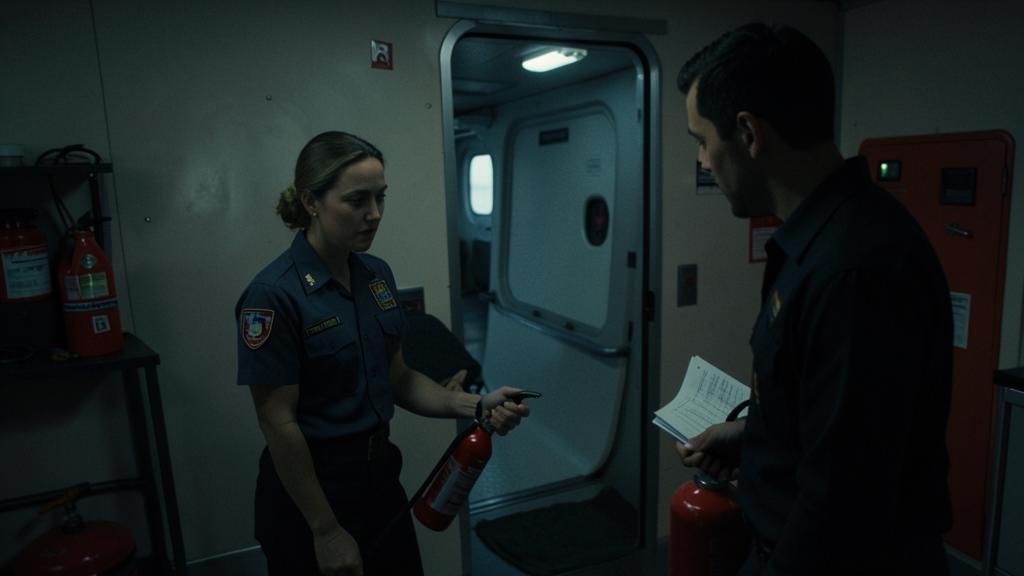
The second consequence is more insidious: recurrent training propagates the error. Recurrent training must cover every type and every variant actually operated. Built on a false record, it covers the wrong scope and carries the anomaly forward year after year, with every appearance of compliance. No one detects a gap by checking that the annual programme was followed — one has to trace the issue back to the entry pathway.
Then comes the interplay of two separate clocks, often confused because they resemble each other. Recurrent training validity runs from the training itself, on an annual cycle, generally extended to the end of the month of issue; recency, meanwhile, runs from the last flight actually performed on the type or variant, and lapses after a few months without practice, requiring refresher training before any further assignment. A crew member can therefore be perfectly up to date on recurrent training and yet unassignable, and the reverse is also true. The two counters must be tracked separately, type by type.
A final word on the attestation itself, because the distinction is reassuring in a misleading way. It is attached to the crew member, not to an operator — depending on the State, it is issued by the authority or by a body it has approved — and it does not lapse along with a type qualification: the crew member keeps it, and only loses the ability to be assigned with this operator on this type. Operationally, this amounts to the same thing. And the fix cannot be backdated: the missing conversion training must be delivered, checked, familiarisation redone, and the status of flights already carried out addressed separately.
Bad classification means unqualified crew members may be assigned, and recurrent training won’t catch the mistake. It’s like driving without a valid license—just because you’ve had training before doesn’t mean you’re qualified now.
A cabin crew member is assigned to an Airbus A320 after only differences training, but they never completed conversion training with the new airline. Six months later, an audit reveals they were unqualified for every flight, putting the airline in violation of safety regulations.
The training record: what must be readable in it
A useful record is not a history of sessions — it is a document that allows a conclusion to be drawn. It must show the exact nature of the pathway, the type and the variant, the operator, the date, the practical elements actually carried out and on which training device, the identity of who instructed and who checked, the outcome, and the resulting validity. A session title, a course code, and a duration prove nothing: they describe a roster line, not delivered content.
The decisive test takes one minute. Pick a record at random and try to work out, without calling anyone, which types and variants this crew member can be assigned to tomorrow, and until what date. If the exercise requires a phone call to the training department, the record proves nothing — and it will prove nothing either the day someone from outside asks the question.
The right reflex. Require the roster line to carry three pieces of information, not one less: the nature of the pathway, the type, the variant. And require the record to reference the syllabus actually delivered, not the title of the course. A line that reads “2-day course” cannot be checked, cannot be challenged, and cannot be fixed, because it states nothing verifiable.
What to go and open in your own documentation
Four points deserve careful reading, and they are not found in the same place. First, the list of variants: where it lives, on what criteria it was built, and above all who updates it when an aircraft is modified in the cabin. Next, the rule that caps the number of types on which the same crew member can be assigned, and the bounded exception that opens up an additional slot only on condition that two of the types concerned have sufficiently similar emergency equipment and procedures. This rule has a direct and rarely spelled-out consequence: treating a variant as a distinct type uses up a slot against the cap. The choice between “variant” and “type” is therefore not merely technical — it affects the assignment flexibility of an entire fleet.
Third point, the treatment of crew members assigned across several types: how recurrent training is split between them, how recency is tracked for each, what happens when one type falls out of recency and the others do not. Fourth point, the interruption threshold beyond which refresher training no longer suffices. Both answers are found in the approved training programme, not in the accompanying internal memo.
One grey area remains that few manuals address candidly: the progressive retrofit of a fleet, when two configurations coexist for months. The regulation states what a crew member trained on the old configuration needs in order to operate the new one; it rarely states what a crew member trained on the new configuration needs when assigned to an aircraft still in the old one. Differences training is bidirectional, or it is worth nothing. For anyone preparing to take on a purser role or change operator, the stakes are very concrete: it is the record that will be read, not the memory of what was done, and a misclassified pathway always comes to light at the least convenient moment. Qualification pathways are also prepared through this kind of review.
This reading grid remains just that — a reading grid: the applicable regulation, the approved training programme, and your operator’s operations manual prevail over this article under all circumstances, including where they prove more demanding than what is described here.
Questions fréquentes
Must a crew member who changes operator on the same type redo full conversion training?
Yes. Conversion training addresses the operator-type pairing, not the aircraft alone. Normal and emergency procedures, cabin layout, emergency equipment, documentation, and the operator-specific human factors component belong to the certificate, and change with it. Differences training cannot be used to cover this case, even within the same group.
Can a variant be treated as a fully separate type?
It is the operator who defines its variants in its manual, on the basis of emergency equipment, exits, safety systems, and procedures. Treating a variant as a distinct type is possible, but it uses up a slot against the cap on the number of types a crew member can be assigned to. The choice therefore affects the assignment flexibility of the entire fleet, not just the content of a course.
Do familiarisation flights count within the required cabin crew complement?
No. The crew member on familiarisation is supernumerary to the minimum cabin crew complement. Counting them within that complement turns a good practice into an operating irregularity, since the regulatory crew composition is then no longer met. Familiarisation is observed and logged; it is not checked.
What happens if a course was classified as “differences” when it should have been conversion training?
The type does not enter the record, so the crew member is not qualified on that type with that operator, and the required cabin crew complement was not met on the sectors concerned. The fix cannot be backdated: full conversion training must be delivered, checked, familiarisation redone, and the status of flights already carried out addressed separately. Recurrent training completed in the meantime makes up for nothing, since it covered the wrong scope.
Does a break from flying invalidate the cabin crew attestation?
No. The attestation is attached to the crew member, not to an operator, and its validity is not measured by recency on a type. What lapses is the ability to be assigned: beyond the recency threshold, refresher training is required before any new assignment, and beyond an even longer interruption, conversion training must be redone. The operational result is the same: the crew member does not fly until the pathway is fully completed.
Does recurrent training automatically cover every variant operated?
Only if the record lists them all. The recurrent programme is built on the scope declared in the crew member’s record, type and variant included. A variant missing from the record remains absent from the annual programme, and the anomaly carries forward year after year with every appearance of compliance.


Leave a Reply
You must be logged in to post a comment.