
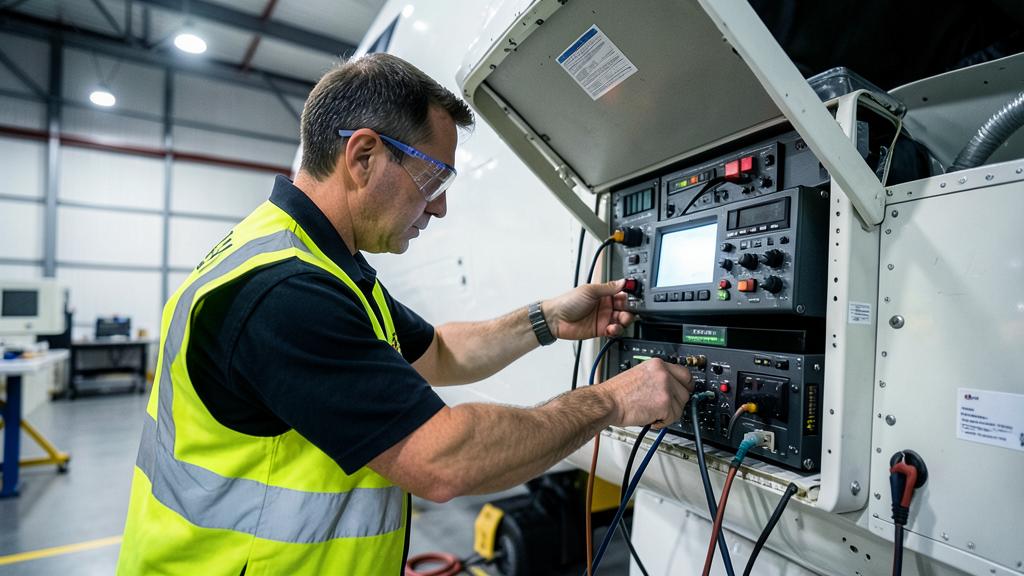
Connecting a loader to a maintenance panel and pushing a new standard into a computer takes less time than the paperwork that surrounds it. That asymmetry is the whole subject. The technical act is short, reversible in appearance and easy to get right; the configuration state it creates is long-lived, invisible from outside the box, and the place where fleets quietly split in two.
A software load is a design change with a screwdriver attached
The software running in an avionics computer is part of the type design. It was developed and verified to an assurance level chosen according to the consequence of its failure, under the recognised software standard for airborne systems, with its programmable hardware covered by the companion standard. It was then approved as part of the aircraft’s certification basis, either with the original type certificate or through a subsequent change.
That has a direct consequence for the hangar. Changing it is not a repair and not a servicing task; it is the embodiment of a design change that somebody else has already had approved. The operator’s role is not to decide that a newer version is better. It is to establish that this particular version is approved for this particular aircraft, to embody it exactly as the approved instructions require, and to leave behind an unambiguous record of what is now installed.
The instruction reaches the operator as a service bulletin from the design approval holder or as the instructions attached to a supplemental approval, and sometimes with an airworthiness directive on top making embodiment mandatory within a stated compliance time. Only that document defines the approved data. A vendor release note describing improvements, a field representative’s recommendation, or the fact that the load ran without error are none of them evidence of approval.
Loading new software is like installing a certified upgrade to your car’s computer. The manufacturer says what version works, and you must follow their exact instructions. Just because the new software works doesn’t mean it’s approved for your specific plane.
An A320 operator receives a service bulletin for a new avionics software version. The bulletin specifies part number 12345-ABC, but the engineering team accidentally loads 12345-XYZ, which is the latest version but not the approved one. The aircraft flies with unapproved software until an audit catches the mistake months later.
The version that counts is the one approved for this airframe
A load is identified by more than a version number, and every one of the identifiers can be right on its own while the combination is wrong. The media set carries a part number in the format defined by the loadable software standards, and that part number — not the marketing version, not the display string on a maintenance page — is what the approved data refers to. The receiving unit carries its own hardware part number and modification standard, and the compatibility between the two is a statement made by the design approval holder, not an inference to be drawn locally.
Then there is the rest of the aircraft. A computer rarely changes standard alone. It exchanges data with other units whose own software makes assumptions about message content and behaviour, which is why bulletins so often come in sets and why partial embodiment is explicitly forbidden in some of them. The compatibility matrix in the bulletin is the operative document, and reading it as a table of options rather than a set of constraints is a recurring source of trouble.
Getting the load to the aeroplane intact
The transport layer has been standardised for decades. Media sets are structured and part-numbered to a common standard; the loading protocols, from the older bus-based scheme to the current network-based one, define how a portable or on-board loader talks to the target; and a further standard covers the electronic distribution of software so that a load can travel from the design approval holder to the operator as a signed package rather than on physical media.
The signature and the integrity checks in those standards do real work: they establish that the package came from the organisation that issued it and that it has not been altered in transit. What they do not establish is that it is the right package for this aircraft today. The verification of applicability is human and documentary, and it happens before the cable is connected.
The physical act has its own small set of hard requirements, and they are the ones most often improvised. Electrical power has to be stable for the duration; an interruption partway through a load can leave a unit in a state that requires more than a retry to recover, and an aircraft can be stopped by a momentary break in the ground power supply. The loader itself is a shared tool that visits many aircraft and many operators, which makes its own configuration and the provenance of the media on it a control point rather than a detail. And the load has to be given the time it actually needs, which for some systems is measured in tens of minutes per unit and does not compress because the departure time did not move.
Proving afterwards what is actually installed
The load is complete when the aircraft record says what is on board and that statement is verifiable. This is the step that separates a controlled fleet from a hopeful one, and it has two halves that people routinely merge.
The first half is reading the configuration back from the aircraft. Most modern types can report installed software part numbers through a maintenance page or a central maintenance system, and that read-back is evidence in a way that the loader’s success message is not. A load performed on a dual or triple installation can succeed on one channel and fail on another; the system may or may not annunciate a cross-channel mismatch, and it may only do so in a specific configuration or flight phase. Reading each channel individually is not excessive caution, it is the only way to know.
The second half is the documentary trail. The continuing airworthiness records have to show the current modification and configuration status of the aircraft, and the maintenance organisation has to issue a release to service against approved data for the task performed. Recording the bulletin as embodied is not the same as recording the resulting part numbers, and the difference surfaces years later, when a component is swapped and someone needs to know what standard the aircraft was actually at.
The fleet is the real object
An individual load is a manageable event. A fleet is not, because configuration drifts by mechanisms nobody decided on. The most common is the spares chain: a rotable removed from an aircraft at one standard, overhauled, and fitted to an aircraft at another. Unless the standard is checked and corrected at fitment, an aircraft that was recorded as embodied silently reverts. The second is partial embodiment across the fleet, which is not a fault in itself — bulletins are commonly embodied opportunistically at scheduled inputs — but which becomes one when the register does not track who is at which standard.
The third mechanism is the one that hurts most, because it is invisible: the databases and configuration files that ride on top of the software. Navigation, terrain, performance and operator-specific configuration data all have their own cycles and their own distribution paths, and a software change can alter what the underlying data is expected to look like. New software reading data prepared for the previous standard is a configuration mismatch that no part number comparison will catch.
Keeping a fleet in sync is like herding cats. Even if you update most planes, one rogue part or a forgotten database can cause problems. The real challenge is tracking every change, not just the obvious ones.
A Boeing 737 fleet is updated to a new avionics standard, but one aircraft receives a replacement FMC from stores that still runs the old software. The crew notices navigation discrepancies only after takeoff, forcing a return to the airport. The issue was missed because the maintenance team didn’t check the part number of the replacement unit.
What the change does to the people who use the aircraft
An avionics standard change rarely stops at the box. It can alter a display, a mode logic, an annunciation, a failure message or the way a system degrades — all of which are the flight crew’s working material. In the European framework, the data that operators need to train and operate a type is formalised as operational suitability data, which covers the master minimum equipment list, the flight crew training elements including differences between standards, simulator data and the data relevant to maintenance certifying staff. When a change is significant enough, the difference between standards becomes a training requirement, not an information note.
Even short of that threshold, the practical questions arrive quickly. Does the minimum equipment list item still read the same way? Does the abnormal procedure still match the message displayed? Do simulators reflect the new standard, or are crews being trained on the old one? Does maintenance troubleshooting documentation exist for both standards while the fleet is mixed? Each of those has an owner, and none of them is the engineer holding the loader.
The reflex worth having. Treat the load as complete only when three things agree: the part numbers read back from the aircraft, the entry in the fleet configuration register, and the documentation the crews and the troubleshooters will actually open. Two out of three is the normal state of an organisation that is about to be surprised.
Reverting is not the mirror image of loading
Rollback is assumed to be available and frequently is not. Reverting to a previous standard is itself a configuration change, and it needs the same things the forward change needed: approved data that permits it, media for the previous standard still held and still valid, and a record. Where the forward change was mandated by a directive, reversion may be prohibited outright. Where the previous standard has been superseded in the supplier’s distribution system, the media may simply no longer be obtainable.
The practical rule is to decide the reversion position before embodiment rather than after: whether it is permitted, whether the media is retained, and what the aircraft’s dispatch status would be in the interim. An organisation that discovers the answer during an event has already lost the aircraft for the duration.
A sequence that survives contact with a real hangar
Establish applicability first, from the effectivity list and the aircraft’s own records, and confirm the receiving unit’s hardware standard before anything is connected. Confirm the compatibility set — which other units must be at which standard, and whether the change may be embodied in stages. Secure stable power and enough time for the slowest unit in the set. Load, then read back per unit and per channel. Perform the functional test the approved data specifies, not the one that seems sufficient. Record the resulting part numbers rather than the bulletin reference alone, and update the fleet register in the same shift, because a register updated later is a register updated selectively.
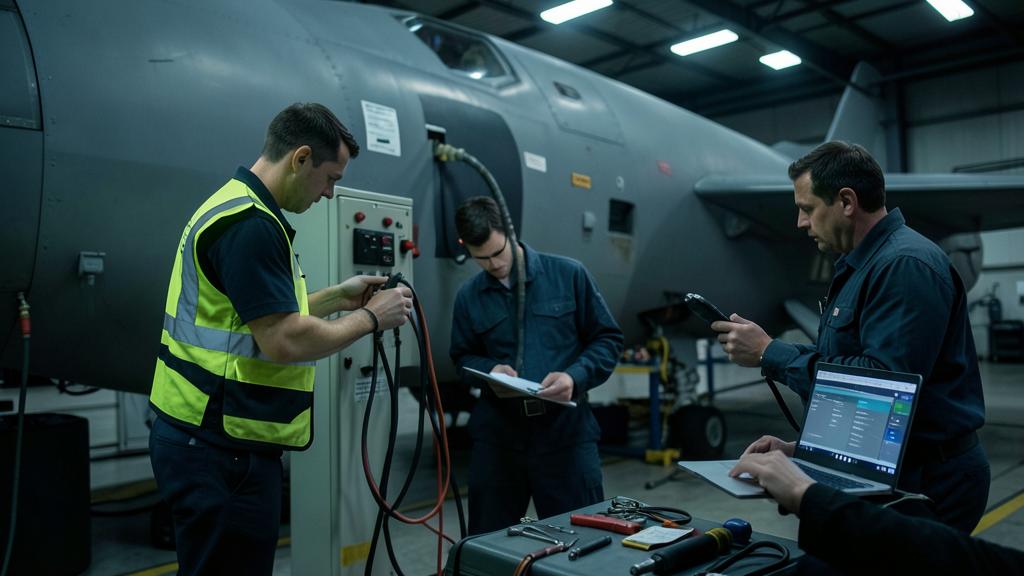
Then close the loop outside the hangar: confirm that the associated databases and configuration files are at the matching standard, that the minimum equipment list and crew documentation match what is now installed, and that anyone maintaining a mixed fleet knows which tail numbers are at which standard. Comparing how different operators handle that last part — particularly the discipline around standards arriving through the spares chain — is a conversation worth having with people outside your own engineering department, and one that runs regularly on forums.fl330.com.


Leave a Reply
You must be logged in to post a comment.