
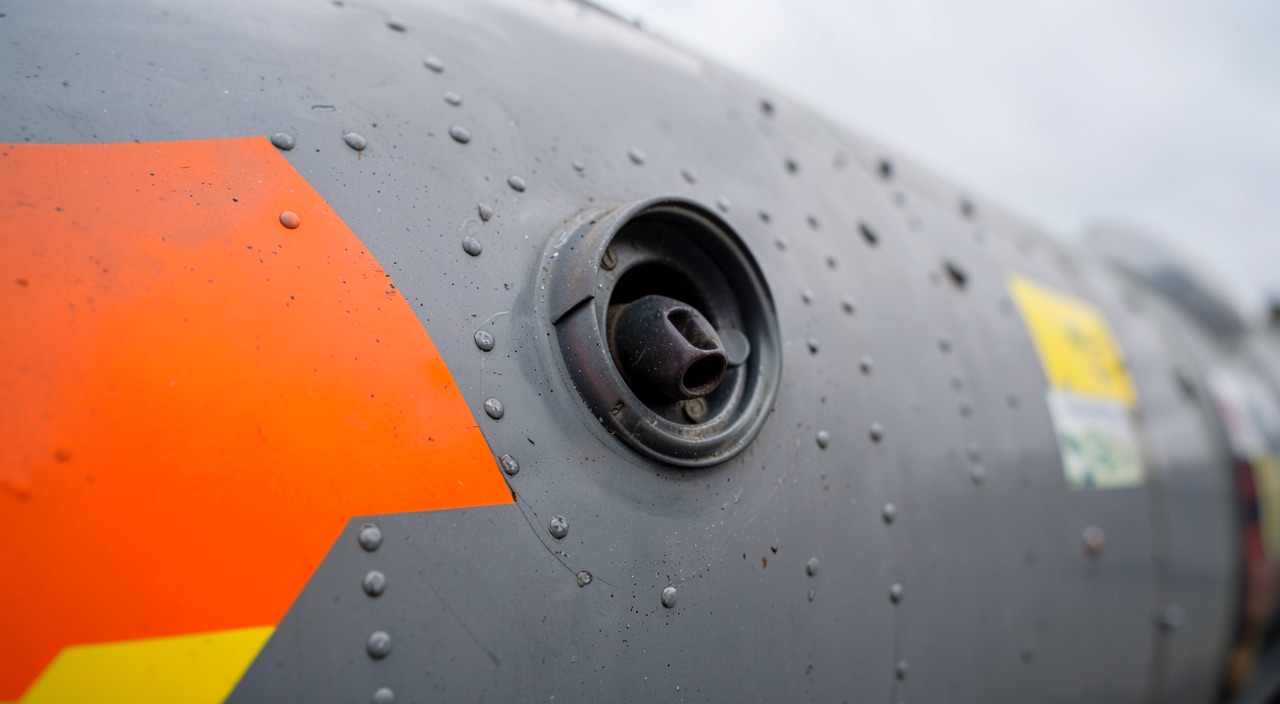
An aircraft comes out of a check, airworthiness file complete, the two primary altimeters agree to the foot on the flight deck — and yet the operator receives an unfavourable altitude-keeping assessment on that registration: the external measurement places its altimetry error outside the allotted budget. No failure, no message, nothing to cross-check on board. What is called into question is not a dial, it is the entire chain, from the fuselage skin to the transponder. Reduced vertical separation approval comes down to that error budget: two terms, two owners, and a single witness able to tell them apart.
What the approval controls: a chain, not an instrument
Reduced vertical separation minimum — RVSM — brings spacing down to a thousand feet between FL290 and FL410 inclusive within designated airspace, where two thousand feet used to be required; above FL410, the two thousand feet remain. Nothing in this reduction assumes a more accurate altimeter: it assumes that each aircraft’s total vertical error is bounded, demonstrated and monitored, so that the vertical collision risk stays within the safety envelope accepted for the airspace concerned.
The approval rests on two legs that must not be confused. An airworthiness leg: the aircraft, in its type design and maintenance condition, meets minimum performance specifications for the altimetry system. An operational leg: the operator holds the procedures, training, maintenance programme and records that keep this performance over time, and contributes to fleet monitoring. Depending on the authority, this second leg takes the form of a specific approval or rests on airworthiness compliance combined with continuing monitoring; the underlying mechanism does not change.
On the equipment side, the list is short and every item has its reason for being there. Two independent altitude measurement systems, so that the failure of one channel is detectable rather than silent. An automatic altitude-hold system, because manual altitude keeping does not hold the tolerance over time. An altitude alert, triggered beyond a threshold typically of a few hundred feet. A transponder reporting the pressure-altitude of the system actually used to hold the level — without which what the ground sees bears no relation to what the crew is following.
One last structuring point: the demonstration does not hold at a single point, but over a domain. The basic envelope covers common cruise conditions in altitude, Mach and mass; the full envelope pushes to the certified extremes. The tolerance granted to altimetry error is wider there, precisely because static-source error is not a constant: it is a function of Mach number and angle of attack.
RVSM doesn’t just check if an altimeter is accurate. It ensures that the entire system—from the aircraft’s skin to the transponder—keeps the plane within a safe vertical distance from others. Two types of errors are tracked: one from the altimetry system (hard to detect on board) and one from the pilot’s altitude control (visible in flight). Both must stay within limits to prevent collisions.
The error budget: two terms, two owners
The whole architecture rests on one decomposition. Total vertical error is the gap between the pressure-altitude actually occupied and the one that was assigned, and it is made up of two contributions whose signs decide whether they add up or cancel out.
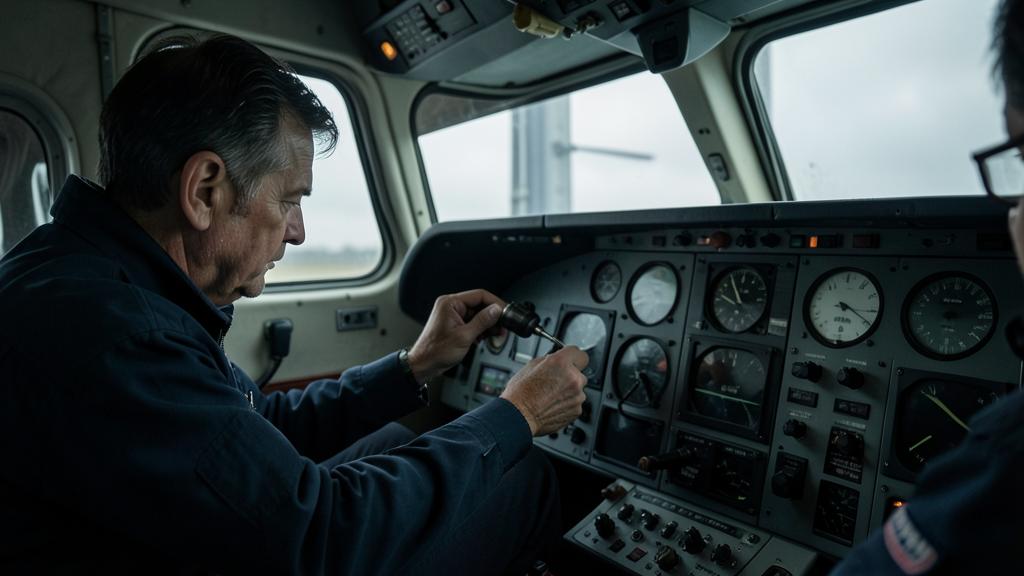
The first is altimetry system error: the gap between the pressure-altitude displayed to the crew — the one used to hold the level and that is reported — and the true pressure-altitude of the surrounding air. It aggregates static-source position error, the residual of the correction meant to compensate for it, sensor and computer error, and the display. It is invisible from the flight deck: no on-board barometric instrument can reveal it, since it would share the same assumption and, very often, the same pressure source.
The second is assigned-level deviation: the difference between the displayed altitude and the one that was cleared. It falls under piloting, automation, level-change technique and disturbances encountered. It is visible on board, visible on the ground, correctable in real time.
The same total deviation therefore points back to two distinct organisations: the altimetry share is dealt with in the workshop and the design file, the level deviation in training, procedure and flight analysis.
| Term | Operational definition | What produces it | Who is accountable | How it is established |
|---|---|---|---|---|
| Altimetry system error | Displayed pressure-altitude minus true pressure-altitude | Static sources, source-correction residual, sensor, computer, display | Type certificate and maintenance | Geometric height converted to pressure-altitude, compared with reported altitude |
| Assigned-level deviation | Displayed and reported altitude minus cleared level | Altitude keeping, guidance, levelling off, mountain wave, turbulence | Crew and operator | Transponder report compared with the clearance |
| Total vertical error | Pressure-altitude actually occupied minus cleared level | Both mechanisms, which add up or cancel out depending on their signs | Shared, hence the ambiguity of an observed deviation | Reconstructed: geometric measurement checked against the cleared level |
The sign of the two deviations decides the outcome, and this is where the reasoning turns on itself. Take an altimetry system reading two hundred feet high: the surrounding air is two hundred feet below what the crew reads. If the crew stabilises the display two hundred feet above the cleared level, the aircraft occupies exactly the cleared level — zero total vertical error, even though two non-conformities coexist, one in the pressure chain, the other in altitude keeping. If the same crew instead stabilises the display two hundred feet below the cleared level, the two errors add up and the aircraft flies four hundred feet too low. Same installation fault, two opposite outcomes: this is why monitoring does not stop at the total deviation and seeks to isolate the altimetry share, the only one whose distribution can be modelled in the collision-risk calculation.
An Airbus A320 flying at FL330 has an altimetry system error of +200 feet (the air is actually 200 feet lower than the altimeter shows). If the crew levels off at 33,200 feet (200 feet above the cleared level), the plane is exactly at FL330. But if they level off at 32,800 feet (200 feet below the cleared level), the plane is 400 feet too low. The ground sees a 400-foot deviation, but the real issue is the hidden altimetry error.
In-group or out-of-group: why compliance is statistical
A point dispatched in a single sentence in most training conditions the whole logic of the approval. The specification is not stated as an individual tolerance along the lines of « this aircraft must be accurate to so many feet », but, for a group of aircraft, on the distribution of altimetry error: the group mean below one value, the mean plus three standard deviations below another, wider one. This bounds both the bias common to the type and the dispersion between airframes.
A group is defined by a shared set of physical causes: same type, same skin definition in the region of the static sources, same circuit architecture, same source-error correction applied by the same equipment standard. What belongs to the group has no individual demonstration: its compliance is inherited. An aircraft that does not belong to any group — prototype, major modification, particular installation — must demonstrate compliance on its own, under an individual limit that is more stringent in the basic envelope than in the full envelope.
| Criterion | Aircraft belonging to a group | Out-of-group aircraft |
|---|---|---|
| Form of the requirement | On the group’s distribution: mean bounded, mean plus three standard deviations bounded more widely | On the airframe: error bounded at every point of the envelope |
| Orders of magnitude | Mean bounded to a few tens of feet; mean plus three standard deviations bounded around two hundred feet | On the order of one hundred and sixty feet in the basic envelope, two hundred in the full envelope |
| Nature of the evidence | Type flight tests, source-error correction calculation, documented membership of the standard | Measurement campaign specific to the airframe |
| Modification near the static sources | Leaves the group: inherited compliance falls away | Demonstration to be redone |
| Role of monitoring | Sample the group to confirm the distribution | Check the airframe, with no sampling effect |
This logic sheds light on two things. Why monitoring is carried out on samples by group and by operator, renewed periodically, rather than on every registration: what is being monitored is the validity of a distribution. And why a minor skin modification — a reinforcement, a repair, repainting — has a disproportionate regulatory effect: it breaks the shared set of causes that underpinned the inheritance.
What in-flight monitoring actually measures
Since altimetry error is defined relative to true pressure-altitude, no altimeter can establish it. The only external witness is geometric, and the measurement is made in two steps: record the aircraft’s geometric height, then reconstruct the true pressure-altitude from it using a meteorological field describing the atmosphere observed at that place and that instant. What this true pressure-altitude delivers first, compared with the altitude reported by the transponder, is the altimetry share itself: this is the directly measured quantity. Total vertical error is then reconstructed, by checking true pressure-altitude against the cleared level — a level that must be known to air traffic control or, failing that, inferred from the nearest flight level, an assumption that becomes false precisely in cases of large deviation. Three families of means coexist, with neither the same cost nor the same reach.
| Means | Quantity recorded | What it requires | Reach | Structural limitation |
|---|---|---|---|---|
| Ground-based height-monitoring installation | Geometric height by cross-referencing the arrival times of transponder replies | Overflying the covered area | Any transponding aircraft that passes, without operator action | Limited coverage; one measurement point per pass |
| On-board satellite recorder | Geometric height recorded on board, processed after the flight | Dedicated equipment, campaign coordination | Any route, rare or out-of-group aircraft | One-off, costly, sensitive to the geoid model |
| Continuous-broadcast monitoring | Geometric height and barometric altitude, in separate fields | Compliant broadcast, usable vertical quality | Very large volume, near-permanent | Uneven quality; geodetic reference to be controlled |
A monitoring result says less than is often credited to it: it characterises altimetry error at the altitude, Mach and mass of the moment, with its own uncertainty, and not over the whole envelope. An aircraft favourably measured at economy cruise has demonstrated nothing at high Mach and heavy mass, where the source-correction residual is most stressed. Conversely, one isolated unfavourable result is not proof of non-compliance: it triggers an investigation that cross-checks level deviation, static-circuit condition and equipment standard.
Where altimetry error drifts without setting anything off
This is the side the crew never sees, and it weighs the most in the budget. The static source does not read the pressure of undisturbed air: it reads the local pressure field created by the airflow around the fuselage. Source-error correction models this gap as a function of Mach and configuration, to subtract it out — a model valid only as long as the external geometry remains the one on which it was established.
Hence the tolerance zone defined around the sources in the maintenance documentation: skin flatness, absence of a dent, of an overlap, of protruding sealant, of a proud rivet, of excess paint thickness. Hence the leak checks on the static circuit: a micro-leak in a low-pressure zone alters the pressure read without creating any inconsistency between altimeters if both channels are affected together. And hence the sensitivity to equipment standard: a computer replaced by a neighbouring software reference but carrying a different correction table produces an error that only shows up at high Mach numbers — never during a low-altitude check.
The trap. Assuming that cross-checking the altimeters before entering reduced-separation airspace proves altimetry compliance. It tests consistency between two channels, not accuracy relative to the surrounding air. Two altimeters whose sources undergo the same local field change, or that process the same faulty source correction, agree perfectly while both being out of budget. The common mode is precisely what internal comparison cannot detect — and it is the dominant mode among the non-conformities found.
In flight: what the pre-entry check proves, and what it does not
The pre-entry check remains indispensable, provided one knows what it catches: drift of one channel, blocked source, a stuck value, inconsistency with the known terrain altitude at the time of setting, unavailability of altitude hold, of the alert or of the report. The tolerance for deviation between primary altimeters is stated in the flight manual and depends on type; it is typically counted in tens to a few hundred feet. What it does not catch is what affects both channels together.
On the other term of the budget, control is direct and plays out in identified situations. Mountain wave and clear-air turbulence produce excursions that altitude hold does not recover from instantly, with a characteristic pair: loss on the descending side, overshoot on recovery. Levelling off at the top of climb is the other major contributor, when a high residual vertical speed turns the capture into an overshoot. Add to this the granularity of reporting: the hundred-foot increment masks deviations that the twenty-five-foot increment makes visible on the ground — the fineness of detection changes, the deviation does not.
The right reflex. Treat the question in two distinct phases. Before entry: check the consistency of the channels and the availability of the three functions — altitude hold, alert, report — the altimetry share being secured by the file, not by the reading of the day. In flight: monitor the level deviation, anticipate wave and turbulence, announce any incapability rather than compensate for it. On return, report the abnormal vertical deviation as a technical event with the altitude, the Mach number and the mass: it is these three parameters, and not the deviation in feet alone, that tie the case to a point in the envelope.
What is left to check at home, and the grey area
Four points vary from one operator and one type to another, and deserve a reading in one’s own documentation rather than a memory of a training course. The tolerance for cross-check between primary altimeters, and the conditions under which it applies, on the ground or in flight. The items of the minimum equipment list that condition capability, and the expected wording for announcing incapability. The maintenance programme tasks that carry altimetry compliance: static-circuit tightness, inspection of the tolerance zone around the sources, tracking of equipment standards, traceability of skin repairs. Lastly, the monitoring status of one’s own fleet, group by group: knowing that a group is awaiting its sample changes the reading of an isolated unfavourable assessment.
The grey area is shifting. The move to continuous-broadcast monitoring replaces campaigns with near-permanent observation: one is no longer looking for a sample, one is managing a stream where the quality of geometric height varies with the installation and where the geodetic reference used must be known for the comparison to mean anything. The risk is no longer a lack of data, it is reading a noisy signal as a type non-conformity. For anyone preparing a qualification or a technical review, the expectation shifts accordingly: reciting a thousand feet between FL290 and FL410 demonstrates nothing. What is to be demonstrated is the decomposition of the total deviation, the reason why one of the two shares is invisible from the flight deck, and what is done when it stops being guaranteed. This reasoning is worked through in training, and concrete cases are compared on the forum.
The applicable texts, airworthiness directives, airspace specifications in force and the operator’s approved documentation prevail in all circumstances over this article, whose purpose is to explain a mechanism, not to serve as a procedure.
Questions fréquentes
What exactly does a reduced vertical separation approval control?
It does not control an altimeter but an entire chain and the error budget it consumes. On the airworthiness side, it verifies that the aircraft’s altimetry system — static pressure sources, source-error correction, sensors, computers, display — meets minimum performance specifications across a whole domain of altitude, Mach and mass. On the operational side, it verifies that the operator holds the procedures, training, maintenance programme and records that keep this performance over time, and that it contributes to fleet monitoring.
Why doesn't cross-checking the two altimeters before entering reduced-separation airspace prove altimetry compliance?
Because it tests consistency between two channels, not accuracy relative to the surrounding air. If the pressure field around the static sources has been altered in the same way for both channels, or if both process the same faulty source correction, the indications agree perfectly while both being out of budget. This common mode is exactly what an internal comparison cannot see, and it is the dominant mode among the non-conformities that external monitoring brings to light.
How can an aircraft be deemed compliant without ever having been measured individually?
Because the requirement bears on the distribution of altimetry error across a group of aircraft, not on an individual tolerance. A group brings together airframes sharing a common set of physical causes: same type, same skin definition in the region of the static sources, same circuit architecture, same source-error correction standard. An aircraft’s compliance within the group is inherited from this collective demonstration, and monitoring samples the group to confirm that the assumed distribution still holds.
What does an altitude-keeping monitoring campaign actually measure, and what does it not measure?
It records a geometric height by an external means, then reconstructs the corresponding true pressure-altitude from a meteorological field describing the atmosphere observed at that place and that instant. Compared with the altitude reported by the transponder, this true pressure-altitude gives the altimetry share directly; total vertical error is only obtained afterwards, by checking the measurement against the level actually cleared. What the result does not say is behaviour over the whole domain: it characterises the aircraft at the altitude, Mach and mass of the moment, with its own measurement uncertainty.
Which maintenance actions can take an aircraft out of its altimetry error budget?
All those that affect the external geometry within the tolerance zone defined around the static sources: a dent, a reinforcement, an overlap repair, excess sealant, a proud rivet, excess paint thickness. Add to this static-circuit sealing defects, particularly when a micro-leak sits in a low-pressure zone, and changes of equipment standard carrying a different correction table. In this last case, the error only appears at high Mach numbers and remains invisible during a low-altitude check.
What should be done in flight when an item conditioning capability in reduced-separation airspace becomes unavailable?
One must consider that the error budget is no longer guaranteed, and say so, without trying to compensate. The correct conduct is to apply the flight manual procedure for the item concerned, cross-check the available altitude indications, then announce the incapability to air traffic services in the wording provided so that a different separation can be applied. On return, the event is handled as a technical fact and documented with the altitude, Mach number and mass of the moment.


Leave a Reply
You must be logged in to post a comment.