
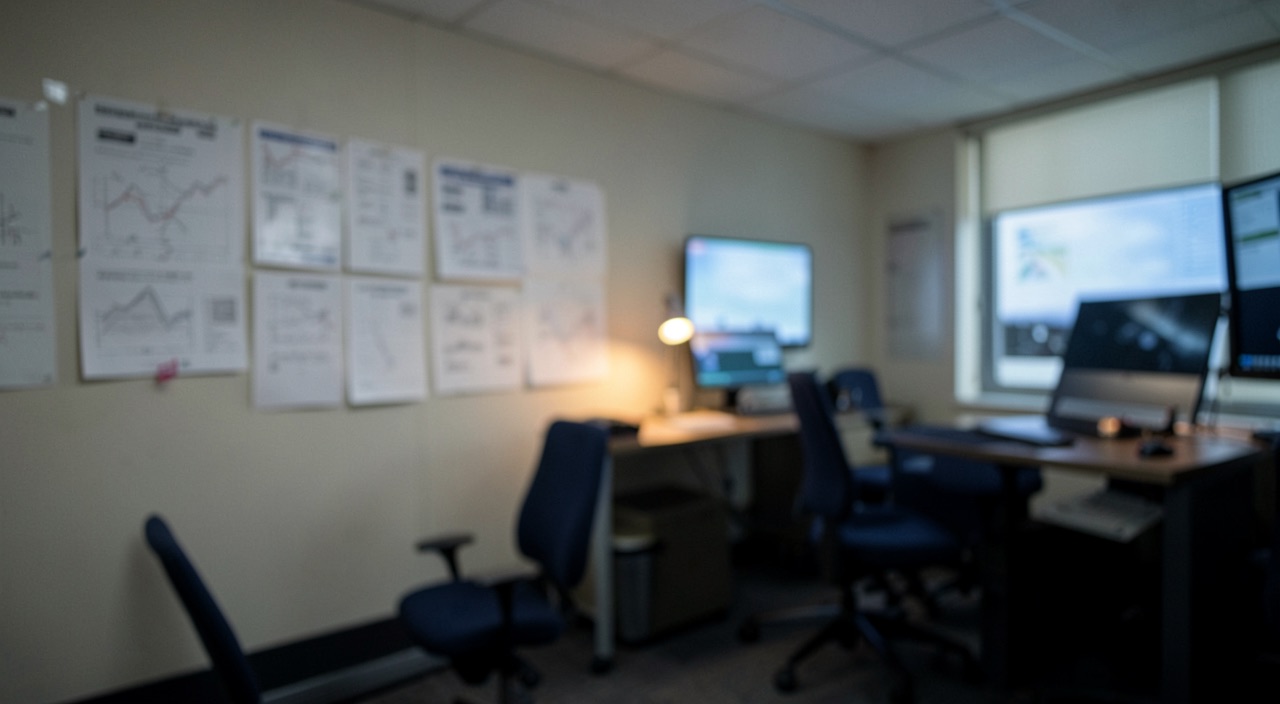
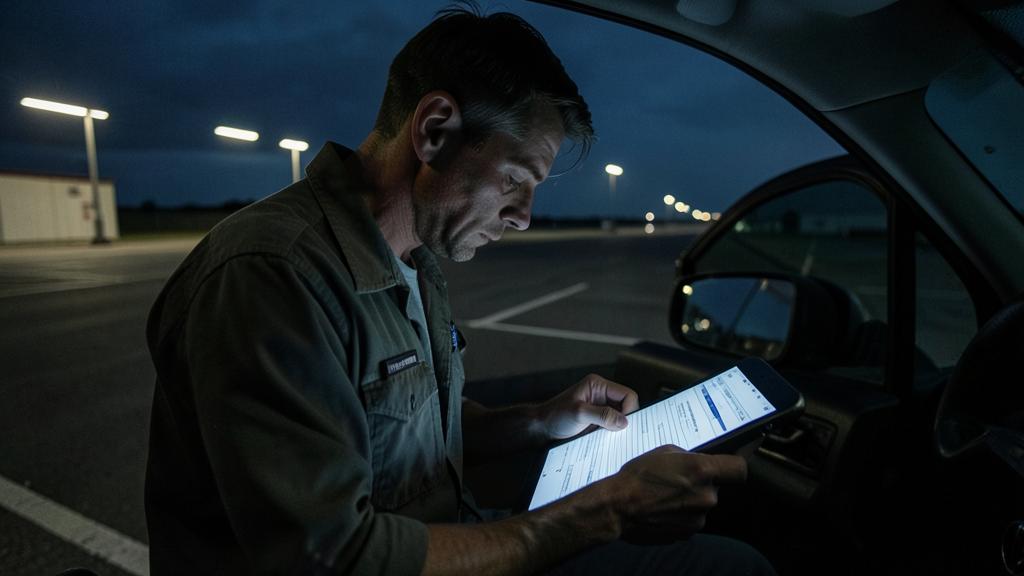
Fourth wake-up before four in the morning on the same pairing, a night flight on the way back, and that fatigue report form filled in on the car park before getting out of the car. Three weeks later, the pairing is still on the programme, unchanged. Whether that sheet of paper achieved anything depends less on the operator’s goodwill than on the machinery that processes these reports: what it can do with an isolated signal, what it cannot do with it, and what the just culture policy really covers once you have signed.
Reporting and standing down: two acts that are constantly confused
A fatigue report is not a declaration of unfitness. Both exist, both are legitimate, but they act neither at the same moment nor on the same object. Declaring yourself unfit is an operational decision: it bears on the duty about to start or already under way, it removes a crew member from their function, it produces a replacement, a delay or a cancellation, and it commits the operator on crew composition. Filing a report is a record: it removes no one, cancels nothing, changes nothing about the duty in progress. It feeds a database, and that is all it does — which is neither little nor much, depending on what you put into it.
The confusion is costly both ways. Filled in instead of a stand-down, the report lets someone fly who believed themselves unfit to hold their post, and the written trace will say exactly that, in so many words, with a time on it. Left unwritten because it did not go as far as a stand-down, it deprives the system of the only information that could have moved a schedule: nobody saw anything, so nothing happened. The hardest pairings in a programme are rarely the ones that trigger stand-downs; they are the ones everybody absorbs in silence.
| What is being compared | Declaring yourself unfit | Fatigue report |
|---|---|---|
| Timing | Before or during the duty | After the duty, exceptionally during it |
| Immediate effect | Removal from the function, a replacement to be found | None on the duty in progress |
| Recipient | Operational management, crew control, senior cabin crew member | Safety or fatigue management function |
| What it produces | An operating decision, dated and named | An aggregable data record, de-identified after receipt |
| Time horizon of the effect | The day | The scheduling season, sometimes the next one |
| What is expected of you | A fitness judgement here and now | A factual description of the duty and of what preceded it |
The trap: believing that filling in the form has put you in the clear. The report has no effect on the duty in progress and covers no one who sets off knowing themselves unfit to hold their function — on the contrary, it documents that knowledge. A stand-down is said out loud, to the person who can decide; the report is written afterwards, and it explains what led there.
A fatigue report is just a record, not a way to stop a flight. It helps improve schedules over time, but only if many people report the same issue. If you’re too tired to fly, you must say so to your supervisor immediately – that’s a stand-down, not a report.
On a regular A320 route between Paris and Madrid, three pilots in different months report fatigue after early morning departures from Madrid. Each report alone doesn’t change anything, but when the safety committee sees three reports about the same pairing (same departure time, same crew base, same hotel), they move the departure time to 07:00 instead of 05:30 to reduce fatigue risk.
What becomes of the form, step by step
Receipt knows your identity, and that is necessary: to call you back if the description is incomplete, to link the report to an event already known, sometimes to offer an interview. It is also the last step where the name exists. What then goes to the database is a line of fields, and the quality of that line is decided entirely at the coding stage.
Coding means turning a narrative into quantities that add up: flight pair, departure base, report time, end time, duty length, number of sectors, position of the duty in the sequence, length and place of the preceding rest, declared wake-up time, declared sleep, moment of degradation, function affected. A report whose fields stay empty does not disappear: it becomes a line of free text, which costs analysis time, is read once and aggregates with nothing. That is a common fate, and it has nothing to do with any ill will on the recipient’s side.
Then comes the rating, then review in committee — safety committee, fatigue group, with or without staff representatives depending on the house. The possible decisions are more varied than one might think, and moving a schedule is the rarest of them: a change of hotel or room, a shorter journey to the rest facility, shifting the report time by one notch, adding a crew member, removing a sector, introducing controlled rest, or simply putting the pairing on a watch list. Feedback, for its part, is the most frequently failing part: acknowledgement of receipt is usually automatic, substantive feedback almost always has to be asked for.
A single report moves nothing, a series moves a roster
A single report is indistinguishable from a bad personal night: a sick child, a house move, a time shift never caught up with. An operator will not change a commercial programme on that basis alone, and would be wrong to do so — the data does not allow it. What triggers an analysis is repetition on an identifiable object: the same flight pair, the same sequence, the same hotel, the same report time, the same direction of time shift.
The practical consequence is a writing rule, and it is counter-intuitive: describe the duty, not your state. “Tired at the end of the pairing” aggregates with nothing. “Report time 04:15, fourth consecutive early morning, room on the runway side, unable to fall asleep before 23:00 local” aggregates on at least three fields — report time, position in the sequence, rest location — and mechanically joins the other reports citing the same hotel or the same slot.
The second consequence concerns the collective. A crew that lives through the same day often produces a single report, by tacit division of labour: “someone has done it”. That is exactly the opposite of what is needed. Four independent reports on the same duty are not the same information four times over: they establish that the effect does not depend on one person, which is precisely the question the committee will ask.
This series mechanism has a limit worth knowing before relying on it: it assumes a programme that repeats. In scheduled operations, the same flight pair comes back every week for a whole season, and the object to cite is given in advance. In charter, on-demand transport or business aviation, no two rotations are ever alike and none will come back: citing the flight number produces no series at all, and the report stays indefinitely isolated, however many people file one. The object to name then becomes the pattern rather than the flight — a night report time after a day on standby, a rest taken in a hotel chosen for its proximity to the runway, a third early wake-up in the same week, a run of different departure bases. Described that way, the report aggregates with those carrying the same pattern on entirely different flights. The same reasoning applies to long-haul flying, where every trip is unique but where the direction of the time shift, the length of the layover and the local report time for the return sector do repeat from one sector to the next.
The fields that make a report usable
The most decisive field is not the duty length, which the operator already knows better than you: it is the actual wake-up time. It alone allows the time awake at the moment of the last landing to be calculated, one of the quantities that best explains the degradations reported and one that appears nowhere in a roster. Two duties strictly identical as far as the limits are concerned may differ by several hours of wakefulness depending on the journey to the airport and the time at which the alarm went off.
The second most useful field is the moment of degradation, and it is most often left blank. Discomfort present from report time onwards does not tell the same story as discomfort appearing in the final hour: the first points to the preceding rest and the construction of the sequence, the second to the length of the duty or the number of sectors. These two findings call for opposite corrections, and when the field is missing they cancel each other out in the average.
| Item described | What the analysis draws from it | If the field is missing |
|---|---|---|
| Actual wake-up time | Time awake at the last landing | One falls back on the report time, which hides very early wake-ups |
| Sleep obtained over 24 and 48 hours | Accumulated debt, distinct from the length of the duty | The pairing looks like the cause when in fact it is the rest |
| Moment of degradation | Cumulative fatigue or end-of-duty fatigue | The two possible corrections cancel each other out |
| Function and task affected | Actual operational consequence, hence the risk rating | The report stays a subjective feeling and is rated at the lowest level |
| Place and quality of the rest | An action available without touching the commercial programme | The only conceivable action becomes the most expensive one, hence the least likely |
| Countermeasures applied | Actual effectiveness of the means already provided | What has already failed gets prescribed again |
The right habit: note the wake-up time and the hours of sleep obtained before leaving the aircraft, never the next day. A reconstruction made after a recovery night almost always leans towards the optimistic, and that is precisely the figure on which the whole analysis rests. Four lines in a note on your phone are enough: wake-up time, sleep over the two previous nights, the moment things degraded, and what suffered from it.
What fatigue attacks first in a cabin
Fatigue does not first make you fail at difficult actions. It attacks automatic actions and prospective memory, that is, deferred intention: remembering in ten minutes’ time what you decided now to do. That is exactly how a cabin preparation works — a long sequence, interruptible, with no immediate error signal. One compartment checked, a passenger asking a question, the sequence resumed two rows further along than where it had been left, and the check counts as done without having been.
The second effect is more discreet and shows up in the collective: tolerance of deviation rises. You let through what you would have picked up the day before, you cut an announcement short, you accept an imprecise answer without asking for confirmation. The third is the most troublesome for the report itself, since it bears on the measuring instrument: self-assessment degrades at the same time as performance, without following the same slope. You believe yourself to be fine at the very moment you no longer are, and the report gets written with that judgement.
Hence the way to write. An effect observed on an identified task is worth infinitely more than an adjective: “life jacket check restarted twice, for want of a marker of the row where it had been interrupted” is a sentence that can be coded, that can be rated and that carries weight in committee, because it names a safety task and a consequence. “Very tired” cannot be coded, cannot be rated, and will end up in the box for subjective feelings, which is the box where things that do not get processed are filed.
Just culture: what protection covers when fatigue is the subject
Applied to the fatigue report, protection covers three concrete things: filing itself is not an admissible ground for disciplinary action, the content is not intended to serve as evidence in an internal procedure, and the source is de-identified during processing, at a step the operator’s procedure is supposed to name. The benchmark used to settle contested cases is substitution: would a colleague of the same qualification and comparable experience, placed in the same context with the same information available at the same instant, have been able to act in the same way? If the answer is yes, the event belongs to the system, whatever its consequences may have been.
What protection does not cover deserves to be said just as clearly. It does not apply to an act willed in knowledge of the risk, it does not stand in the way of proceedings falling to the judicial authority in the cases provided for by national law, and above all it does not guarantee that nothing will change for you. A series of reports concentrated on the same slots may legitimately lead to an interview about sleep hygiene, to a medical opinion, to an adjustment of the programme. These are not sanctions, even when they are experienced as such, and confusing the two discourages reporting just as surely as a threat does.
A just culture policy is read on four points, and the rest is literature: who signs it — management alone, or management and staff representatives —, who decides how a case is classified, whether there is any appeal against that classification, and what happens when the report concerns a lapse by its own author. The fourth point is the real test: it is the only case in which protection costs the operator something.
Prescriptive framework or risk management: the same form, two uses
In a purely prescriptive framework, flight and duty time limitations sort situations into classes according to report time, number of sectors and crew composition. That is robust, verifiable, enforceable — and coarse by construction. Two duties identical as regards the limit can produce very different times awake depending on the rest that precedes them and the journeys that frame them.
Within that framework, a report changes no limit, and demanding that it should is a dead end. It works elsewhere: it feeds the safety management system, where fatigue is a hazard like any other, and the correction goes through voluntary scheduling, that is, through the margin the operator gives itself beyond what the regulation requires. Showing that a pairing consumes all the available margin is a possible course of action; asking for the rule to be changed is not.
Where a fatigue risk management system is in place, the report changes status: it becomes an input to the loop, compared with the prediction produced by a model and, where they exist, with objective measurements of sleep and alertness. A repeated gap between what the model announces and what the crew reports is exactly what that system is for. It is also, in practice, the configuration in which an accumulation of reports may in time support a variation from a prescriptive limit — in either direction, and subject to the agreement of the oversight authority.
What to go and open in your own documentation
The following points can be checked in half an hour, off duty, and they determine whether your reports serve any purpose:
- where the form lives, and how many actions it takes to reach it from wherever you are at the end of a pairing;
- who receives it, by name, and under what title — safety, fatigue management, human resources are not the same answer;
- the time limit for acknowledgement of receipt and the time limit for substantive feedback, which are never the same figure;
- at which step de-identification takes place, and who keeps the key;
- whether fatigue data is presented to the safety committee, how often, and in what form;
- how to ask for the result of an analysis already completed, and from whom;
- what becomes of the report if the same pattern comes back on the roster the following month.
There remains a grey area that no procedure closes: a report filed after the fact does not repair a duty flown in the knowledge of being unfit. The boundary between tired and unfit remains a personal judgement, exercised alone, often at an hour when judgement is precisely degraded. What a good policy produces is not the disappearance of that area, it is a lower cost for saying that you are in it — and that cost is measured by the number of stand-downs accepted without discussion, not by the number of lines written in the manual.
For anyone preparing for a cabin safety manager post, a role as representative on the committee, or simply a recruitment interview, the useful skill is not knowing how to fill in a form: it is knowing how to read a database of reports, tell a signal from noise, rate a risk and present the whole thing to people who decide on a programme. That can be learned, it can be compared between operators, and it is the kind of subject usefully discussed on the FL330 forum or worked through in dedicated training on the FL330 learning paths.
The applicable regulation, the just culture policy signed at your operator and its approved documentation prevail over this article, which describes a mechanism and not a procedure.
Questions fréquentes
Can a fatigue report take me off a flight?
No. The report is a record that feeds a database and has no effect on the duty in progress. Standing down from a flight is a different act, addressed to operational management and taken before or during the duty. The two can be combined on the same day, but one never replaces the other.
Does my name appear in the analysis and in the safety committee?
The function that receives the report knows your identity, which allows it to call you back if the description is incomplete. On leaving that receipt stage, the report is de-identified and circulates only as a set of fields. The point to check in your documentation is the exact step at which this de-identification takes place and who keeps the matching key.
Why does nothing change even though several reports have been filed?
A single report is indistinguishable from a personal one-off and does not trigger an analysis. What opens a case is repetition on an identifiable object: the same flight pair, the same hotel, the same report time. If your reports describe your state rather than the duty, they aggregate with nothing and stay invisible in the database.
Which fields absolutely must be filled in for a report to be useful?
The actual wake-up time first of all, because it alone gives the time awake at the last landing, a quantity that appears in no roster. Then the sleep obtained over the two previous nights, the moment the degradation appeared, the task affected and the rest location. These fields should be noted before leaving the aircraft: a reconstruction made the next day almost always leans towards the optimistic.
Does just culture protect me even if the event described had consequences?
Yes, the dividing line is about intention and not about outcome. The benchmark used is substitution: if a colleague of comparable qualification and experience, holding the same information at the same moment, could have acted in the same way, the event belongs to the system. What falls outside protection is deviation willed in knowledge of the risk, not the error whose consequences turned out badly.
Within what time frame can feedback be expected?
Acknowledgement of receipt is almost always automatic and attests only to a filing. Substantive feedback follows the rhythm of the safety committee meetings and not that of the filing: it is that second time frame you need to look for in the operations manual, together with the name of the person you can ask for the result of an analysis already completed.


Leave a Reply
You must be logged in to post a comment.