
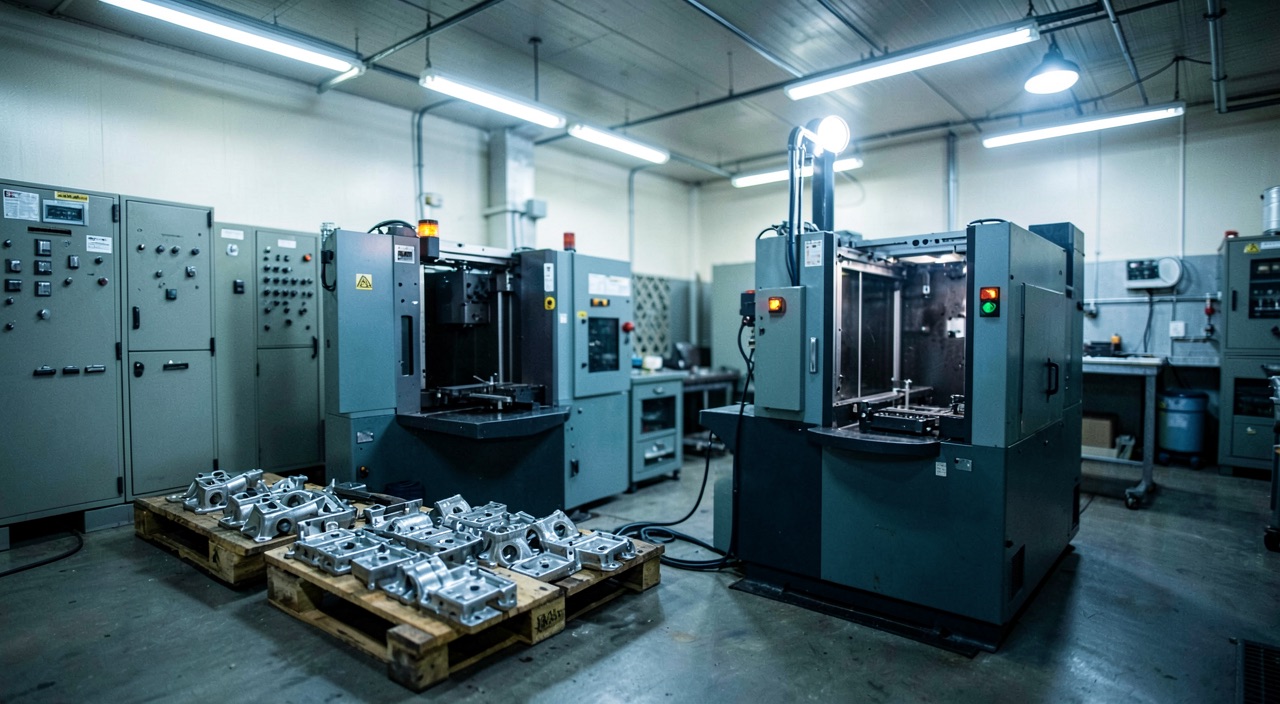
A fitting cracks on several aircraft of the same fleet. The investigation traces the cause back to a heat-treatment batch processed by a shop that neither the operator nor the manufacturer had ever audited: it was working for the supplier’s supplier. The question that then arises is not primarily legal, it is operational. Who is entitled to say what the part is worth, who must put it right, and to whom? The answer lies in a mismatch that is rarely spelled out: the industrial chain runs down indefinitely, the regulatory chain stops very high up.
Two chains that do not run equally deep
A common structural assembly involves several superimposed industrial levels: the manufacturer that integrates, a Tier 1 that delivers a complete assembly, a Tier 2 that machines or assembles detail parts, a Tier 3 that supplies the material and the surface treatments, and sometimes a further level for a very particular process. There is nothing abnormal about this depth; it has been the sector’s normal form of organisation ever since manufacturers stopped doing everything themselves.
Regulation, for its part, knows nothing of tiers. It knows holders: a design approval holder, answerable for the definition of the product, and a production approval holder, answerable for the conformity of what leaves the factory with that definition. Everything else is, from its point of view, a purchase. The holder buys, so the holder demonstrates; the party it bought from does not exist in the regulatory file other than as an element of the holder’s quality system.
From this principle follows a rule that governs everything else: delegating a task never delegates the responsibility attached to it. A Tier 1 that entrusts a machining operation to a Tier 2 remains, before its authority as before the manufacturer, the party asserting that the part is in conformity. It cannot answer that it bought in good faith. Symmetrically, the authority has no direct link with the Tier 2: it reaches it through the right-of-access clauses that the holder is required to include in its purchase orders, and which must allow access to the premises of partners and subcontractors.
The industrial chain can go as deep as needed, but the legal responsibility stops at the top. Even if a Tier 1 subcontracts work, it remains responsible for the final product. The regulator only recognizes the main manufacturer and its direct partners.
An Airbus A320 wing component is machined by a Tier 2 supplier. If a defect is found, Airbus (the manufacturer) must fix it, even if the Tier 2 was at fault. The regulator holds Airbus accountable, not the subcontractor.
What the Tier 1 sells: a drawing executed or a function guaranteed
The question that decides almost everything arises well before the incident: who owns the design data? Three regimes often coexist on the same aircraft, sometimes in the same bay.
Under the build-to-print regime, the manufacturer defines everything: dimensions, material, sequence of special processes, acceptance criteria. The Tier 1 executes. It brings industrial capacity, not design competence, and it has no latitude over what it makes. Under the delegated design regime, the Tier 1 receives an interface and performance specification and defines the item itself, under the cover of the manufacturer’s design organisation, with written arrangements that fix who approves what. Under the third regime, that of technical standard order equipment, the equipment manufacturer holds its own design approval for the article and produces under its own production approval: it is no longer a subcontractor, it is a holder.
| What distinguishes them | Build-to-print | Delegated design | Article under its own approval |
|---|---|---|---|
| Design data | Manufacturer | Tier 1, under arrangement with the manufacturer | Equipment manufacturer |
| Who rules on a manufacturing nonconformity | The manufacturer alone | Tier 1 within the written limits of the arrangement | Equipment manufacturer |
| Who signs the release of the part | The approved production organisation that made it | The same, with design-production agreement | Equipment manufacturer |
| Who analyses a defect found in service | Manufacturer | Tier 1, under the manufacturer’s oversight | Equipment manufacturer, with the manufacturer for the aircraft-level effect |
| What the operator sees | An airworthiness directive or a manufacturer’s service bulletin | A manufacturer’s service bulletin, causes rarely visible | Two possible contacts, and a risk of being passed back and forth |
The sensitive point is the second regime. It presents itself as a delegation of design, but the limits of the delegation are not in the commercial contract: they are in the technical arrangements signed between organisations. A quality department that reads the contract and not the arrangements regularly misjudges the real extent of what its Tier 1 may decide.
The point at which a supply becomes an aircraft part
Until it has been released by an approved production organisation, a part is only a purchase. The certificate of conformity that a Tier 2 attaches to its delivery is a contractual declaration: it binds its author before its customer, and before that customer alone. The authorised release certificate, by contrast, is a regulatory document: it is signed under the cover of an approval, within the scope covered by that approval, and it carries weight before the authority.
Two configurations occur. Either the Tier 2 holds its own production approval and releases the articles within its scope itself, possibly with a direct delivery authorisation that lets it ship to the operator without going back through the manufacturer. Or it holds none, and its output then enters its customer’s quality system: it is the Tier 1 that inspects, that accepts, and that signs. The same shop, the same lathe, the same part: the value of the paperwork accompanying it depends entirely on the arrangement.
A part only becomes official when an approved organization signs off on it. Before that, it’s just a component with a contract certificate. The key difference is who takes legal responsibility for it.
A Boeing 737 landing gear component is made by a Tier 2 supplier. If the Tier 2 has its own approval, it can ship directly to Boeing. If not, the Tier 1 must inspect and approve it before it becomes an official aircraft part.
The trap. A spare part offered by an “original” manufacturer at a price below the aircraft manufacturer’s, with an impeccable certificate of conformity and complete material traceability. It is all true: it does make that part, and it does so for that programme. What is missing is not quality, it is the title to release: its output is intended to become an aircraft part only after acceptance by its customer. The stores that shelve this box without distinguishing between the two documents introduce a part whose release no one has taken responsibility for.
Supplier oversight is not an annual audit
The obligation on an approval holder to control its purchases breaks down into a series of actions, of which the periodic audit is the most visible and the least decisive. The flow-down of requirements comes first: every purchase order must carry the applicable characteristics, the mandated processes, the acceptance criteria, the record-retention obligations. Next comes qualification of the source, process by process, then first article inspection, which in principle must be repeated whenever the tooling, the site or the routing changes. Last comes routine surveillance: receiving inspection, possible delegation of inspection to the source, handling of discrepancies.
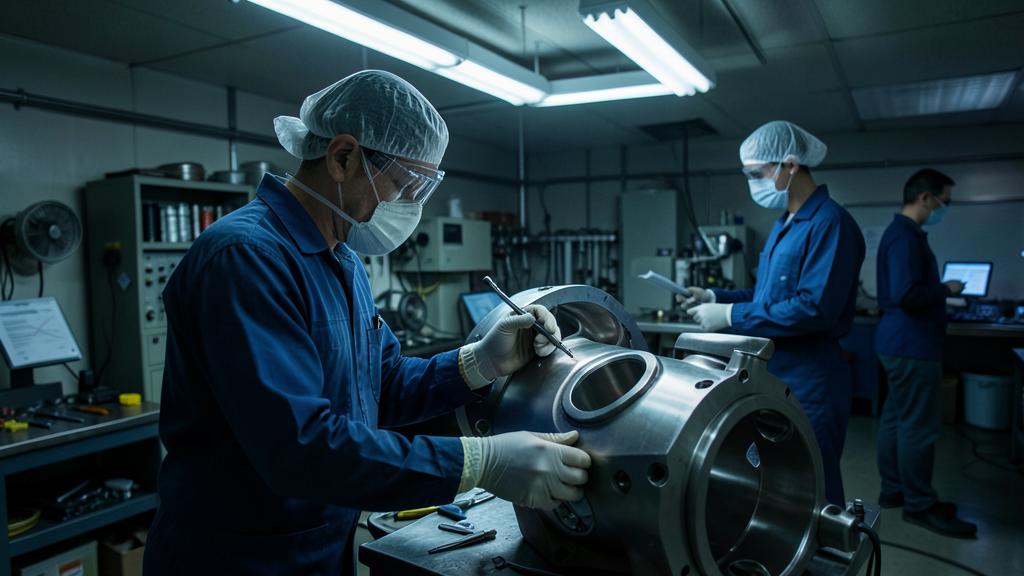
Special processes concentrate the risk, because their result cannot be verified on the delivered part: you cannot read a heat treatment, a bond or a cure at goods-in, you can only read frozen parameters and witness coupons. The 9100-series quality standards and special-process accreditations usefully structure this control, but no certificate obtained by a supplier replaces the customer’s own conclusion. An accreditation says that a shop knows how to do the job; it does not say that it did, on that day, on that batch, what the purchase order called for.
Just because a supplier has a quality certificate doesn’t mean they did the job right on your specific order. You still need to verify their work yourself, especially for processes you can’t easily check later.
A heat-treated turbine blade from a Tier 2 supplier arrives with perfect paperwork. But without checking the actual heat treatment records for that specific batch, the Tier 1 can’t be sure it was done correctly.
The structural flaw in this arrangement is easy to state and hard to correct: clauses are copied from one tier to the next much further down than verifications reach. The Tier 1 audits its Tier 2; the Tier 2 imposes the same clauses on its Tier 3, but with inspection resources on an altogether different scale. It is in that gap that silent changes take hold: a material supplier replaced, a treatment bath moved to another site, a finishing subcontractor changed without notification.
The right reflex. Treat the change-notification clause as a configuration item, not as a stock phrase. In practice, for critical articles: ask for the named list of Tier 2 and Tier 3 subcontractors, the date of the last first article inspection, and the list of changes notified since. A supplier that has notified nothing for years is not a stable supplier: it is a supplier that does not notify.
A concession is not settled at the level where it is found
The manufacturing nonconformity is the chain’s moment of truth. A bore out of tolerance, an insufficient fillet radius, porosity beyond the criterion: the manufacturer observes, but it does not decide. Only the holder of the design data can say whether the part remains fit, must be reworked or must be scrapped, because it alone holds the justifications that led to the criterion. The manufacturer, for its part, knows only the criterion.
This rule seems obvious and is nevertheless circumvented every day, under an entirely understandable pressure: the part is late, the assembly line is waiting, and the discrepancy looks trivial. Escalating costs days. The temptation is to classify the nonconformity as “minor” at a level where no one is entitled to do so. That, far more than an isolated manufacturing defect, is where the chain of responsibility genuinely breaks.
A second signal deserves to be tracked: the repeated concession. When the same use-as-is acceptance comes back batch after batch, it is no longer a production incident, it is a disagreement between the definition and the actual process. The right outcome is not to industrialise the concession, it is to change the definition or the routing — which has a cost, and explains why this drift often lasts a long time.
Just because a part looks okay doesn’t mean it meets all the requirements. Only the original designer can decide if a flaw is acceptable. If the same flaw keeps happening, it’s a sign the design or process needs to be fixed, not just ignored.
A Boeing 787 wing rib has a minor dimensional issue. The Tier 1 might want to use it as-is to avoid delays, but only Boeing (the design holder) can approve that. If this keeps happening, it means the design or manufacturing process needs to be updated.
A discrepancy found in service: the real path of the information
On the operations side, the sequence is well marked out. The occurrence is recorded and reported under the occurrence reporting scheme; the continuing airworthiness management organisation passes it to the design approval holder, which is required to report failures, malfunctions and defects liable to affect airworthiness and to analyse their significance. If an unsafe condition is established, the authority mandates a measure applicable to the fleet concerned. At no point in this loop does the operator have to know the name of the part’s actual manufacturer.
On the industrial side, a second loop starts in parallel and follows an entirely different timetable: identify the batch, trace back to the process parameters, isolate the root cause, determine the extent of the suspect parts, correct the production run. These two loops do not run at the same speed and do not answer to the same actors.
| What distinguishes them | Airworthiness loop | Industrial loop |
|---|---|---|
| Trigger | Occurrence report, finding on the line or in the shop | Notification from the data holder to the supplier |
| Who decides | Design approval holder, then the authority | Data holder together with the Tier 1, down to the tier concerned |
| Expected output | Measure mandated on the fleet, possibly a repetitive inspection | Root cause, batch perimeter, correction of the routing |
| What blocks it | Uncertainty over the extent of the affected population | Batch traceability broken at a low tier |
| Effect of a failure | Measure widened as a precaution to a whole range of serial numbers | Defect that reappears on a later batch |
The link between the two loops is batch traceability, and it is what decides the cost of the affair for operators. When the perimeter of the affected parts can be demonstrated, the mandated measure targets those parts. When it cannot, for want of a record kept somewhere at Tier 3, the only prudent way out is to widen it: a whole range of serial numbers, sometimes dozens of aircraft to inspect for a handful of parts genuinely at fault. The price of lost traceability is never paid by whoever lost it.
When a problem is found in an aircraft, two investigations happen at once. One figures out how to fix the planes, the other finds out why it happened. If they can’t track which parts are affected, they have to check way more aircraft than necessary, which is expensive.
A crack is found in an Airbus A350 engine component. The airworthiness team orders inspections, but without good records, they might have to check 50 planes instead of just 5. The cost comes from the operator, not the supplier who lost the records.
What depth adds to the risk, and what it does not
Depth in itself is not dangerous. A Tier 3 shop often does more careful work than the factory that employs it, because it does nothing else. What depth degrades is the preservation of the part’s history and the speed at which information travels the other way. A defect propagates upwards with the parts; the alert has to come back down against the current, through companies that share neither the same customer nor the same commercial interest in speaking.
It also produces a concentration effect that is invisible from any single contract taken in isolation. Several competing Tier 1s source from the same forging house or the same surface treatment provider, simply because few of them know how. A discrepancy at that single supplier then affects several programmes at once, while none of the customers has the overall view that would allow them to sense it coming.
Finally, it is at the finest ends of the chain that parts without a history slip in: diverted scrap, resold surplus, genuine parts whose file has vanished. The useful distinction is not between a good part and a bad part, it is between a part whose release someone approved has taken responsibility for and a part for which no one has.
Long supply chains can be good, but they make it harder to track problems. If a small supplier has issues, it might affect many different aircraft programs. The real danger isn’t the quality of the work, but losing track of where parts came from.
Multiple aircraft programs use the same specialty heat treatment supplier. If that supplier has a process issue, it could affect engines, landing gear, and airframes across different models. Without good tracking, the problem might not be caught until it causes failures in service.
What to go and check in your own file
For stores or a procurement department: for every part number bought outside the manufacturer’s catalogue, identify who signed the release, under which approval, and whether the article falls within the scope of that approval. The question is not “is the document genuine”, it is “who took on what by signing it”.
For a Tier 1 quality department: pull, for critical articles, the actual list of Tier 2 and Tier 3 subcontractors, and compare it with the one that appeared in the qualification file. The gap between the two lists is the most honest measure of the oversight actually performed.
For a design office working under delegation: check that the extent of the authority to rule on nonconformities is written down, and not assumed. Many organisations discover the limit at the moment they cross it.
One durable grey area remains, and it is better named than left unsaid: that of the parts a manufacturer keeps producing for the spares market after the aircraft manufacturer has stopped ordering them, and that of repairs designed under licence by a Tier 1. In both cases, the question of which design data prevail deserves a written answer before the purchase, not after the first return from the shop. These concrete cases are usefully discussed among peers, in particular on the FL330 professional forum, where quality departments and operators do not read the same document the same way.
For anyone preparing for an interview or taking up a post in a supplier quality department, the screening question is always the same: faced with a nonconformity, being able to say immediately who holds the data, who has the title to release, and whose decision it is. The rest can be learned; that cannot.
This text describes a mechanism and substitutes for nothing: the applicable regulation, the arrangements signed between organisations and the approved documentation of the operator or the manufacturer prevail in all circumstances over what is written here.
Questions fréquentes
Can a Tier 2 supplier issue the release certificate for a part itself?
Only if it holds its own production approval and if the article falls within the scope covered by that approval. Failing that, its output enters its customer’s quality system, and it is the Tier 1 that inspects, accepts and signs the release. The certificate of conformity it attaches to its delivery remains a contractual document, enforceable against its customer and against no one else.
Who can accept as-is a nonconforming part found in manufacturing?
The holder of the design data, because it alone holds the justifications that led to the criterion exceeded. The manufacturer, even a major Tier 1, knows only the criterion and can only propose a disposition. When the definition belongs to the aircraft manufacturer, escalation is mandatory even if the discrepancy looks trivial and even if the assembly line is waiting.
Can the authority audit a subcontractor that holds no approval?
It has no direct link with that subcontractor, but it reaches it through the approval holder. The holder is required to include right-of-access clauses in its purchase orders allowing access to the premises of its partners and subcontractors. A supplier that refuses this access puts its customer in difficulty with respect to that customer’s own approval.
What difference does it make whether a Tier 1 designed the part rather than built it to print?
It shifts the authority to decide on nonconformities and on changes to the definition. Under delegated design, the Tier 1 may rule within the written limits of the arrangement made with the manufacturer’s design organisation; on a build-to-print drawing, it can decide nothing on its own. Those limits appear in the technical arrangements between organisations, not in the commercial contract.
Should an operator that discovers a defect try to contact the part's actual manufacturer?
No, and it would slow the handling down. The route is the occurrence report and escalation to the design approval holder, which is required to analyse the significance of the defect and, where applicable, to propose a corrective action. The search for the root cause at the supplier follows a second, industrial loop to which the operator is not a party.
Does a special-process accreditation relieve the customer of its own oversight?
No. An accreditation attests that a shop has mastered a process under given conditions, it does not attest that the batch delivered was processed in accordance with the purchase order. The approval holder remains the party asserting the conformity of what it delivers, which presupposes a conclusion of its own supported by frozen parameters, witness coupons and retained records.


Leave a Reply
You must be logged in to post a comment.