
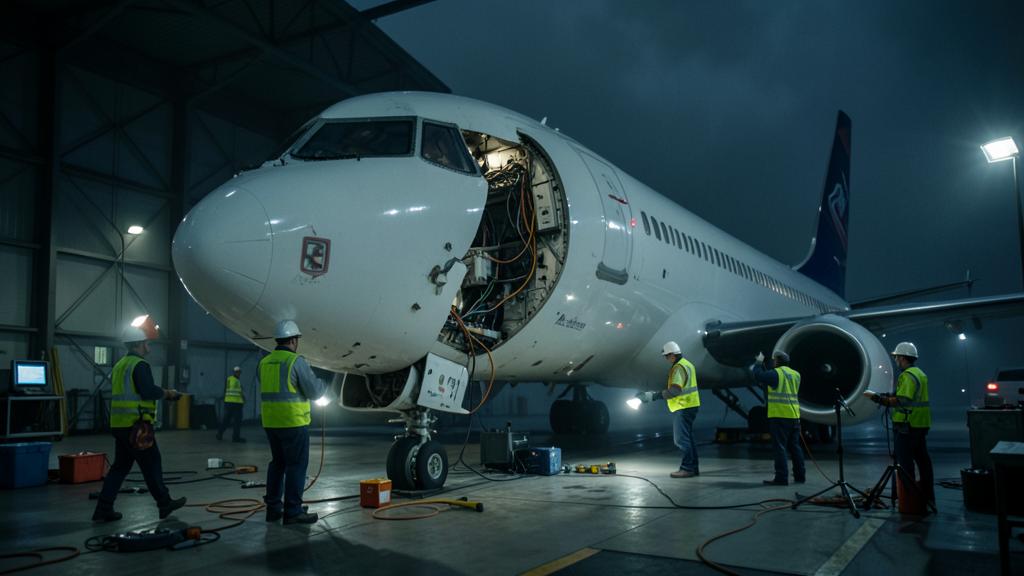
Almost every new aircraft type spends its first two years being less available than the brochure implied, and every experienced fleet manager knows it. What is less widely understood is that this is not one problem but five, arriving from five different directions, on five different timescales, each with a different owner — and that most of them are settled in a contract signed years before the first delivery, not in the hangar where they eventually appear. The aeroplane on jacks at three in the morning is usually the visible end of a decision made during negotiation.
What maturity is actually measuring
The headline metric is dispatch reliability: the proportion of scheduled departures achieved without a technical delay beyond a defined threshold, or a technical cancellation. The convention across the industry puts that threshold in the region of a quarter of an hour, but the number that matters commercially is whatever the purchase agreement says, because that is the number a guarantee is measured against. Read the definition before comparing anybody’s figures with anybody else’s — exclusions for operator-induced damage, foreign object damage and non-approved parts routinely move a programme’s published performance by more than the differences being argued about.
The shape is consistent even when the values are not. A mature single-aisle programme sits a fraction of a percentage point below one hundred. A type entering service typically starts a point or more below that, and closes most of the gap over roughly two years. A point sounds trivial until it is multiplied out: across a fleet flying several sectors a day, it is the difference between an operation that absorbs its technical events inside the buffer and one that spills them into the schedule every week.
Dispatch reliability also flatters. It counts departures, not aircraft. A type can post a respectable dispatch figure while one airframe sits unavailable for three weeks awaiting a part, because that airframe generates no departures to fail. The honest companion metric is aircraft-on-ground days, and the pair should always be read together.
Dispatch reliability measures how often flights leave on time, but it hides long groundings. Aircraft-on-ground days show how much time planes spend stuck on the ground. Together, they give the full picture of availability.
An airline with 10 A320neo aircraft flying 5 sectors a day might see a 99% dispatch reliability drop to 98% with a new type. That 1% means 15 fewer flights per month, costing thousands in delays and lost revenue. Meanwhile, one grounded aircraft could add 21 days of unavailability, disrupting the entire schedule.
Why the curve is steep at the start
Reliability engineering has described this shape for decades: a period of elevated failure rate early in life, a long flat plateau, and a rising rate at end of life. The early portion is not a defect in the design so much as the process of finding out which units were assembled, installed or specified at the edge of their tolerance. Certification demonstrates that the design meets its requirements. It does not, and cannot, demonstrate what happens when several thousand copies of each component are built by suppliers ramping up production and installed by teams building the first hundred aircraft.
Nor does flight testing substitute for service. A test programme accumulates hours under instrumentation, with engineers aboard, in a controlled sequence chosen to explore the envelope. An airline accumulates cycles: short sectors, quick turnarounds, contaminated runways, salt, de-icing fluid, freight loaders, ground power interruptions, and the specific mistreatment that only appears at volume. Much of what fails early is driven by cycles rather than by hours, and an airline fleet accumulates them far faster than any certification campaign can.
The gap between failure and removal
Two numbers describe a component’s behaviour and they are not the same. Mean time between failures describes the hardware. Mean time between unscheduled removals describes what the maintenance system does about it. On a mature fleet the two sit close together. On a new type they diverge sharply, and the space between them is filled by removals of serviceable units — the no-fault-found population.
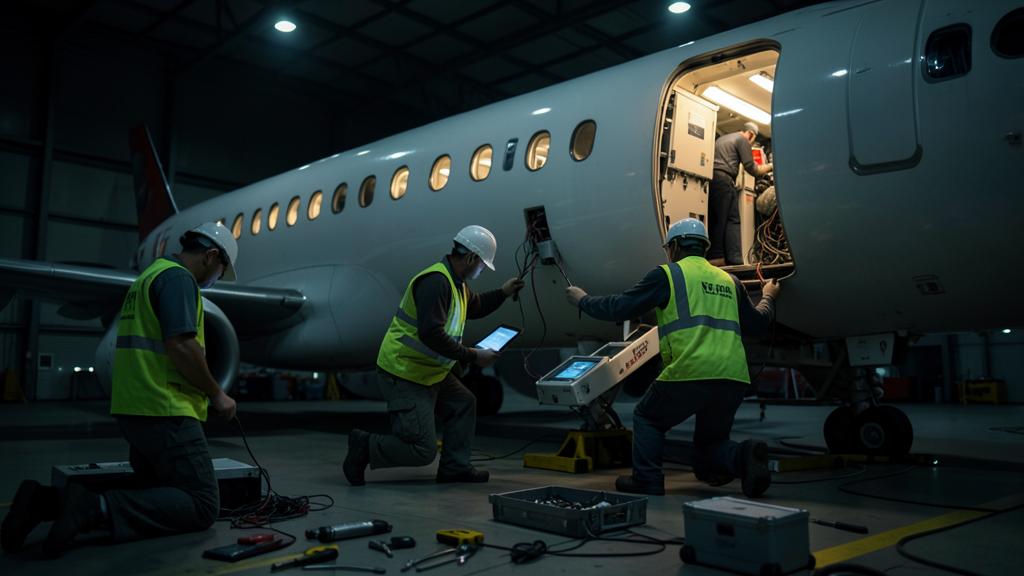
The mechanism is straightforward and expensive. A fault message appears. The fault isolation manual, written from analysis rather than experience, points at a line-replaceable unit. The unit is changed, the aircraft departs, the fault reappears three sectors later, and the shop reports no fault found on a unit that was doing its job. The cause was the wiring, the connector, the interaction with another system, or a message that means something other than what the manual says it means.
The consequences compound. Spares pools sized on the design’s predicted removal rate are consumed at a multiple of it. Repair shops fill with serviceable units, lengthening the turnaround for the units that are genuinely broken. Engineering confidence in the fault messages erodes, which produces both unnecessary changes and, more dangerously, delayed ones. Every mature programme has fought this; the difference between a well-run entry into service and a bad one is largely how fast the fault isolation data is corrected and fed back.
Five immaturities, arriving separately
Treating entry-into-service trouble as a single quality problem guarantees the wrong response. Five distinct immaturities operate at once, and each has a different owner and a different remedy.
| Source | What it looks like on the line | What shortens it | Owner |
|---|---|---|---|
| Design maturity | Repeat defects on the same system; frequent software standard changes; service bulletins with short compliance times | Fleet-wide data feedback; modification embodiment programmes | Manufacturer and suppliers |
| Production maturity | Defects that vary by airframe serial; rework found at first heavy check; out-of-sequence work delivered with the aircraft | The production learning curve; supplier ramp stabilising | Manufacturer |
| Supply chain maturity | A routine removal becomes a three-week grounding; no repair capability approved yet for a given unit | Consignment stock, pooling agreements, repair station approvals | Shared — and this is where the contract bites |
| Documentation maturity | Fault isolation that does not isolate; task cards that do not match the aircraft; a thin minimum equipment list | Reported discrepancies, revision cycles, operator feedback | Manufacturer, driven by operator reporting |
| Skills maturity | Long troubleshooting times; the same defect addressed three times; missing tooling and ground equipment | Training, on-site manufacturer representatives, deliberate knowledge capture | Operator |
Only the last is fully inside the operator’s control, and it is the one most often left to look after itself. The engineers who troubleshoot the first hundred defects on a new type accumulate knowledge that exists nowhere else in the world at that moment. Whether it is written down, or leaves with them at the end of a contract, is a management decision.
The minimum equipment list problem
One driver of early downtime is invisible until it bites. The master minimum equipment list of a new type is thin. Relief is granted on the basis of analysis, and the analysis is conservative where service experience does not yet exist. Items that a mature type dispatches with — deferred under a letter category that sets how long the defect may remain — simply have no entry at all on a new one. No entry means no dispatch.
Two structural facts follow. First, the list grows over the programme’s life as the manufacturer accumulates evidence and applies for relief, which is a large part of why availability improves without any hardware changing. Second, an operator’s own minimum equipment list may be more restrictive than the master document but never less, so any relief must arrive from the manufacturer and the authority before the operator can use it. A fleet entry plan that assumes mature dispatch relief in year one is planning against a document that does not yet exist.
The trap. Reading a mature type’s minimum equipment list and assuming the new variant inherits it. Where the variant carries a different system, a different engine or different alerting, the relief must be re-established for that configuration. Crews and dispatchers alike are caught by this: a defect that was routinely deferred on the previous fleet becomes a cancellation on the new one, with no explanation that makes sense from the flight deck.
Spares, repair capability, and the grounding that lasts three weeks
The single largest contributor to aircraft-on-ground days early in a programme is rarely the failure itself. It is the absence of anywhere to get the replacement. At entry into service the global spares pool for a new part number may amount to a handful of units, the repair capability may not yet be approved and tooled at any independent shop, and the manufacturer’s own repair loop may be measured in months rather than days.
This is why initial provisioning is negotiated rather than ordered. A recommended spare parts list is built jointly, weighted by predicted removal rates that are — as established above — optimistic. Consignment stock held at the operator’s base at the manufacturer’s risk, pooling arrangements with other early operators, and guaranteed response times from an aircraft-on-ground desk are the instruments that convert a supply chain problem into somebody else’s supply chain problem. They are worth more in year one than a headline price concession, and they are worth substantially less in year five.
Engines deserve separate attention because they are a separate programme, bought under separate agreements, with their own warranty structure and their own shop network. On several recent programmes the dominant source of early unavailability was not the airframe at all but engine removals whose shop turnaround times were themselves lengthened by an immature repair network. An airframe availability plan that treats the powerplant as an accessory will be wrong in the direction that hurts.
What is actually negotiated before the first delivery
The mechanisms that shorten the immature period are almost all commercial, and almost all agreed before the aircraft exists.
| Instrument | Insures against | What to check in the wording |
|---|---|---|
| Dispatch reliability guarantee | A programme that does not mature on the promised curve | The definition of a chargeable delay, the exclusions, the measurement window, and whether the remedy is a credit or cash |
| Consignment and pooling arrangements | A routine removal becoming a long grounding | Where the stock sits, who owns it, replenishment lead time, what happens on scope change |
| On-site manufacturer representation | Troubleshooting time while the operator’s engineers are new to the type | Duration, coverage hours, and whether the representative can commit the manufacturer |
| Aircraft-on-ground response commitments | Nobody answering at two in the morning in a station with no support | Response time versus resolution time — they are not the same undertaking |
| Warranty and supplier pass-through | Paying twice for early defects | Whether supplier warranties are administered by the manufacturer or pursued separately by the operator |
| Training entitlements and tooling provisioning | Skills and ground equipment arriving after the aircraft | Quantities, timing relative to first delivery, and who pays for recurrent needs |
| Delivery delay protection | A schedule sold against an aircraft that does not arrive | Trigger dates, the cap, and whether it covers consequential schedule cost |
The general shape of these remedies should be understood before anyone relies on them: they are usually credits against future purchases rather than payments, they are usually capped, and they are measured over defined windows with defined exclusions. They are real value, but they are not a substitute for planning the operation around reduced availability.
How to fly a new type
Fleet planning does more to protect the first two years than any contractual clause. The measures are unglamorous and well known to anyone who has done it twice. Base the new type where the heavy maintenance, the spares and the most experienced engineers already are. Keep it off the thinnest rotations and off the last wave of the day, where a technical event has nowhere to recover. Build a higher spare-aircraft ratio into the plan than the mature fleet needs, and resist the pressure to sell that slack. Where the route network allows, avoid stations with no support for the first season.
The maintenance programme itself starts conservative by design. Task intervals derived through the maintenance review board process are set on analysis, and are escalated later as the reliability programme accumulates evidence. That escalation is an operator-driven activity requiring data and a functioning reliability review — which is another way of saying that the operators who invest in continuing airworthiness data get their availability back sooner than those who wait for it.
The right reflex. Track the no-fault-found rate by system from the first month, and report it to the manufacturer with the removed unit. It is the fastest available signal that the fault isolation data is wrong, it is the metric most likely to be missing from a standard reliability report, and correcting it converts more groundings into departures than any other single intervention available to an operator.
The trade nobody states out loud
Early operators pay in availability and are compensated in price, in influence over the configuration, and in a position at the front of the delivery queue. Later operators inherit a matured minimum equipment list, a stocked spares network, corrected documentation and a repair market that exists. Both positions are defensible; what is not defensible is taking the first and planning as though it were the second.
For the people on shift the practical consequence is the same in every hangar: the first two years of a type consume unplanned hours at a rate the rest of its life will not repeat, the reasons are structural rather than anybody’s fault, and the knowledge built in that period is the most valuable thing the operation produces. Engineers comparing entry-into-service experience across recent programmes tend to do so in more detail than any published figure allows, and those conversations run in the maintenance sections of the FL330 professional forums.


Leave a Reply
You must be logged in to post a comment.